Alarm in Baltic as Kremlin seizes control of Soviet past
Medvedev bans the 'falsification of history to the detriment of Russia'
In Russia it is not only the future that is unpredictable; often the past is equally in doubt. One minute Leon Trotsky was a hero of the Revolution, the father of the Red Army and a strong contender to succeed Lenin; the next minute he never existed. Until the late 1980s, the 1917 Revolution was the pinnacle of human achievement; suddenly in the 1990s it was seen as an utter failure.
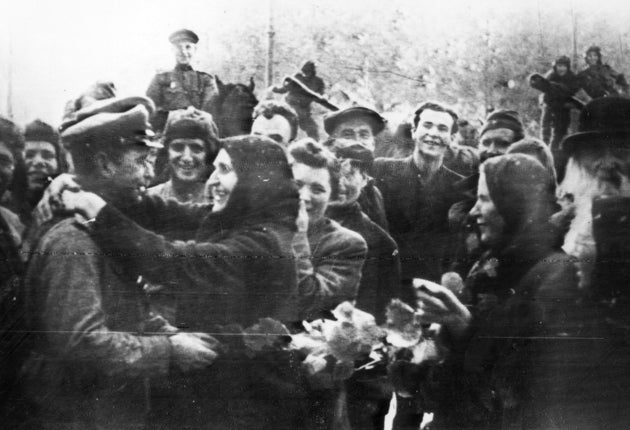
And today again history in the region is turning into an ideological battlefield. When the Red Army poured into the Baltic states at the end of the Second World War, it liberated them from Nazi tyranny – but from the perspective of the subsequent decades of Soviet domination, was it liberation or merely another invasion?
The Russians, of course, have no doubt on the matter: for them it was an heroic national achievement. But for the states which less than two decades ago managed to crawl out from under the Soviet boot, things are not so simple. The Museum of the Occupation of Latvia, an imposing black box of a building in the heart of Riga, tells the story of Latvia's time inside the Soviet Union. The Soviet soldiers, glorified as heroes in Moscow, are portrayed as criminals and occupiers, no better than the Germans they defeated.
But now, slamming shut a stable door through which its former subject states long ago bolted, Russian President Dmitry Medvedev has ordered the creation of a body with the Orwellian title of the Commission to Counteract the Falsification of History to the Detriment of Russian Interests. A linked law is also likely to be passed that will outlaw the "rehabilitation of Nazism" on the territory of former Soviet republics.
Pressure to stop their much smaller neighbours telling recent history the way they see it has been building for some time. When authorities in Estonia removed a monument to Soviet soldiers from the centre of Tallinn two years ago, riots between police and ethnic Russian citizens of Estonia ensued, and the Kremlin made furious noises. With its new commission and law, Moscow is upping the stakes. Russia accuses the governments of Estonia and Latvia of glorifying partisan regiments which fought on the side of the Nazis.
In recent years, relations between Latvia and Russia have normalised in many spheres, but the Second World War is still a thorny issue. "The one issue which divides us is our interpretation of history," says Ojars Kalnins, director of the Latvian Institute, a think-tank linked to Latvia's Foreign Ministry. "Russia could demonstrate a lot to the world if it did what Germany did, and apologised for the actions of previous governments."
Apologising, however, is the last thing the Kremlin plans to do, and the new commission and law suggest that Russia is moving in the opposite direction, seeking to glorify the Soviet past and silence critics of Soviet communism.
The commission, say critics inside Russia, smacks of a Soviet attitude to history, and the most worrying aspect to be inferred from its bizarre title is that falsifying history in Russia's interests is quite acceptable.
Last week, a scandal erupted over an article written by a Russian military historian that was posted on the website of the Russian Defence Ministry, blaming Poland for starting the Second World War. The article absolved the Soviet Union from any role in contributing to the start of war, and instead blamed Poland for not acceding to "reasonable" demands from Nazi Germany. The paper was removed after an official complaint from Poland.
A key pillar of Vladimir Putin's eight-year presidency involved exhorting Russians to feel proud of their history, and he once said that foreign countries should never be able to make Russia feel guilty for its Soviet past. The public appears to agree. A recent survey by a leading Russian polling agency showed that 77 per cent of Russians consider the Red Army to have liberated eastern European countries and given them the chance to develop, while only 11 per cent felt that there was an occupation.
"Those trying to turn everything upside down and portray the Nazi liberator states as invaders have to suffer punishment," said Valery Ryazansky, a member of the pro-Kremlin United Russia party and one of the law's sponsors. The Russians remain determined to stem the tide of what they see as anti-Russian propaganda. "Such attempts are becoming more hostile, more evil, and more aggressive," said Mr Medvedev in his online video blog last month. "We must fight for the historical truth."
Join our commenting forum
Join thought-provoking conversations, follow other Independent readers and see their replies
Comments
Bookmark popover
Removed from bookmarks