Eurozone members look at 'big bang' plan to overcome debt crisis
Bailout fund may be given increased powers, says ECB, as German Chancellor seeks support for cash injection to Greece
Under pressure from the US and the rest of the international community, eurozone officials are considering a "big bang" plan to dramatically increase the size of the European bailout fund to tame financial markets and bring the sovereign debt crisis under control.
A European Central Bank (ECB) board member threw his weight behind a plan, first mooted by the US Treasury, to increase the size of the European Financial Stability Facility (EFSF) by allowing it to borrow additional funds from the ECB.
The comments, by Lorenzo Bini Smaghi at a conference on the sidelines of the International Monetary Fund, were the first hints that a plan to leverage up the EFSF is being considered by the ECB and the eurozone governments which are contributors to the fund.
The EFSF was conceived as a fund to channel bailout money to eurozone countries that were having trouble servicing government debt, but its ability to fully contain the sovereign debt crisis has been in doubt almost since its inception. Contributors have pledged up to €780bn (£675bn), though ratification through member countries' parliaments is slow and uncertain.
The plan emerging last night would widen the scope and dramatically increase its size, providing additional funds to buy government debt from any countries that might be frozen out of the financial markets, a major fear for core eurozone members Spain and Italy. It would also be able to inject money into any European banks that get into trouble because of losses on government debt, such as are likely to occur if Greece defaults on its debt – something that markets now view as inevitable.
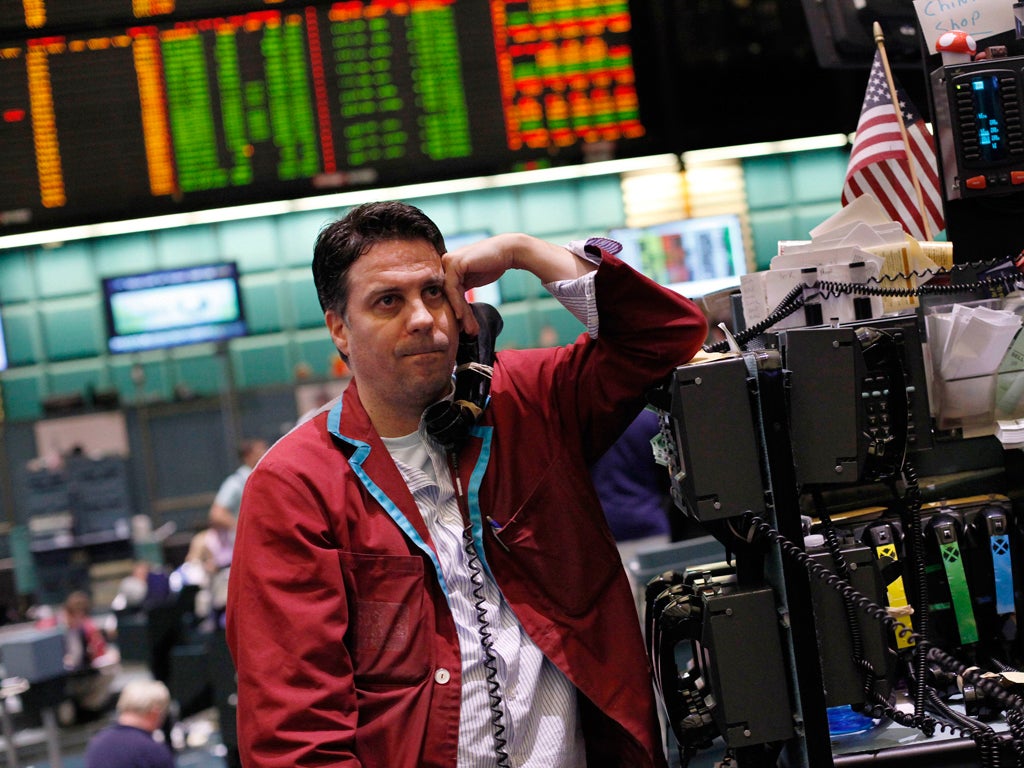
Markets around the world achieved a degree of calm yesterday on rumours of the big bang approach from the eurozone, and new reports on the details of the wider, bigger EFSF sent the US stock market soaring last night. Turmoil in the eurozone is the biggest single threat to the global economy, traders believe, and they have watched political wrangling on the continent with alarm. There was also disappointment that the G20 and IMF meetings over the weekend ended with no major policy announcements, though it was clear that work was continuing at a frenzied pace behind the scenes.
That the solution is by no means secure was underlined when Germany's Chancellor Angela Merkel took the rare step of appearing on a television chat show in an attempt to halt a dramatic decline in public support for her coalition's plans to contribute to the Greek bailout. Opinion polls suggest that between 75 and 80 per cent of Germans oppose more cash injections for Greece. Several leading members of Ms Merkel's coalition also oppose the plan.
However, Ms Merkel warned during her television appearance that Germany's failure to help Athens could result in a domino effect which could spread throughout the eurozone. "We have to be able to put up a barrier," she told viewers, adding that she wanted Greece to keep the euro.
The Chancellor's made her remarks before a key parliamentary vote in the German Bundestag on Thursday over plans to approve increases to the lending capacity of the EFSF. With opposition increasing from within her own ranks, particularly among her liberal Free Democrat coalition partners, Ms Merkel cannot be absolutely certain of a majority.
The Chancellor has indicated that she may have no option but to rely on the votes of opposition Social Democrats and Greens to get the measure through parliament. Some observers have predicted that if she is forced to take this course, she could be forced to hold a parliamentary vote of confidence in her administration which would almost certainly result in the collapse of her coalition. However, Ms Merkel insisted during her appearance that she was confident of obtaining a majority during the vote. "I want a majority of my own and I am confident about getting one," she said.
Ms Merkel was due to meet Greek Prime Minister George Papandreou in Berlin tonight for renewed discussions about Athens' ability to cope with the crisis caused by its deepening debt problem.
What a Greek default would mean for...
The world economy
In an interconnected world, chaos in the eurozone threatens the global economy. If Greece defaults without back-stop support, the financial system could well freeze over and business confidence would collapse as it did after the implosion of Lehman Brothers three years ago. Banks would stop lending, trade would grind to a halt and another recession or a depression would result.
Greece
Some argue that default and leaving the euro would not be a disaster for Greece. After all, it would then be free of austerity measures that threaten to keep the country in a spiral of spending cuts and weakening growth. It would also have a weaker, more competitive currency. But with no one willing to lend it money, the country, which is led by George Papandreou, pictured, would have to print money and risk hyper-inflation. Unpleasant as it is, the proposed bailout may be the best compromise for Greece.
The banks
Europe's banks would go into meltdown if Greece defaulted in a "disorderly" fashion because they have large holdings of bonds (or IOUs) issued by Greece and countries such as Italy and Spain. A full default would leave Greece's bonds worthless, causing banks huge losses. France's banks have sparked the greatest fears because of concerns about their exposure to Greek debt and the market thinks they need more capital. UK banks have smaller holdings of Greek bonds but would face trouble if panic spread to Ireland and Spain.
The euro
A chaotic Greek default would almost certainly see panic spread to the sovereign debt of Italy and Spain, which are too big to be bailed out under current arrangements. That scenario could trigger the break-up of the single currency. The package under discussion is intended to replace past patch-ups with a decisive plan to shore up confidence in the eurozone's political resolve.
Britain
The UK needs this plan to work, hence the urgent calls from David Cameron and George Osborne for action. Europe is by far this country's biggest trading partner and economic catastrophe there would choke off exports that the Government and the Bank of England are trying to encourage to boost growth.
Join our commenting forum
Join thought-provoking conversations, follow other Independent readers and see their replies
Comments