Fears over new leak at Chernobyl spark plea for radiation shield
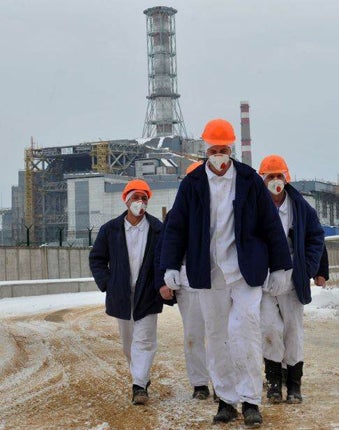
Fears that the destroyed nuclear reactor at Chernobyl could collapse and again leak deadly radiation have prompted European agencies to seek hundreds of millions of pounds to fund the construction of a vast steel building to encase the site.
As the 25th anniversary of the worst nuclear accident in history approaches, there is a funding shortfall of €740m (£631m) for projects to build a "shelter" over the destroyed reactor and to safely store nuclear fuel from the other nuclear reactors at the site.
The new shelter for the destroyed reactor is being funded by the European Union and the European Bank for Reconstruction and Development in co-operation with the Ukrainian government, but European officials say they urgently need countries to pledge money for the project, which is under way but underfunded. They hope that a conference in April, ahead of the anniversary of the disaster, will see governments donate the missing funds.
Jean-Paul Joulia, the head of the EU's Nuclear Safety Unit, said during a visit to the site last week that the EU had contributed about €500m to various projects at Chernobyl, more than half of that for the new shelter. The alliance is now hoping that individual European governments, and Russia, will stump up more cash for the project.
The explosion at Chernobyl's Reactor Number Four occurred on 26 April 1986. About 30 people were killed instantly, and it is estimated that another 4,000 died prematurely in the aftermath, while many more still suffer health effects from the radiation. In the months after the accident, a "sarcophagus" of concrete was hastily erected over the destroyed shell of the reactor, with many of the workers involved being subjected to life-threatening doses of radiation to get the work done.
In recent years, the structure has become extremely unstable, with experts warning that if it collapses, a catastrophic amount of radiation could be released into the atmosphere. Stopgap stabilising work on one of the walls of the sarcophagus has reduced the chances of collapse and extended its life by around 15 years, but this might not be enough to prevent a disaster.
"Even after the stabilisation activity, there's still potential for the partial or complete collapse of the object shelter," said Laurin Dodd, the head of the Shelter Implementation Plan at Chernobyl. "It's only once we get the new structure in place that we can say it's safe."
The new shelter will be the largest moveable structure ever built, and one of the world's biggest buildings, at over 108 metres high, 257 metres long and 164 metres wide. Work on the shelter has already begun in an area adjacent to the reactor; when it is finished, it will be slid into place, completely encasing the old reactor.
Even today, there is a 20-mile "exclusion zone" around the Chernobyl power plant where inhabitation is prohibited. The other reactors at Chernobyl remained in use until 2000.
Mr Dodd said that once the shelter was in place, work would begin using cranes and other automated technology to dismantle the old reactor inside. He said human intervention would be kept to a "strict minimum" but admitted that some people would nevertheless be subjected to dangerous doses of radiation. The new shelter is designed to be safe for 100 years.
Join our commenting forum
Join thought-provoking conversations, follow other Independent readers and see their replies
Comments
Bookmark popover
Removed from bookmarks