Secret tunnels that brought freedom from Berlin's Wall
Old barrier between East and West pulls in tourists 20 years after its fall
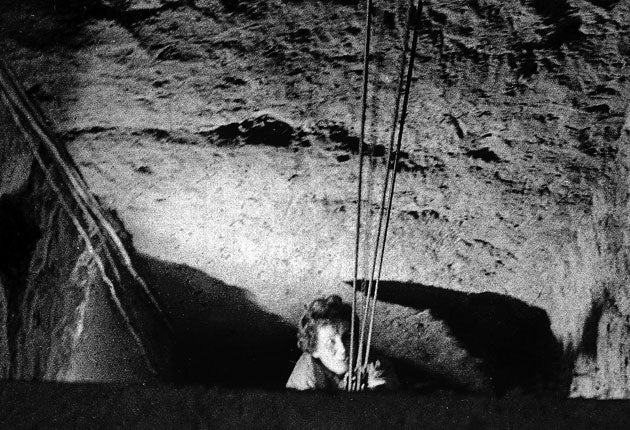
When the East German government built the Berlin Wall in 1961 to prevent its citizens from leaving, the regime failed to take into account the ingenuity and creativity of those willing to risk anything to escape the communist system. While some flew over the barrier in hot air balloons, others sailed far around it, via the Baltic Sea, and still others were smuggled across, hidden in secret compartments in cars. But several hundred took advantage of the soft, sandy soil under Berlin to tunnel their way beneath the wall.
Today, almost 20 years after the wall's demise, Berlin's Cold War-era bunker and tunnel system has become one of the most popular attractions for tourists and locals alike. And their guide is often Hasso Herschel, who, in the 1960s and 1970s, helped dozens escape through the secret tunnels, some of which he dug with his own hands.
Mr Herschel, who escaped to West Germany with a forged passport in 1961, dug several illegal tunnels under the wall, the first in September 1962. Its entrance was hidden in a house on the eastern side of the border, right across from the wall on Bernauer Strasse, according to Mr Herschel's sister Anita Moeller, who helped him to cross. "We went into the house, down to the basement, and then had to get into a hole in the floor," said Mrs Moeller, who escaped with her infant daughter and husband. "First, I was worried, because I'm claustrophobic. But once I was inside the tunnel, there was no time left for my fears."
Twenty-nine people fled through that shaft, making it one of the most successful tunnel projects at the time. While some passageways were less than 100ft, others were nearly 600ft in length. Some were like small tubes, barely big enough to crawl through, while others were tall enough to stand up in. It took between three days and six months to dig the various constructions completed between October 1961 and April 1982. Altogether, about 300 managed to escape through them.
Fleeing East Germany was dangerous. Border guards had orders to shoot any escapees on the spot. Researchers estimate that 136 people died trying to cross the wall and about 750 perished along the entire 856 miles of the border separating East and West Germany. It is not clear how many were killed trying to flee through the tunnel system. Last month, the city honoured Siegfried Noffke and Dieter Hoetger, who were caught by East German authorities on 12 June 1962, while digging a tunnel. Mr Noffke was killed; Mr Hoetger survived, but was badly injured.
Often tunnels were discovered before they could be used by the border troops or the Stasi, East Germany's dreaded secret police. Others collapsed, were flooded by groundwater or buried by loose soil.
"Altogether, we have counted 71 tunnel projects and 20 per cent of those were successful," said Dietmar Arnold, the head of the Berlin Underworlds Association, which conducts the tours and works on opening more subterranean structures to the public. "Most tunnels were dug from the West to the East, often by men who had already fled to the West and who were now trying to get the rest of their families out of East Germany," Mr Arnold told visitors recently.
Tours usually start at a labyrinthine Cold War bunker in the bustling immigrant neighbourhood of Wedding. Here, the association has created an illustrative model tunnel equipped with buckets, shovels and a little wooden box wagon like those used to carry out excavated soil. The light in the bunker is dim, and fluorescent paint from the Cold War-era glows on the walls, creating an eerie atmosphere. Later, groups move on to Bernauer Strasse in the neighbourhood of Mitte, one of the most popular spots for tunnel diggers at the time, due to the high amount of clay in the soil.
In the first months after the erection of the Berlin Wall on 13 August 1961, about 600 refugees got away through the city's canals and the subway system but, by the end of 1961, East German border troops had sealed off access completely. It was then that people started digging their way to freedom. "We crawled on all fours through the mud, until we reached a ladder which we climbed up," Anita Moeller remembered. "It took me a while to understand I was free... and only then I experienced this complete inner happiness."
Join our commenting forum
Join thought-provoking conversations, follow other Independent readers and see their replies
Comments
Bookmark popover
Removed from bookmarks