'Six months to save Lascaux'
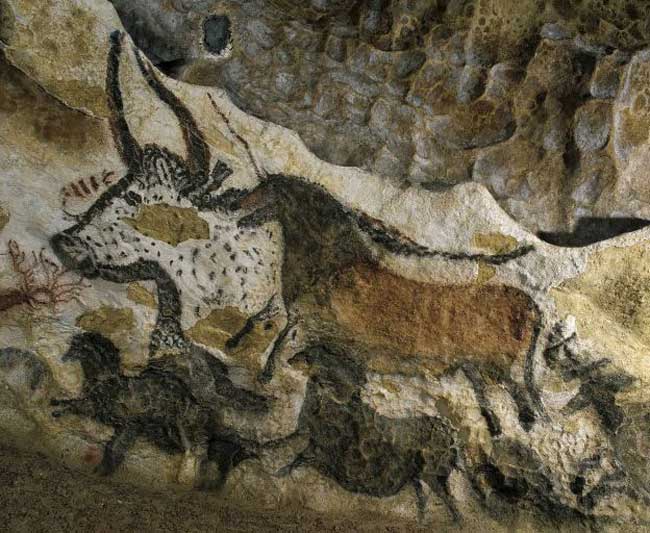
Unesco, the world cultural body, has threatened to humiliate France by placing the Lascaux caves – known as the "Sistine Chapel of prehistory" – on its list of endangered sites of universal importance.
The Unesco world heritage committee, meeting this week in Quebec, has given the French government six months to report on the success of its efforts to save the Lascaux cave paintings in Dordogne from an ugly, and potentially destructive, invasion of grey and black fungi.
At the same time, a scientific committee appointed by the French government has conceded that an elaborate treatment with a new fungicide in January failed to stop the mould advancing through one part of the caves.
An independent pressure group of scientists and historians claims that up to half of the startlingly beautiful, 17,000-year-old images of bison, horses, wild cattle and ibex are now threatened by the fungal invasion – the second of its kind in eight years.
The heritage committee warned France this week that it will consider placing Lascaux on its list of imperilled cultural and natural sites of global significance unless progress is made by next February. The committee requested France to open Lascaux – closed to the public since 1963 – to a visit by independent experts. It also advised France to commission an "impact study" of all past, and possible future, actions in the caves since the first fungal invasion in 2001-02.
There are already 31 sites on the Unesco "List of World Heritage in Danger", including such treasures as the ancient Buddha statues of the Bamiyan valley in Afghanistan, partly destroyed by the Taliban. Only one of the existing, officially threatened sites is in western Europe – the architectural heritage of the Dresden-Elbe valley in eastern Germany, site of a planned motorway. A decision by the Unesco committee to list Lascaux as "endangered" would, therefore, be a severe embarrassment to France. Unesco would, in effect, be telling Paris that it can no longer be trusted to manage one of the world's most important historical and cultural treasures.
Officials from the French government's department of historic monuments and experts from all over the world have been quarrelling for years over the best way to preserve the Lascaux paintings. Some experts have accused the French authorities of a series of blunders, including a change in the air-conditioning system in 2000, the use of high-powered lights in the caves and allowing too many "special" visits.
An independent body, the International Committee for the Protection of Lascaux, infuriated Paris by asking Unesco to intervene last September. Laurence Léauté-Beasley, president of the committee, was jubilant yesterday. "The requirements placed upon France [by Unesco] are significant and strong," she said. "France will now have to answer to the world community for actions they have taken in the past and will take in the future. Lascaux's management must now operate in a spirit of transparency."
The French authorities initially denied that the Lascaux paintings themselves had been attacked by the second fungal invasion. They later admitted to some blotching on the paintings but no lasting damage. The independent protection committee, citing information from experts who have visited the caves, insist that some of the images have been irreparably blurred or that their colours have faded.
Mme Léauté-Beasley said: "Upwards of 50 per cent of the caves' ... art is disappearing under an incursion of black spots, some as large as human hands, triggered by the use of high intensity lights and excess human presence inside the cave."
On Thursday night, the French authorities admitted a setback. A treatment with fungicide in January appeared to have been successful at first but the black and grey blotches are now spreading once again across one part of the paintings, according to an official statement.
A committee of international experts, appointed by Paris after the first fungal attack in 2001, announced that the new treatment had been "very satisfactory" in one part of the caves, known as the "room of the bulls". The spread of fungal blotches had resumed, however, in the "right-hand part of the caverns".
Marie-Anne Sire, the head curator of Lascaux, told the French news agency AFP that the news was disappointing but progress was being made. Studies had revealed that the air which used to circulate in the caves had become immobile. This might explain the fungal outbreaks – and to offer a possible solution, she said.
The paintings were discovered by chance in September 1940. The 600 images of aurochs, wild horses, bison and ibexes are regarded as among the finest cave paintings in the world.
Visions of the past
The Lascaux paintings are in a cave on the left bank of the river Vézère, a tributary of the Dordogne. They include depictions of ibexes facing off, and a "unicorn" chasing a herd of horses. It is thought that they were painted between 15,000 and 17,000 years ago by hunter-gathering people who crushed minerals to create red, ochre, brown and black paints.
The paintings were discovered accidentally by four teenagers in September 1940. After a visit to the caves, the Cubist artist Pablo Picasso declared: "We have invented nothing." The caverns were closed to the public in 1963 to protect them from just the kind of fungal infections that have appeared over the past eight years. In 1983, a complete life-sized facsimile of the caves and paintings – Lascaux Two – was opened nearby for visitors.
Join our commenting forum
Join thought-provoking conversations, follow other Independent readers and see their replies
Comments
Bookmark popover
Removed from bookmarks