Israeli elections: Be afraid. Be very afraid
Donald Macintyre reports from Jerusalem on an election campaign that is still too close to call, but one with ominous portents
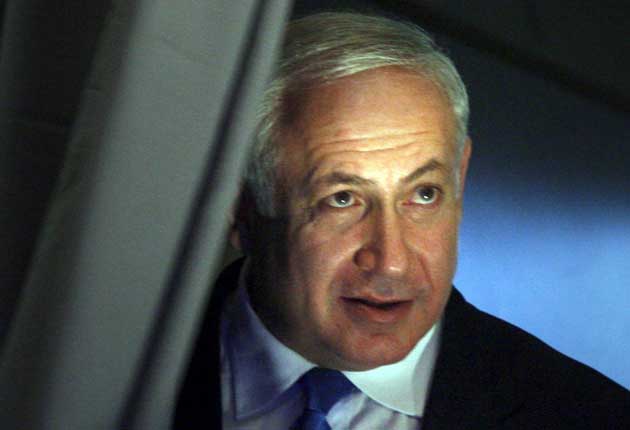
Israel's Foreign Minister, Tzipi Livni, last night launched a concerted final effort to become her nation's first woman leader since Golda Meir, despite the rightwards shift in public opinion that has threatened to propel Benjamin Netanyahu back into the premiership.
The leader of the centrist Kadima party, who began the closing stages of her campaign with a rally for Druze Arab voters in Galilee last night, issued a direct personal challenge to Mr Netanyahu to agree to the television debate which he has consistently refused.
As polls showing the lead of Mr Netanyahu's right-wing Likud party has narrowed to only two seats ahead of Kadima, Ms Livni's campaign team believes she can overtake her rival by the time Israel goes to the polls on Tuesday.
Mr Netanyahu has emphasised the threats from Hamas and a nuclear Iran in his campaign.
Ms Livni, who strongly supported the recent invasion of Gaza, but has pledged to continue talks on a two-state solution with the moderate West Bank Palestinian leadership, said there was a public demand from potential leaders "to specify with which policies they plan to cope with the threats, and lead [Israel] to a better future of peace and quiet". Meanwhile the outgoing Kadima premier, Ehud Olmert, was making what the Defence Minister, Ehud Barak, said were "supreme efforts" to leave a positive legacy by securing the release of Gilad Shalit, the army corporal seized by Gaza militants in 2006, before polling day.
Turkish TV reported on Friday that Turkish officials were holding talks in Damascus with exiled leaders of Hamas, which has been seeking a large-scale release of Palestinian prisoners in return.
At the same time Mr Barak, Labour's prime ministerial candidate, told Channel 1 TV that Cpl Shalit was known to be "well, alive, breathing and OK".
He added: "You know that I am a fierce critic of the Prime Minister, but in these matters, in these days, he is making a great effort, as am I ... in order to expedite the process." Whether the formidable obstacles to securing the release can be overcome remains to be seen, however.
A Hamas official, Osama al-Muzaini, said talks on the issue had so far made little progress because Israel "remained unwilling to pay the price".
While Mr Barak warned the release of Cpl Shalit would require "painful decisions" – presumably on a prisoner exchange – the electoral effect, if it happened, would probably be to help Labour and Kadima at the expense of Likud and the increasingly popular Yisrael Beiteinu, led by the hard-right Avigdor Lieberman.
According to the polls, the main features of a relatively lacklustre election so far have been the Likud comeback under Mr Netanyahu from its three-decade low of just 12 Knesset seats in the 2006 election, and the seemingly relentless rise of Mr Lieberman, who could yet prove the kingmaker in forming a coalition after Tuesday.
Polls published on Friday – the last allowed before election day – showed Likud with 25 to 27 seats, just ahead of Kadima, with 23 to 25. Mr Lieberman's party with 18 or 19, which, if fulfilled in actual voting, would push the once-dominant Labour Party into fourth place.
Most analysts think the rightward shift has resulted from a combination of two factors. One is Hamas's continued control of Gaza. The other is the stillbirth of the centrist programme under Mr Olmert of withdrawing from settlements and negotiating a peace deal with the moderate Palestinian leadership. This was envisaged at the international Annapolis summit sponsored by President George Bush at the end of 2007.
The change also reflects the widespread popularity among mainstream Israelis – despite the Palestinian death toll of more than 1,200 – of the three-week onslaught on Gaza. This had long been urged by Mr Netanyahu.
Mr Lieberman, a harshly right-wing West Bank settler who wants Israeli Arabs to forfeit their citizenship rights if they fail to pledge loyalty to the Jewish state, was characterised on Friday by a leading Israeli columnist, Nahum Barnea, as "the scarecrow that panic-stricken Israelis want to place in the political cornfield in the hope that the Arabs are crows... and take fright".
At least in theory, Ms Livni could be asked by President Shimon Peres to try to form a coalition even if Kadima does not emerge as the biggest single party, especially if Ms Livni secures the support of Mr Lieberman as a potential coalition partner. Like Ms Livni, Mr Lieberman is secular, and could baulk at a Netanyahu-led government which included ultra-orthodox parties such as Shas.
Nevertheless such a move by President Peres – while constitutional – would be unprecedented. It would provoke furious charges from Likud, if it is the single biggest party, of being undemocratic. For now Ms Livni will go all out to persuade the still-undecided fifth of the Israeli electorate that she is the only candidate to stop the polarising Mr Netanyahu.
Over coffee in one of the few downtown Jerusalem cafes open on the Jewish sabbath, Maya Ayvo, 35, and her husband Ezer, 38, described yesterday how 15 of their mainstream middle-class family members had discussed their "confusion" over how to vote at the traditional Friday night meal the previous evening.
While most did not want to vote for Mr Netanyahu or Mr Lieberman, said Mrs Ayvo, "they like Tzipi Livni, but are not sure about her party; others like the Labour Party, but are not sure about Barak".
Mrs Ayvo said she had been toying with voting Green, as she did in 2006, or the left-wing Zionist party Meretz, but that she had now come down in favour of Ms Livni. This was partly because she was a woman, but "I feel that this time I have to be responsible and not vote for a smaller party, because this election is so important". She said that she would be very disappointed if Ms Livni included Mr Lieberman in a coalition.
Her husband, who voted for the small Pensioners' Party in the last election because he was fed up with the larger parties, said he had not yet made up his mind, but might vote for Ms Livni. Like his wife, he supported the war in Gaza. "I wasn't happy about it, but I think it was very necessary," he said.
Meanwhile, over bacon, beer and coffee at another cafe, in the city's German Colony district, what was for Jerusalem an unusually leftist and secular group was debating the respective merits of the left-of-centre parties. Most were Jewish, but the group included a Christian Palestinian lawyer, Daoud Khoury. He and a Jewish friend, Moshe Simchovich, supported the communist Arab-Jewish party Hadash.
But Rachel, a 58-year-old teacher who asked for her family name not to be used because of her public servant status, said she would be voting for the newly combined Greens and Meimad party, led by the liberal and popular Knesset education committee chairman, Rabbi Michael Melchior. "The reason that Lieberman is doing so well is because of the one-sided media coverage of the war in Gaza,"she said.
Israel's four contenders for power
Tzipi Livni, 50
Foreign Minister and Kadima leader. Protégée of Ariel Sharon who was briefly a Mossad agent in her youth. Has staked her appeal on a cleaner politics and talks with the moderate West Bank Palestinian leadership over a two-state solution. Like Barak, has not ruled out military option on Iran. A hawk on Gaza, publicly opposed to idea of a negotiated end to the Gaza war, saying Israel's role is to "fight terror" not to talk to its perpetrators.
Ehud Barak, 66
Defence Minister and Labour leader. Prime Minister 1999-2001 and a much-decorated ex-military chief of staff. He went further than predecessors towards a two-state solution but blamed Yasser Arafat for the collapse of the Camp David talks. Favours an Egyptian-brokered ceasefire with Hamas if possible and was quicker than PM Ehud Olmert and Livni in seeking halt to Gaza operation. More sceptical than either about negotiations with Palestinian President Mahmoud Abbas.
Benjamin Netanyahu, 59
Leader of main right- wing opposition, Likud. Prime Minister 1996-99. Strong opponent of Oslo accords and 2005 withdrawal from Gaza, over which he resigned from Sharon government. Says Gaza military operation not complete and that Hamas regime must be ended. Against territorial concessions to Palestinians and says Iran must "not be armed with a nuclear weapon". Says options "include everything that is necessary to make this statement come true".
Avigdor Lieberman, 50
Leader of Yisrael Beiteinu, secular hard-right party. Moldovan-born immigrant who wants Israeli Arabs to pledge loyalty to the Jewish state or lose the vote. Wants borders redrawn – unacceptable even to moderate Palestinians – to put more than 100,000 Israeli Arabs in future Palestinian state. Has faced corruption allegations. Israel may have to act militarily alone in Iran "in worst-case scenario". Has suggested treating Gaza as Russia did Chechnya.
Join our commenting forum
Join thought-provoking conversations, follow other Independent readers and see their replies
Comments
Bookmark popover
Removed from bookmarks