Barred from Jerusalem for crime of being Palestinian
Engineer's battle to overturn loss of residency highlights plight of thousands
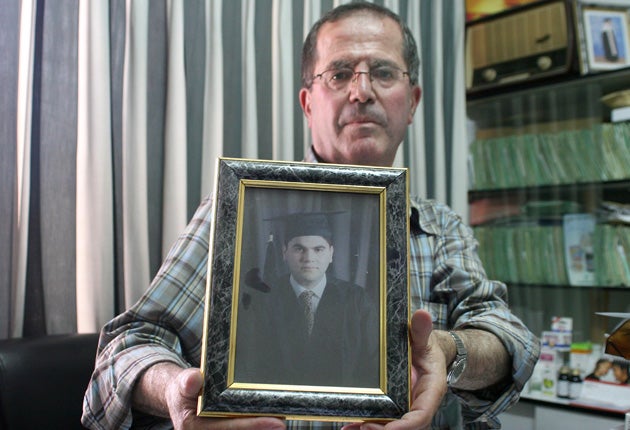
To say that Palestinian Murad Abu-Khalaf's roots are in Jerusalem is a serious understatement. His family lived in the Baka district of West Jerusalem until they were forced to leave in the war of 1948. They have since lived – and live – in the inner East Jerusalem district of Ras al-Amud. His family doctor father's clinic in East Jerusalem's main street of Salahadin is opposite three shops owned by each of his uncles. One of his brothers, also a doctor, works at one of Jerusalem's two main (Israeli) hospitals, the Shaare Zedek Medical Centre. The city is, in short, his home.
But when the next hearing of a case of fundamental importance to the future of this super-qualified young man takes place in the Jerusalem District Court today, he won't be there. At the age of 33, he has suddenly become, to use his own word, "stateless". His only "crime" has been to spend several years in the US doing an electrical engineering PhD, completing post-doctoral research funded by a division of the US Army, acquiring high-tech work experience with the sole purpose of bettering his future career prospects in the Holy Land, and being a little homesick.
Yet in 2008 the young Dr Abu-Khalaf became a statistic, one of a record 4,577 Palestinian residents to have their Israeli-conferred status as a resident of East Jerusalem revoked in that year and with it the right to live permanently or work in either Israel or the occupied Palestinian territories. It is this revocation which is being challenged in court on his behalf by the Israeli human rights lawyer Leah Tsemel today, and about which he says: "Losing my residency in my country is a source of pain to me... I feel I am being asked to choose between building my career and my homeland."
For Dr Abu-Khalaf has been told his only chance of having the revocation "reconsidered" – and it's far from certain this would succeed – is if he gives up his high-flying job as a software developer, leaves the US and stays here for at least two years – maybe "working in a café", as he puts it. So far Dr Abu- Khalaf has been told he will no longer qualify for an Israeli travel document. He would still be able to visit the country as a tourist, though not work or live in it, and then only if he obtains a US travel document.
If Dr Abu-Khalaf was an Israeli citizen he would be able to take up temporary residency for as long as he liked without losing his rights. But his case exemplifies the fragile status of more than 200,000 East Jerusalem Palestinians, who have Israeli conferred ID, and the right – denied to most West Bank Palestinians – to travel in Israel and access to certain benefits like Israeli health insurance, but not the security of full citizenship. According to Ir Amim, an Israeli NGO campaigning for an "equitable and stable" shared Jerusalem, the sharp increase in residency revocations are part of "an ongoing Israeli policy to reduce the Palestinian presence in East Jerusalem".
When Israel unilaterally annexed Arab East Jerusalem after the Six-Day War – an annexation whose legality has never been accepted by most of the international community, including Britain – it offered Palestinian residents citizenship. But the large majority refused, believing that to accept would reinforce Israel's claim on occupied East Jerusalem.
Part of Dr Abu-Khalaf's problem was that he applied successfully for a "green card" purely to maximise his job opportunities, but unwittingly reinforcing Israel's determination to cut off his Jerusalem residency. Dr Abu-Khalaf said when he was job-searching "many potential employers replied to me asking if I held a green card." They told him that "otherwise they could not employ me... I never knew it would cause all this fiasco."
His father, Samir Abu-Khalaf, wanted Murad to return and marry when he had laid the firm basis of a career. "It's injustice to deal with us in this way," he said. "It seems they want Palestinians only to be workers, cleaners." To his son it is illogical that in an age when academic and corporate life is increasingly multinational, he should be penalised for participating in it. The loss of residency "in my home country", he said, is "at best inconsiderate... extremely backward looking, and short-sighted."
An Interior Ministry spokeswoman said the law prescribed that East Jerusalem residents were treated like any other people with resident status, losing it if they are away for more seven years or take up residency elsewhere. Asked whether the position of native East Jerusalemites was not different from – say – those from France temporarily living and working in Israel she added: "If you want someone to justify the policy you are asking the wrong person. But it's the law."
Join our commenting forum
Join thought-provoking conversations, follow other Independent readers and see their replies
Comments