British soldiers back in Basra as hundreds of Iraqi troops desert
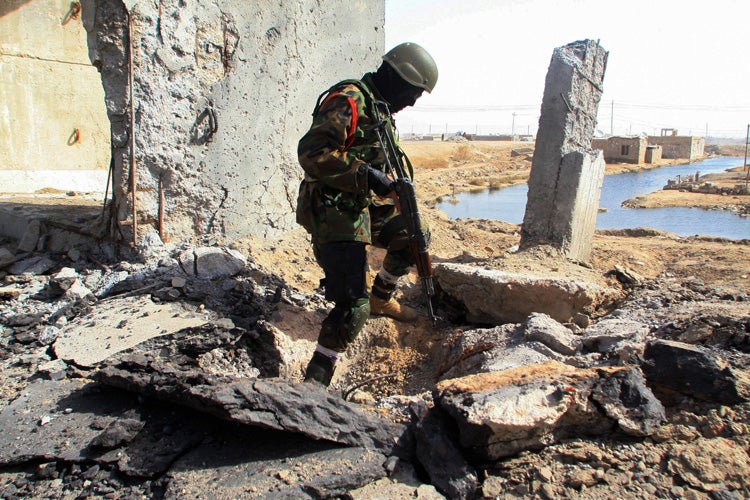
British troops have returned to Basra, in a major change of policy, six months after withdrawing from the city because their presence was said to be provoking violence from the militias.
Around 150 UK military personnel with Mastiff and Warrior armoured vehicles have been deployed in the past few days alongside Iraqi government forces in the aftermath of fierce fighting against the Mehdi Army. The Ministry of Defence described the move as "a logical extension of our training role that will provide additional mentoring and monitoring to the Iraqi army". However, British troops have until now been kept strictly outside the city limits, with officials saying that stepping back into the quagmire of Basra would set back the exit strategy from Iraq.
The Americans have been pressing for UK forces, who are now stationed at the airport, to be more actively involved in operations in the city. The British return to Basra comes days after the Government announced that Gordon Brown's pledge to reduce troop levels by 1,500 this spring could not be fulfilled because of security concerns. The development comes alongside the disclosure that up to 1,500 Iraqi soldiers refused to fight, or deserted in the operation against the radical cleric Moqtada al-Sadr's Shia militia. The numbers, according to Iraqi and American sources, included dozens of officers and at least two senior field commanders. Iraqi officials said that Colonel Rahim Jabbar and Lieutenant Colonel Shakir Khalaf, a brigade commander and his deputy, have been suspended for declining to fight.
In addition to those who refused to follow orders, about 100 members of the Iraqi security forces simply changed sides, to the Mehdi Army. The Iraqi Prime Minister, Nouri al-Maliki, has faced strong criticism over the operation, which he had led after flying from Baghdad to Basra and which ended, critics say, in a stalemate with an Iranian-brokered peace deal. The Independent revealed how Mr Maliki countermanded the plans of Lieutenant General Mohan al-Furayji, the Iraqi commander in charge of the south, who had wanted to wait until June to carry out the operation after a build-up of resources, economic projects on the ground and an offer of amnesty to the Shia fighters.
Gen Mohan had planned to target all militias rather than just the Mehdi Army. The offensive which took place concentrated, instead, on Mr al-Sadr's forces while the Badr Brigade, which has links to Mr Maliki's government, and the Fadilla group of Basra governor Mohammed Waeli were not targeted.
There are now signs of a future confrontation, with Mr Sadr asking a million Iraqis to march to the Shia holy city of Najaf to protest against the Americans. The radical cleric also accused the Iraqi government of breaking the agreement under which he withdrew his militia from the streets just over a week ago.
Any outbreak of violence is almost certain to spread to Basra and surrounding areas, and the British troops, in six Military Transition Teams, are likely to be involved while mentoring and directing their Iraqi charges. UK assistance to Iraqi forces so far has consisted of providing logistical support as well as artillery fire, from outside the city, on militia positions. American and British sources say that while some parts of Basra that had become "no-go" areas had been reclaimed by Iraqi troops, the Mehdi Army remains a potent military force. Some Shia soldiers and policemen who refused to take part in the mission against the Mehdi Army said they could not fight fellow Shias, while others feared that their families would be targeted if they took part. One officer, a lieutenant from Sadr City, said: "What they were asking us to do was to fire on our friends, members of our family. A lot of men were unhappy, we felt there should have been talks before the attack began."
Mr Maliki, however, said there would be firm action against those in the military who disobeyed orders. "Everyone who was not on the side of the security forces will go into the military courts", he said. "Joining the army or police is not a trip or a picnic. They swore on the Koran that they would not support their sect or their party, but they were lying."
Join our commenting forum
Join thought-provoking conversations, follow other Independent readers and see their replies
Comments