Iran warns West against 'past mistakes'
Iran said on Tuesday it would refuse to discuss a newly declared nuclear plant at forthcoming international talks and cautioned Western powers it could curb cooperation further if they repeated "past mistakes."
Washington has suggested possible new sanctions on banking and equipment for the oil and gas industry if Tehran fails to assuage Western fears it seeks nuclear weapons. U.S. officials believe sanctions could now have more effect, playing on leadership divisions evident since a disputed presidential poll.
Comments by Western and Iranian officials suggested little optimism ahead of the Thursday's rare meeting of the P5+1 -- permanent U.N. Security Council members China, Britain, France, the United Sates and Russia, as well as Germany -- with Iran.
"My expectation, or my hope, is that we will be able to get...the guarantees from Tehran, that the programme in which they are engaged in is a peaceful programme," EU foreign policy chief Javier Solana told reporters in Gothenburg, Sweden.
"I don't think it will be easy to ask for, but we will continue to engage."
Last week's news of a second uranium enrichment plant, under construction south of Tehran, added urgency to the Geneva talks. Uranium in less refined form can be used for power generation but in a more highly refined state is used in nuclear bombs.
Iranian state Press TV quoted Ali Akbar Salehi, head of Iran's Atomic Energy Organization, as saying late on Monday that Tehran was in constant contact with the U.N. International Atomic Energy Agency (IAEA).
"Yes, the inspectors will come and inspect," Salehi said.
"We are working out a timetable for the inspection and we will soon be writing a letter to them about the location of the facility and others."
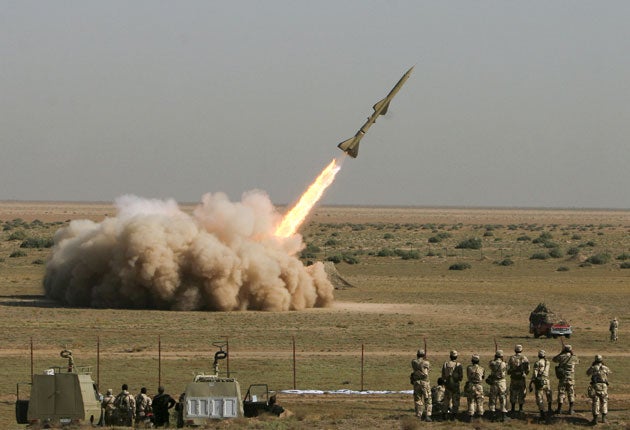
Iranian missile tests on Sunday and Monday added to tension with Western powers, who fear a hardline leadership in the Islamic Republic could ultimately use a threat of nuclear attack to pursue its political ends in the Middle East and beyond.
Iran denies any plans for nuclear weapons and portrays international pressure on it over its programme as a Western plot, with deep historic roots, to isolate and destabilize the country.
ELECTION PROTESTS
Iranian lawmakers signed a statement expressing support for negotiations based on proposals put forward by Iran, which do not mention Tehran's own nuclear programme.
"We remind the negotiating countries that this is an historic opportunity which can be a way out of the current deadlock and solve the problems," the 239 MPs said in a statement quoted by state broadcaster IRIB.
"We recommend the 5+1 to use this historic opportunity," it said. "If the group of 5+1 repeats past mistakes instead of using this opportunity, the Iranian parliament would take other decisions as it did in the past."
In 2006, the Iranian parliament passed a bill obliging the government to review the level of its cooperation with the U.N. nuclear watchdog after the United Nations approved sanctions on Tehran over its atomic programme.
The Geneva meeting is the first such encounter since the June re-election of President Mahmoud Ahmadinejad stirred mass protests in Tehran and signs of division in the leadership over accusations of vote fixing. It is also the first since President Barack Obama took office, seeking to revive contacts with Tehran.
Russia, though cautious on sanctions, has expressed concern about Iranian missile launches and about Tehran's nuclear programme. President Dmitry Medvedev has said "other means" could be employed if Geneva talks failed.
China urged all sides on Tuesday to try to ease mounting tensions over Iran's nuclear plans and focus on negotiations, as Western powers ramp up pressure on Tehran to come clean.
Join our commenting forum
Join thought-provoking conversations, follow other Independent readers and see their replies
Comments
Bookmark popover
Removed from bookmarks