Iraqi leaders attacked over spate of homophobic murders
Dozens of young men and boys killed by death squads in Baghdad
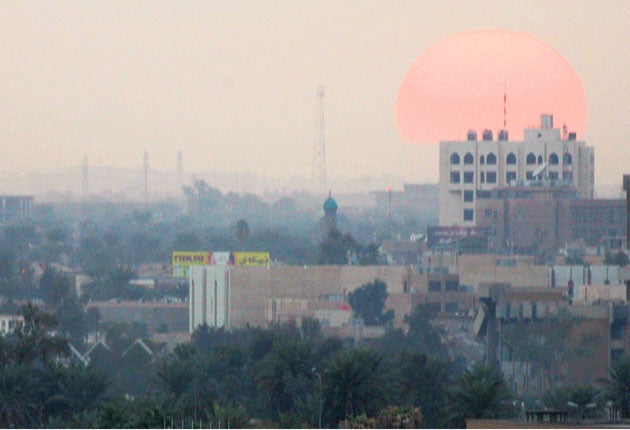
Iraqi leaders are accused of turning a blind eye to a spate of murders of homosexuals after 25 young men and boys were killed in recent weeks.
Gay groups claim the Iraqi government is giving tacit support to the death squads targeting young homosexuals who venture outdoors.
In an unusual move, Amnesty International will today write to the Iraqi President, Nouri al-Maliki, demanding "urgent and concerted action" by his government to stop the killings. Amnesty said the murders appear to have been carried out by militiamen and relatives of the victims, after being incited by religious leaders. Homosexuality has always been taboo in the country, but a surge of killings followed religious leaders' sermons condemning "deviancy".
The violence came after the improved security situation briefly encouraged some gay men to start meeting discreetly in public. This led to furious condemnation from clerics who have called for homosexuality – which can lead to a prison sentence of seven years – to be eradicated from Iraqi society.
Most of the killings have taken place in the Baghdad suburb of Sadr City, controlled by ultra-conservative Shi'ite militia. Murders have also been reported in Basra, Najaf and Karbala.
The bodies of four gay men, each bearing a sign with the Arabic word for "pervert" on their chests, were discovered in Sadr City three weeks ago. Following the discovery of another two corpses six days later, an unnamed official in the city told Reuters: "They were sexual deviants. Their tribes killed them to restore their family honour."
No arrests have been made. Ali Hili, the London spokesman for Iraqi LGBT (Lesbian, Gay, Bisexual, Transgender) said it had received reports of at least 63 killings in the last four months. He told The Independent: "Since mid-December we've been getting lots of reports about mass arrests and raids on houses, cafes, barbers shops." He claimed police and the Ministry of the Interior were behind some of the murders.
"Most of the people who are arrested are found dead, with signs of torture and burns. We believe a war has been launched by the Iraqi Government and its establishment against gay people."
Mr Hili said homosexuals in the country were forced to live in hiding for fear of abduction and death. Some had managed to escape to the west, with another 20 preparing to flee Iraq.
He said: "It's impossible to be gay and out ... It's the most difficult thing to be in Iraq. People visit each other's houses, they meet in places where it's safe ... for the most effeminate cases, we advise them not to go out at all."
Amnesty's letter to Mr Al-Maliki protests over his government's failure to condemn the killings publicly or to investigate the murders adequately. It also points to statements by police which appear to condone, or even encourage, the targeting of gay men, and calls for officers who incite homophobic attacks to be "held to account and either prosecuted or disciplined and removed from office".
Niall Couper, a spokesperson from Amnesty International, said: "The gay community in Iraq deserves protection and that means their leaders needs to stand up for them. Amnesty International is calling on Nouri al-Maliki to condemn all attacks on members of the gay community, publicly, unreservedly and in the strongest terms possible."
The letter reminds the Iraqi government that it is bound by international treaties stipulating "all human beings are equal in dignity and rights".
Hasan: Our optimism after the fall of Saddam has turned to despair
Comment
My boyfriend was killed by the police because of his sexuality. Policemen came to his house, 10 minutes away from mine, put him in a police car, arrested and killed him. They told his parents it was because of his job. He was working for Iraqi LGBT (Lesbian Gay Bisexual Transgender). For six months I didn't go out, I didn't do anything – just grieved for him. He was killed because of who he is.
After the fall of Saddam Hussein in 2003, we – the gay community – were very optimistic. We thought that we would live in a democracy and felt safe with US troops around. So we started to print leaflets that promoted freedom for gay and lesbian people.
But members of our group started being arrested for it. The leaflets weren't political, they were just spreading gay rights.
We have the right to exist and be who we are, but this offended the government. The leaflets had our email addresses and telephone numbers, so the government and the militias came to find out who was distributing the leaflets.
In 2004, the situation got much worse. People began to be killed in the streets, burnt alive and mutilated for being gay. We were a target for the government and militias. I fled to the UK; I feel very safe here but get emails every day about more killings in Iraq. And the problem is that the UK Government doesn't allow us to stay with refugee status even though Iraq is one of the most dangerous places on earth for homosexuals and a war is being waged by the parts of the Iraqi government on gay people. In the UK, I can't work or study because I've been denied the right to asylum, but my only option is to go back to Iraq, face my family and my community and be killed.
Four members of our organisation have already been deported. I am fighting for my right to stay by re-applying for asylum with the help of Iraqi LGBT. Otherwise, I have no future. On Thursday, we will protest outside the Home Office to highlight the homophobic killings. I wish someone would listen and help us; this has been going on in Iraq for years and no one cares.
Hasan, 26, is gay. He moved to the UK nine months ago from his home in Babel province, south of Baghdad, after receiving death threats. His boyfriend was killed because of his sexuality.
Join our commenting forum
Join thought-provoking conversations, follow other Independent readers and see their replies
Comments