Jews protect Palestinians in harvest of hate
Israelis cross religious divide to shelter olive farmers from settlers' attacks
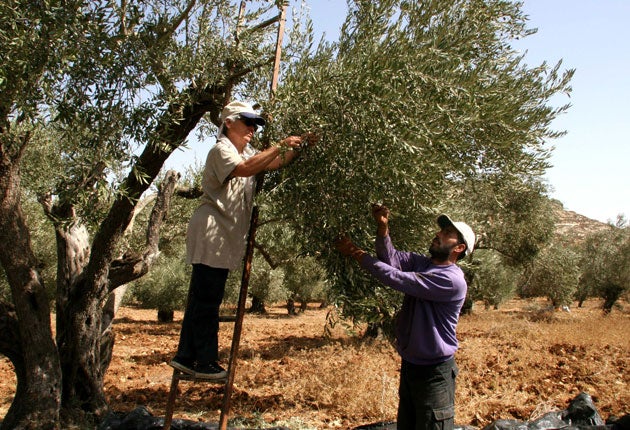
In the shade of the trees where they have been picking olives all morning, in this wadi, south-east of Nablus, a Palestinian farmer, Jamal Otman Koarik, and two of his daughters share a lunch of home-baked bread, zatar, oil, courgettes and salad with three visitors. It's a bucolic scene that could have happened any time in the past century. But what makes it notable in 2008 is that the guests who have been helping Mr Koarik pick the olives are Israeli Jews: a rabbi, an anthropologist and a youth worker, Hellela Siew.
Born in Tel Aviv, Ms Siew served in the army, took a university degree, then a teacher's diploma. Thirty-six years ago, she took the tough decision to emigrate to London, telling her parents: "I won't come back until there's peace." Ms Siew, who is now 64, remains an Israeli citizen but now lives with her British husband in Hebden Bridge. She has kept to her word, except that each autumn she comes back to stay in her hometown with her relatives and spends each day of the two-month harvest season picking olives on Palestinian farmland in the West Bank.
And Ms Siew does that for a purpose. Up on the ridge above us, you can see the red roofs of Itamar, a notably hard-line Jewish settlement, and she is here to help protect the Palestinian farmers from the threat of settler violence which has so often scarred the olive harvests.
Last year, she was in a group in the South Hebron Hills confronted by settlers who fired shots from a pistol and an M16 assault rifle, despite the presence of the army and police. "Then one of the soldiers said, 'Look, one of them is coming down with a jug of water for you'. The settler emptied the jug over me. It was full of human shit."
Mr Koarik, the olive farmer, says he has no difficulty distinguishing between the settlers who fired on and burnt out his tractor during the harvest six years ago and the Jews who come to help him. "I welcome them here like they are my family," the 40-year-old says. Looking up at the settlement, Ms Siew tries to explain, as a lifelong opponent of the occupation, why she comes each year. "When there was the big demonstration against the Iraq war in England people carried banners saying 'Not in my name'. I'm trying to do something against what is being done in my name."
Ms Siew was brought here by the Israeli group Rabbis for Human Rights, led by Rabbi Arik Ascherman who has led a never-ending campaign to persuade the army and police to enforce the Palestinian olive growers' right to farm their land despite the settlers' attempts to stop them. RHR has made a special effort this year to maximise its volunteer numbers because of the growing incidence of settler violence against Palestinians in the past few months.
Rabbi Ascherman says that apart from one notably ugly and violent confrontation with aggressive settlers in Hebron last week, the harvest has been relatively quiet. But it has only just begun. And while the army insists that it will "strive" to ensure as normal a harvest as possible, Rabbi Ascherman is considering returning to the Supreme Court because of restrictions he says the military is still imposing on the farmers even in areas opened up under a 2006 order made by the Court.
Asked why he and his volunteers make this often risky mission each year, the US-born rabbi says "if we really believe" the Biblical text that all human beings are made in God's image, "we have got to put our money where our mouth is and be here in an active way to defend human rights". And he also cites the "dialogue of the olive groves" in which Israelis and Palestinians who "have to live and die here together" have "no choice but to communicate" if they also work together. "I think this is not only the just and right and Jewish thing to do, but it's the self-interested thing to do. We are going to survive."
Join our commenting forum
Join thought-provoking conversations, follow other Independent readers and see their replies
Comments