Stalled assault on Basra exposes the Iraqi government's shaky authority
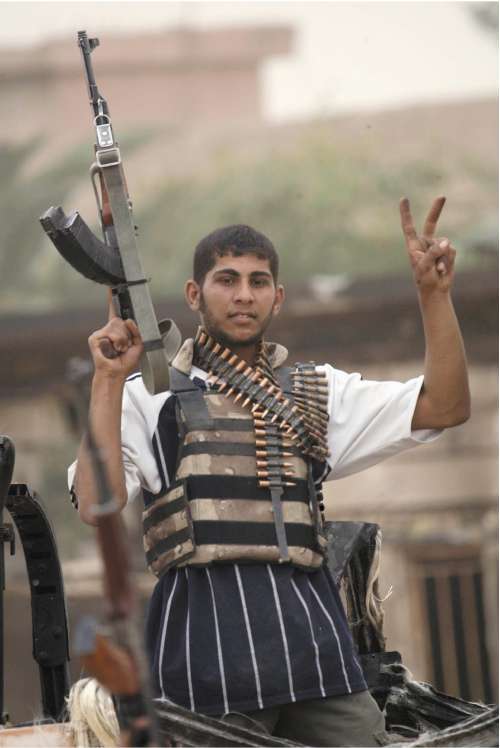
The Iraqi army's offensive against the Shia militia of the radical cleric Muqtada al-Sadr in Basra is failing to make significant headway despite a pledge by the Iraqi Prime Minister Nouri al-Maliki to fight "to the end".
Instead of being a show of strength, the government's stalled assault is demonstrating its shaky authority over much of Baghdad and southern Iraq. As the situation spins out of Mr Maliki's control, saboteurs blew up one of the two main oil export pipelines near Basra, cutting by a third crude exports from the oilfields around the city. The international price of oil jumped immediately by $1 a barrel before falling back.
In Baghdad, tens of thousands of supporters of Mr Sadr, whose base of support is the Shia poor, marched through the streets shouting slogans demanding that Mr Maliki's government be overthrown. "We demand the downfall of the Maliki government," said one of the marchers, Hussein Abu Ali. "It does not represent the people. It represents Bush and Cheney."
The main bastion of the Sadrist movement is impoverished Sadr City, which has a population of two million and is almost a twin city to Baghdad. The densely packed slum has been sealed off by US troops. "We are trapped in our homes with no water or electricity since yesterday," said a resident called Mohammed. "We can't bathe our children or wash our clothes."
The streets are controlled by Mehdi Army fighters, many of whom say they expect an all-out American attack, though this seems unlikely since the US says that an attack on the Shia militias is a wholly Iraqi affair.
In Basra, Iraqi forces have cordoned off seven districts but appear stalled in their effort to dislodge the Mehdi Army fighters. Masked gunmen in some cases have captured or seized abandoned Iraqi army vehicles and painted pro-Sadrist slogans on their armour.
A co-ordinated mortar bombardment struck the main police base in the city beside the Shatt al-Arab waterway and there was heavy shooting in the main commercial street of Iraq's southern capital. An Interior Ministry source said that 51 people had been killed and more than 200 wounded in three days of fighting in Basra. There was an attempt to assassinate Basra's police chief in which three of his bodyguards were killed by a bomb.
Mr Maliki's surprise offensive against the Mehdi Army is likely to have repercussions far beyond Iraq. The Americans must have agreed to the attack though they had previously praised the six-month ceasefire declared by Mr Sadr on 29 August and renewed in February as being one of the main reasons why violence had fallen in Iraq. Although Mr Sadr has said the truce is continuing it is ceasing to have much meaning.
President George Bush praised Mr Maliki yesterday saying he faces a "tough battle against militia fighters and criminals". He said that the Iraqi Prime Minister had taken a bold decision "in going after the illegal groups in Basra".
But the rapid increase in violence may puncture optimism in the US over the "success" of the surge in leading to a turning point in the five-year-long war.
The Green Zone, the heavily fortified centre of American power in Iraq, was wreathed in smoke yesterday as it was struck by rockets and mortars fired from Shia neighbourhoods. In a further blow to the belief that the surge has restored law and order, one of the two Iraqi spokesmen for the Baghdad security plan, which is at the heart of the surge strategy, was kidnapped and three of his bodyguards killed before his house was set on fire. The victim was Tahseen Sheikhly, a Sunni who often appeared with American officials to proclaim the success of the surge.
Clashes are now taking place across Iraq and most of the Shia districts in Iraq. In the middle of last year a Mehdi Army commander said that his militia controlled 80 per cent of Shia Baghdad and 50 per cent of the capital as a whole. This is probably only a slight exaggeration. There has also been heavy fighting in Kut on the Tigris, where 44 have been killed and 75 wounded, and in Hilla on the Euphrates where 60 people died. In past months the Sadrists have been locked in a struggle for Diwaniya, also on the Euphrates south of Baghdad, where they have been fighting police units controlled by Badr, the militia of the other great Shia party, the Islamic Supreme Council of Iraq (ISCI).
When he first came to power, Mr Maliki balanced between ISCI and the Sadrists but has steadily become closer to the first party and has shown growing hostility to Mr Sadr. The last great battle between the Sadrists and the Iraqi government backed by the Americans was in Najaf in 2004 and was ended by the intervention of Grand Ayatollah Ali al-Sistani who wanted the Sadrists humbled but not crushed. He also did not want to see the Shia community divided into warring factions. It is possible that the Grand Ayatollah may seek to mediate again but Mr Maliki may find it difficult to compromise after his claim that he will win control of Basra.
The government has about 15,000 soldiers and the same number of police in Basra but this is not a great number in a city of two million. The police are closely linked to the militias and are unlikely to prove a resolute ally against the Mehdi Army.
Join our commenting forum
Join thought-provoking conversations, follow other Independent readers and see their replies
Comments
Bookmark popover
Removed from bookmarks