Bush steps back from Axis of Evil to reward North Korea
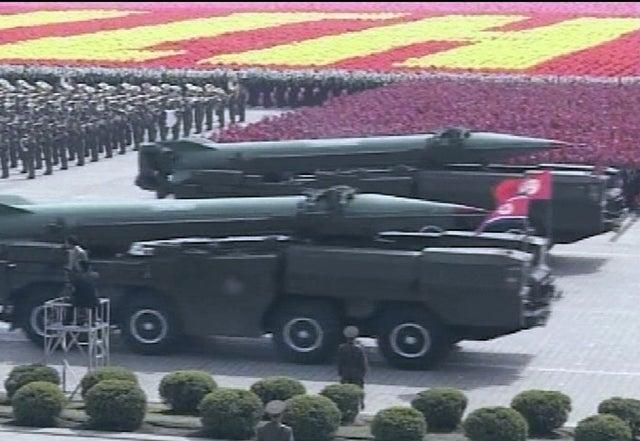
In the twilight of his troubled presidency, George Bush has brought the isolated state of North Korea in from the cold with a promise to remove the country he once truculently described as part of the "Axis of Evil" from a terror blacklist, opening the way for eventual diplomatic relations.
It was an abrupt reversal for Mr Bush, who once said he "loathed" North Korea's leader, Kim Jong-il, whom he described as a "pygmy". Gone was the President's earlier fighting talk of forcing Pyongyang to the negotiating table. Instead, he confirmed he would remove it from America's list of states that sponsor terrorism, and lift sanctions. North Korea was added to the list in 1987 after it destroyed a South Korean airliner, killing all 115 aboard.
The deal calls for Pyongyang to dismantle its nuclear weapons programme in return for food aid and other assistance desperately needed by the impoverished country. And in a sign of its good faith, to be carried live on television, it will today demolish the cooling tower of the already disabled Yongbyon nuclear reactor, 60 miles from the capital, Pyongyang. Diplomats and TV networks from the US, China, Japan, South Korea and Russia will witness the largely symbolic act.
"This can be a moment of opportunity for North Korea," said President Bush, "If it continues to make the right choices it can repair its relationship with the international community."
Yesterday's breakthrough marks a setback for the President's hard-line Republican allies, notably Vice-President Dick Cheney. It follows months of infighting in Washington aimed at sabotaging the diplomatic breakthrough and represents a new realism about the limits of the President's power as he prepares to leave the international stage.
His announcement followed North Korea's long-delayed declaration of the details of its secret nuclear programme, its ambassador to Beijing, Choe Jin Su, handing the 60-page declaration to Wu Dawei, China's lead negotiator in the six-nation talks. Great importance was being attached to information about plutonium from the North Korean plant at Yongbyon. The regime is believed to have made enough plutonium for six bombs.
"I do think it's important to note that if we can verifiably determine the amount of plutonium that has been made; we then have an upper hand in understanding what may have happened in terms of weaponisation," the US Secretary of State, Condoleezza Rice said, in Kyoto, Japan, for a meeting of the G8.
Officials said the North Korean document fell far short of the complete accounting of its nuclear activities and nuclear proliferation efforts around the world that Washington first demanded. Stephen J Hadley, the US national security adviser, expressed confidence that North Korea would fill in gaps in its declaration on alleged uranium enrichment and nuclear proliferation.
Mr Bush said the US would respond to North Korea, "action for action", and lift trade restrictions. In 45 days, it would end its listing of North Korea as a state sponsor of terrorism, addressing a key North Korean demand. "Today we have taken a step toward a nuclear-free Korean peninsula," he said. Lifting sanctions on North Korea under the Trading with the Enemy Act, (which dates from the First World War) will leave Cuba as the only nation subject to those sanctions.
But Mr Bush also warned that if North Korea failed to continue down the disarmament path it would face "consequences". "We remain deeply concerned about North Korea's human rights abuses, uranium enrichment activities, nuclear testing and proliferation, ballistic missile programmes and the threat it continues to pose to South Korea and its neighbours," he said.
North Korea is following the lead of Muammar Gaddafi's Libya two years ago when that country was also removed from the list of state sponsors of terrorism after being forced to reveal its nuclear ambitions.
The breakthrough became possible only when China – host of the six-nation talks on the North's nuclear programme – suddenly took a hard line towards its former client after North Korea exploded its first nuclear device in October 2006.
Axis of Evil: the story so far
IRAQ
Accused by Bush administration of hiding stockpiles of chemical and biological weapons and long-range ballistic missiles. Also accused of clandestine nuclear weapons programme despite UN sanctions. Second Gulf War in 2003 overthrew Saddam Hussein and installed US-led occupation; 150,000 US troops still in Iraq. No weapons of mass destruction were found.
NORTH KOREA
North Korea boasted that it had nuclear weapons after breaking out of non-proliferation treaty in 2003. Bush administration also accuses Pyongyang of having a secret uranium enrichment programme, and of spreading nuclear technology to Pakistan and Syria. Negotiations in six-party talks, involving North Korea, its neighbours and the US, produced disarmament deal. North Korea agreed in October last year to fully account for its nuclear programme in return for aid and economic benefits.
IRAN
Accused by Bush administration of working on nuclear weapons under cover of a civil energy programme, which Iran denies. UN sanctions have failed to halt Iran's uranium enrichment. Diplomacy involving three EU states plus US, China and Russia trying to bring Iran back to negotiating table. But Israel threatens unilateral air strikes and US says all options are open.
Join our commenting forum
Join thought-provoking conversations, follow other Independent readers and see their replies
Comments