Bush to G8: 'Goodbye from the world's biggest polluter'
After rejecting global climate-change targets, George Bush's parting shot to the G8 summit
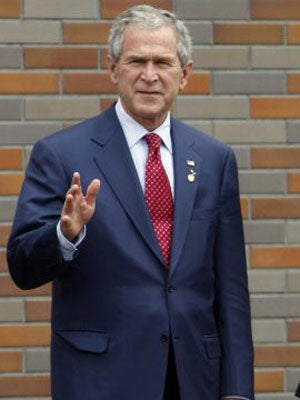
President George Bush signed off with a defiant farewell over his refusal to accept global climate change targets at his last G8 summit.
As he prepared to fly out from Japan, he told his fellow leaders: "Goodbye from the world's biggest polluter."
President Bush made the private joke in the summit's closing session, senior sources said yesterday. His remarks were taken as a two-fingered salute from the President from Texas who is wedded to the oil industry. He had given some ground at the summit by saying he would "seriously consider" a 50 per cent cut in carbon emissions by 2050.
But green groups had protested that the meeting was a missed opportunity to secure the radical reductions in carbon emissions that were needed to reduce global warming. China and India, who were among the emerging economies invited to the summit, refused to sign up to binding agreements without firmer commitments from the US and the other industrialised nations to cut their CO2 emissions.
However, there was progress towards a deal on the world trade talks in Geneva. On the final day of their three-day summit, the G8 countries agreed to instruct their negotiators to make every effort to secure a deal when talks resume on 21 July.
Although a similar call by the G8 summit two years ago failed to break the deadlock in the seven-year trade talks, officials are more confident that this month's negotiations will be successful. They say there is a growing recognition that it will be much harder to secure a deal after a new US President takes office next January because of pressures to protect American farmers during this year's election campaign – and that a new global trade framework may never be struck.
Mr Bush gave his strongest support for an immediate agreement to his fellow G8 leaders. "We were looking for a signal from Bush and we got one," one British source said. "It's not in the bag but there is now a real push for a deal."
The talks will involve a complicated set of trade-offs between Europe, America, Latin America and India over farming and industrial subsidies and tariffs.
Brazil, a possible stumbling block to a deal, raised the prospects of a breakthrough after its President, Luiz Inacio Lula da Silva, met Gordon Brown yesterday on the margins of the summit. They issued a joint statement saying that the "window of opportunity" for an agreement is closing. They added: "The time for technical negotiations is drawing to an end. The key decisions now are political ones. We must act decisively now. If we don't, we will be failing the world's poor and destroying the best basis for continued economic growth in the future. The cost of failure is simply too great."
Brazil's willingness to ease restrictions on imports of goods such as cars and chemicals from richer nations could hold the key to a successful deal if European nations accept cuts in support for their farmers in return. Mr Brown told a press conference that a trade agreement could save the average British household £200 a year by bringing down food prices and would also bring greater benefits to the world's poorest countries, notably in Africa.
He suggested that another potential obstacle to a deal – Nicolas Sarkozy – appeared to have been removed during the G8 meeting, when the French President rejected protectionist moves despite his criticism of Peter Mandelson, the EU's trade commissioner and negotiator in the talks.
The Prime Minister described the Geneva talks as "make or break", adding: "If we fail this month to secure a trade agreement, it will not be easy to resume negotiations... We are at one minute to midnight."
The final day of the summit saw tensions over climate change between the G8 and eight other major economies invited to Japan to discuss a new global agreement. The other eight nations, including China and India, failed to sign up to the G8's pledge to cut its carbon emissions by at least 50 per cent by 2050.
Join our commenting forum
Join thought-provoking conversations, follow other Independent readers and see their replies
Comments
Bookmark popover
Removed from bookmarks