David Cameron dismisses aid criticism
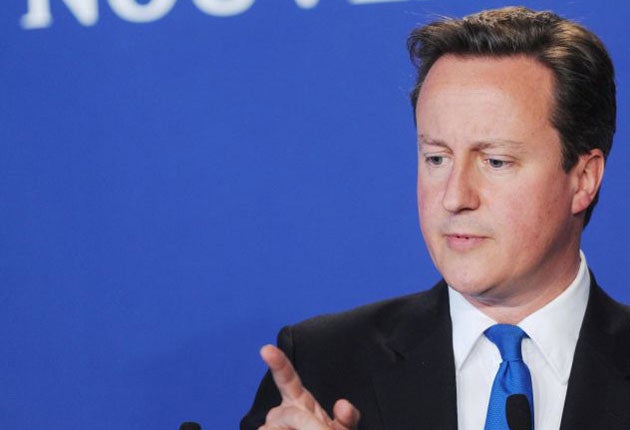
David Cameron today dismissed criticism over rises in aid spending while Britain endures austerity measures.
The Prime Minister insisted he was "proud" that the UK would not "balance its books on the back of the poorest", and warned that failing to support countries at the forefront of the Arab Spring would give "oxygen" to extremists.
At a press conference at the end of the G8 summit in France, Mr Cameron also made clear his frustration that other wealthy nations were not fulfilling pledges on aid.
"Britain will keep its promises and I was tough in urging my counterparts to do the same," he said. "The reality is that as a whole the G8 has not."
He added: "Of course it is a tough argument to make when we are making tough choices at home, but I think it's the right thing."
Mr Cameron said he remembered watching Band Aid and Live Aid on television, and the impact those events had.
Referring to the G8 pledge of spending 0.7% of GDP on aid by 2015, Mr Cameron said: "These things matter and if we are going to try to get across to the poorest people in the world that we care... then we have got to keep our promises."
Mr Cameron said: "The big test for the G8 was whether we could respond to the momentous events that we have seen in North Africa and the Middle East. I would argue that we have responded."
He went on: "There are those that argue that these North African countries, they are not the poorest in the world, and we should concentrate either on our own affairs, or indeed elsewhere.
"I reject that approach. We should be in no doubt that if we get this wrong, if we fail to support these countries, we risk giving oxygen to the extremists who prey on the frustrations and aspirations of young people.
"You would see, I believe, if we fail, more terrorism, more immigration and more instability coming from Europe's southern border."
The two-day summit in Deauville, France, was dominated by the response to the Arab Spring and the situation in Libya.
Mr Cameron previously warned that failing to help countries implementing democratic reforms could create "poisonous extremism" and a wave of immigration.
He has announced that the UK is allocating £110 million over four years to strengthen justice systems, cut corruption, encourage political parties, and broaden economic opportunities.
Aides claimed that, relative to the UK's economy, the commitment was in line with a one billion-dollar debt relief package unveiled by America.
After the prime ministers of Egypt and Tunisia briefed G8 leaders this morning, the final declaration from the summit included a suggestion that multilateral development banks could provide the nations with more than 20 billion US dollars over the next two years.
G8 countries "are already in a position to mobilise substantial bilateral support to scale-up this effort", it said.
Despite tensions with Russia over the Nato military campaign in Libya, the document delivered a strong statement that Muammar Gaddafi "has no future in a free, democratic Libya", adding: "He must go."
US president Barack Obama also reiterated his determination to "finish the job" in Libya, and stressed that meant ejecting Gaddafi from power.
But the declaration language on Syria appeared to have been toned down, with Moscow resisting demands for action over the regime's brutal repression of protests.
Earlier drafts explicitly indicated that a UN Security Council resolution could be sought if the regime did not end human rights violations.
The final version merely stated that the G8 would "consider further measures".
The declaration claimed that the nations were "strongly committed" to meeting pledges on aid levels, and being "transparent" about how much they were giving.
But Mr Cameron is said to have pointed out in a private session earlier that the UK was the only country firmly on track to meet a target for giving 0.7% of GDP by 2015.
Mr Cameron delivered an impassioned defence of Britain's aid spending.
"I cannot guarantee the Italians or the Germans or whoever else will meet the promises that they make," he said.
"But I think what people think about these summits is that frankly a bunch of people in suits get together, make some promises, particularly to the world's poorest, and then go in and have a good lunch and forget about the promises.
"I am not going to do that. We made a promise."
He went on: "I remember where I was during Live Aid in 1985.
"If we are going to try to get across to the poorest people in the world that we care about their plight and we want them to join one world with the rest of us, we have got to make promises and keep promises.
"I don't actually think that - of course, it's difficult when we're making difficult decisions at home - but I don't think 0.7% of our gross national income, I don't think that is too high a price to pay for trying to save lives in terms of the poorest people in the poorest countries."
Mr Cameron said he knew the argument over aid was "controversial", but he insisted it could be won.
"If you are not convinced that it is right to vaccinate children against diarrhoea, to try to stop preventable diseases, to try to save mothers in childbirth - if that doesn't do it for you, what about this argument?
"That these countries that are broken, like Somalia, like Afghanistan, if we don't invest with them before they get broken, then we end up with the problems.
"We end up paying the price of the terrorism, the crime, the mass migration and the environmental devastation.
"If we spent a fraction of what we are spending now in Afghanistan on military equipment into the country's aid and development when there was still a chance perhaps of finding its own future, wouldn't that have been a better decision?"
He went on: "There is a moral imperative. We care about people in the poorest parts of the world and want to help them.
"But also we are looking after our own self-interest by making investments that will pay off in the future."
He also made an appeal to the pride of Britons.
"I think most people in this country want Britain to stand for something in the world and be something in the world," he said.
"What enables us to do that is not just the incredible military hardware that we have. Not just the incredible bravery of our armed services personnel, not just the brilliance of our Foreign Office and our civil service and our soft power.
"It is also actually the fact that when it comes to the big crises, whether hurricanes or earthquakes or tsunamis or pandemics, that Britain is there with a substantial aid budget to meet and match those problems and keep our promises at the same time."
Aides said Mr Cameron had raised the issue of aid targets being missed twice today.
He watched Live Aid on his 18th birthday.
Join our commenting forum
Join thought-provoking conversations, follow other Independent readers and see their replies
Comments
Bookmark popover
Removed from bookmarks