Human rights groups ask Wikileaks to censor files
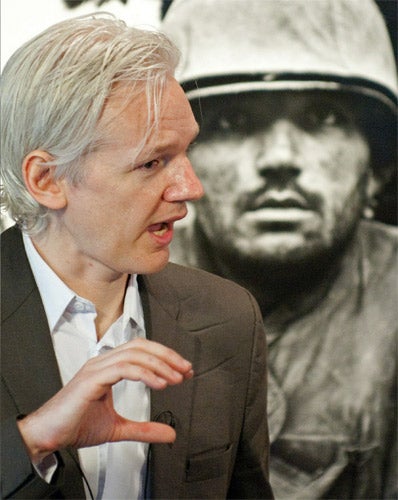
A coalition of human rights groups has called on Wikileaks to remove details of civilian Afghans who were named when the website released more than 77,000 classified US Army documents on the war in Afghanistan.
In a series of emails sent to the website's founder, Julian Assange, the Afghan Independent Human Rights Commission (AIHRC), Amnesty International and three other prominent rights groups called on the whistleblower website to expunge the names of Afghans mentioned in the war logs because of fears that they could be targeted by insurgents.
Nader Nadery, from the AIHRC, said he and the four other rights groups in Kabul had written emails to Mr Assange but had yet to hear back from the Wikileaks founder.
"There was no consideration about civilian lives," he said, adding that Afghan civilians seen to be collaborating with Nato forces are often assassinated by insurgents. "We said that in the future the names should be redacted and the ones that are already there need to be taken down. Even though it's late, it is still worth doing."
The emails, which were also sent on behalf of Campaign for Innocent Victims in Conflict, the Open Society Institute and International Crisis Group, are the first clear indication that some human rights activists are at odds with the way the Afghan logs were published.
Wikileaks, which has been behind some of the most impressive scoops of recent years, gave three newspapers early access to the classified documents which then published their findings simultaneously last month.
Until now, criticism of the decision to leak the logs – or the way they were published – has largely been consigned to those governments involved in the war in Afghanistan and media commentators.
The US government has gone on the offensive against Wikileaks with reports surfacing in the US last night that defence department officials are considering asking Britain, Germany and Australia to bring criminal charges against Mr Assange.
The website may also come under pressure from Sweden, where Wikileaks operates a number of critical internet servers. The country has some of the best media protection laws in Europe and has been a safe-haven for Mr Assange's site, but one Swedish official quoted in the Sydsvenskan newspaper said that Wikileaks was vulnerable because it has no license to publish material in Sweden.
Wikileaks itself has yet to issue any formal response to five human rights groups, but in a series of Twitter updates – Mr Assange's most common form of communication to the public – the website's founder appears to be at odds with the stance of the groups. In his latest tweet, posted yesterday afternoon, Mr Assange said: "Don't be fooled on the "human rights groups". No formal statement. US led."
The US government has demanded that Wikileaks take down the war logs, something that the website has refused to do arguing that the previously unseen documents provide a vital insight into the way the war in Afghanistan has been conducted. Mr Assange has, however, called on human rights groups, Nato and the US government to help it trawl the logs and help redact any names that may be sensitive.
A Wikileaks spokesman, who uses the name Daniel Schmitt in order to protect his identity, told The Associated Press over the weekend: "That request remains open. However, the Pentagon has stated that it is not interested in 'harm minimisation' and has not contacted us, directly, or indirectly to discuss this offer."
The newspapers involved in the initial analysis of the war logs have also felt compelled to defend their decision to publish in recent days.
Eric Schmidt, a reporter at The New York Times who worked on the documents, said: "On this story, as with all sensitive military/ intelligence/ national security articles, we took great care to mitigate any threat to US service members, Afghan security forces and informants working with the US in Afghanistan; as well as US national security, and sensitive sources and methods. We redacted the names and other identifying details from the incident reports we published in the Times."
Join our commenting forum
Join thought-provoking conversations, follow other Independent readers and see their replies
Comments