The real hunger games: How banks gamble on food prices – and the poor lose out
In the last decade, financiers have speculated billions of pounds in food, helping to make prices dearer and more volatile
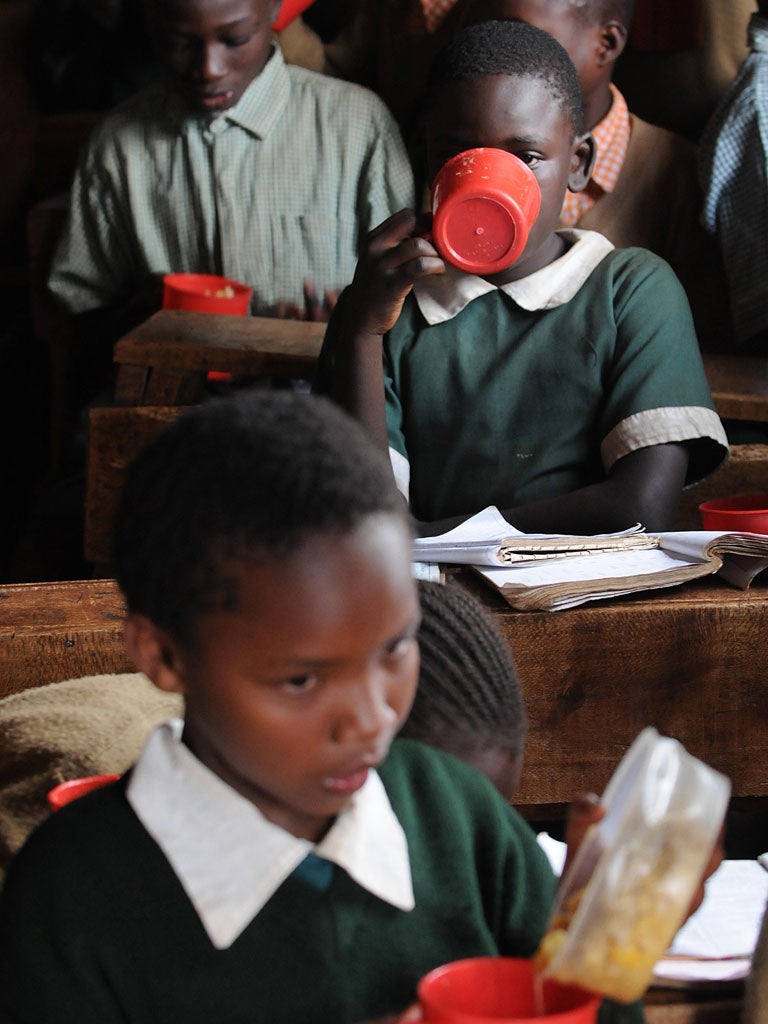
Speculation by large investment banks is driving up food prices for the world's poorest people, tipping millions into hunger and poverty. Investment in food commodities by banks and hedge funds has risen from $65bn to $126bn (£41bn to £79bn) in the past five years, helping to push prices to 30-year highs and causing sharp price fluctuations that have little to do with the actual supply of food, says the United Nations' leading expert on food.
Hedge funds, pension funds and investment banks such as Goldman Sachs, Morgan Stanley and Barclays Capital now dominate the food commodities markets, dwarfing the amount traded by actual food producers and buyers. Purely financial players, for example, account for 61 per cent of investment on the wheat futures market, according to the World Development Movement report Broken Markets.
Speculative investment in agricultural commodities in 2011 was 20 times the amount spent by all countries on agricultural aid. Goldman Sachs, the largest player in the agricultural commodities market, earned £600m from food speculation in 2009, and Barclays Capital, the world's third-largest player and largest British bank in this market, earned up to £340m in 2010, according to the report. Goldman Sachs and Barclays Capital declined to comment.
Before it was deregulated in the year 2000, the agricultural commodities futures market was used mainly by farmers and food buyers seeking to insure themselves against changes in the prices of products such as wheat, maize and sugar. When George W Bush passed the Commodities Futures Modernization Act 12 years ago, there was an influx, led by Goldman Sachs, of purely financial players who had no interest in ever buying food, but who sought solely to profit from changes in food prices, says Olivier De Schutter, the UN special rapporteur on the right to food.
He added: "What we are seeing now is that these financial markets have developed massively with the arrival of these new financial investors, who are purely interested in the short-term monetary gain and are not really interested in the physical thing – they never actually buy the ton of wheat or maize; they only buy a promise to buy or to sell. The result of this financialisation of the commodities market is that the prices of the products respond increasingly to a purely speculative logic. This explains why in very short periods of time we see prices spiking or bubbles exploding, because prices are less and less determined by the real match between supply and demand."
Food prices reached a 30-year high in 2008, sparking food riots from Mexico to Bangladesh. Prices rose even higher in September 2010 and, although they have dipped since, they remain above the 2008 crisis level. This has resulted in a "silent tsunami of hunger", according to the UN World Food Programme. High prices for basic foodstuffs, combined with the global economic slump, have pushed 115 million more people into hunger and poverty since 2008, bringing the total number of hungry people in the world today to 925 million.
High prices are "an absolute catastrophe" for poor consumers, says De Schutter, because they typically spend more than 60 per cent of their household budget on food.
It is not just the places normally associated with food crises that are feeling the effect of the speculators. According to Oxfam, in Armenia, between September 2010 and September 2011, the prices of basic foodstuffs rose as follows: sugar 46 per cent; eggs 49 per cent; cheese 38 per cent; pork 34 per cent; milk powder 30 per cent; and butter 26 per cent. The result was that all income groups in Armenia reduced food consumption: the poor by 14 per cent, and even middle-income groups by 5 per cent.
Karen Badishyan, from Gyumri, is an economist with a doctorate, and is married with two children. He said: "Seventy per cent of our household budget is spent on food and so we need to save more and more and we really lack money. We've borrowed a lot of money and we have no idea how we will pay it back. In Armenia, even if you have a job and work hard, your salary is too low to give your family a decent standard of living."
Violet Waithira is a Kenyan, unemployed, single mother looking after her eight-year-old daughter and 83-year-old father. When prices rose sharply in Kenya recently, the family were forced to drastically cut back: "We stopped eating lunch, and saved the little we had to eat for supper. We drank tea without sugar and sometimes we also missed breakfast. I had to travel so much to wash clothes to get money for food, but sometimes I was so weak I fell down. For supper, we had one or two cups of flour mixed with water and salt. Our life was so hard."
There have been many reasons for high food prices in Kenya, including post-election violence and drought, says Njoki Njoroge Njehu of the Daughters of Mumbi Global Resource Centre, but there were also global factors: "Corporations were speculating on food and made a lot of money. But it was done at the expense of ordinary people in Kenya, in Mexico, in Argentina and other places where there were food riots."
Experts disagree on whether speculation actually causes price rises or simply aggravates other factors such as climate shocks, the rise in world demand for food and the growth of biofuels. Jayati Ghosh, professor of economics at Jawaharlal Nehru University in New Delhi, was one of 450 economists who last year called on the G20 to regulate the commodities market. She says that, although factors such as biofuels are important, speculation is now another "driving force" behind price hikes. She cites the example of world wheat prices doubling between June and December 2010, even though there was no fall in the global supply of wheat.
David Hallam of the UN's Food and Agriculture Organization says that while he does not believe speculation is the cause of price rises, it does exacerbate swings in prices and should be regulated. "If you have something which is amplifying price movements, then that is a terribly important issue that needs to be addressed."
The Obama administration introduced regulation of commodity trading as part of the Dodd-Frank Act, passed in 2010. However, legal challenges by Wall Street mean the regulations have not yet come into force. The G20 summit last June made a commitment to introduce so-called "position limits" which cap the number of agricultural commodities contracts any one investor can buy, but as yet no country, apart from the United States, has adopted these. The one measure taken by the G20 is the creation of the Agricultural Markets Information System, which pools data about crop levels or bad harvests from around the world to try to prevent misinformation or rumours sparking panics on the markets.
The European Union is currently discussing regulation of the commodities market. Christine Haigh, a campaigner from the World Development Movement, says the EU's proposals "need more teeth", but there is "still all to play for". The WDM is particularly concerned that Britain is advocating a weaker form of regulation known as "position management", rather than strict caps. "The food-price spikes we have seen over the past few years have had a devastating impact on the world's poorest people and it is morally abhorrent that banks and other financial institutions are contributing to that. It is vital that we get proper regulation of these markets," she says.
Making the market more transparent is also essential, says the UN's food rapporteur. At present, 82 per cent of trading in the European commodities market is "over-the-counter" – private deals made between two parties that are not registered on any exchange. This makes it impossible to see what's driving the price changes.
But introducing changes will not be easy, says De Schutter. "There is huge lobbying going on. These issues are so technical; lawmakers are literally running out of experts. They can only call on experts from the financial world. Very few legislators are well-equipped to deal with these issues, which sometimes may be too technical for them to make relevant comments. It's really a problem of democracy. We are heading for a difficult situation: climate shocks, droughts, floods are increasingly frequent and extreme. The predictability of crop production is more difficult, so speculation is more attractive than ever, frankly. It is all the more important then, given this context of uncertainty, to regulate speculation to prevent things becoming even worse."
Join our commenting forum
Join thought-provoking conversations, follow other Independent readers and see their replies
Comments