Adrian Hamilton: Can we halt our slide to the margins?
Economically hamstrung, shorn of confidence, and increasingly irrelevant on the world stage. We face hard choices if we are to recover our status
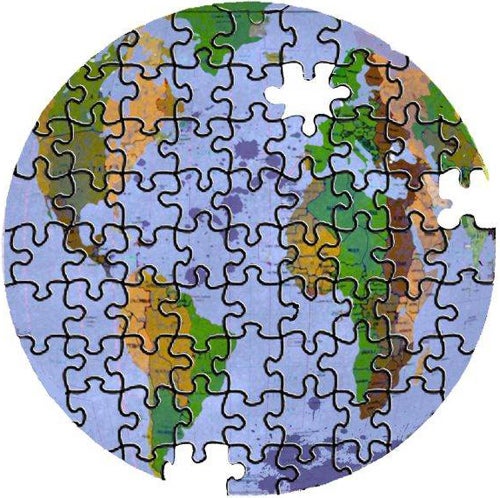
Election periods are never the best time to discuss foreign policy, or defence. Where domestic political issues are concerned, anything goes. You can declare British society broken, the population illiterate, the health service a disaster and all is fair game. When it comes to abroad, however, every party cleaves to the clichés – that our troops are the best in the world, that the country must seek influence in the world and, in that ghastly phrase of Lord Hurd, "punch above our weight" in the international ring.
Really? If there was ever a moment when it was right to step back and take a sober look at Britain's place in the world it must be now. Most of the assumptions that have kept us assured over the decades – the belief in empire, the value of an independent nuclear deterrent, the boast that we were "the workshop of the world", even our international standing as the "mother of parliaments" and the home of liberal democracy – have long been challenged if not undermined.
But it is the collapse of the assumptions that have kept us going through the new century that should cause the greatest rethink. The "special relationship" with America has been tested to breaking point by the invasion of Iraq and the election of a new President who clearly does not believe that either Britain is special or that it is the US's most important ally in all things, at all times. A decade of continuous and unparalleled growth has come to a shuddering halt and with it the confidence that we had a unique command of finance.
Even our claim to a special global reach from our imperial past has been cast into the shade by a growth of China and India and Brazil that owes little to our assistance or involvement. Only Iran seems to treat Britain as worthy of special respect, and that is to use us as a whipping boy for its nationalistic fervour and internal suppression.
That is not to denigrate the country, still the fifth or sixth-largest economy in the world (depending on how far you take into account the fall in sterling), which remains the mother country of the world's lingua franca and has more investment, and more citizens, abroad than any other nation on the planet.
Decline is a relative terms in world affairs. While others may grow more powerful that does not necessarily mean that older powers decline in prosperity let alone wellbeing. But it is to say that, as a country, we cannot just carry on under the illusion of international influence and a particular US relationship without taking stock of just how far these have been shaken by the events of the last decade.
The problem, as ever, is the assumption of global power. Just as class is the bugbear of discussion of domestic policy, so the residue of empire dogs debate about foreign policy. Our general view, and foreign policy stance, is that we have been, and remain, a major player across the full range of world affairs, one of a handful of nuclear powers, a member of the UN Security Council, a moving force in the IMF, World Bank, G8, G20 and the Commonwealth. Yet there is no evidence that the public at large are particularly enamoured with the idea of imperial power or even, unlike the US, that they have any special assumptions about Britain's role in the world.
Historians, indeed, remain pretty divided on whether the empire as such ever meant that much to the ordinary Briton. The upper middle-classes certainly looked to it for position and occasionally wealth. Various parts of Britain provided troops. But the broad mass of the country had little knowledge or interest in the affairs of empire, more of trade. Certainly my father's family, engineers from the north, travelled widely in countries from Latin America to China, and brought back trinkets from them all. But empire as such was never much discussed. The world painted red was a matter of industrial dominance not military might.
Whatever the social attitudes, the Second World War effectively brought an end to them. Lord Mountbatten justified the partition of India, and the bloodbath that ensued, on the grounds that he could not ask conscripted troops to risk their lives in a foreign cause when the big war was over. It was a paltry excuse for a shameful act of "cutting and running". In fact the British conscripts were largely used to protect British civilians who were never actually threatened by the ethnic conflict which exploded in the Indian sub-continent.
But he was right in a broader sense. The soldiers returning from five years of World War were in no mood to commit themselves to preserving colonial ventures. Winston Churchill may have hankered after maintaining the empire, the public did not. Instead it emerged from the Second World War with a series of instinctive presumptions – that America was our natural friend, that the Continent was not to be trusted, that the Soviet Union was not so much an enemy as a joint threat – but no great sense of a planned future position in the world. We'd helped win the war. We assumed we'd play a major part in it after. But, for most people, domestic affairs mattered far more than bestriding the stage abroad
"Britain has lost an empire but has failed to find a role," Dean Acheson, US Secretary of State, famously said in 1952. It was a very American concept, this idea that the world was a giant gaming board in which countries had to have a "role". It suited the Cold War, when the world could be seen in terms of conflict and the countries in it as players on one side or the other. But it belittled what was a major achievement of post-war British politics. We steadily gave up empire with none of the internal strain and sense of humiliation that marked the retreat from empire by Spain, Austria, Germany (in so far as they had an empire) and, most recently, Russia.
Turkey achieved it by a ruthless turn towards nationalism and secularism under Kemal Ataturk. Britain did it by a process of gradual disengagement, in which we painted enforced retreat in the colours of moral beneficence. It was at times nasty (as in the Mau Mau insurgency in Kenya). It was disjointed in parts. But, while politicians worked publicly and energetically to preserve a sense of Britain's importance and military might, the public took with surprising equanimity what were a long series of humiliations in Suez, Rhodesia and finally, Hong Kong.
The post-war years were harsh in terms of Britain's industrial and economic strength. But politically, the Cold War suited us. It kept us useful to the US as an ally who could be relied on, especially on the UN Security Council, and it kept alive the sense that Britain had special and far-reaching expertise because of its imperial past. We may not have had the troops any longer. When push came to shove Harold Wilson (wisely) refused to become involved in America's Vietnam venture. But, given that the rising economic powers of Japan and Germany were both neutered by their past in the war, Britain could still claim to be a country greater than its regional position in Europe.
And it was lucky. It was the North Sea, coming along just at the time of the energy crises of the 1990s, which enabled Mrs Thatcher to fund the economic policies which gave her, and the country, the reputation of a tough, modernising force in the world. It was the Falklands war which enabled Britain to declare a military triumph on its own. And it was the presence in the White House of a fellow-spirit in Ronald Reagan that allowed Mrs Thatcher to seem central to the final collapse of communism in the Soviet Union. She may have got the re-unification of Germany completely wrong. She was ambivalent and often confused on Europe. But in the bigger picture she was part of the winning team.
Tony Blair tried to repeat Mrs Thatcher's achievement and came unstuck. Like Mrs Thatcher, he was lucky in the economics. The end of the 1990s saw the beginning of a decade-long period of unparalleled and sustained growth, fuelled largely by the explosive growth in financial services based in London. We could afford, and Gordon Brown did, to regard Europe as a slow steam train chugging behind us. Sierra Leone proved a military success, although on a smaller scale than the Falklands. The Balkans enabled Tony Blair to forge the kind of public partnership with President Clinton that Maggie had with Reagan over the Soviet block. And then it all ended in tears with the invasion of Iraq.
Iraq and 9/11 changed all so far as Britain, as well as America, was concerned. In 1998 the new Labour Defence Secretary, George Robertson, had produced a reasoned and reasonable Strategic Defence Review, setting out the country's security priorities against its foreign policy objectives. The Falklands, it said, was essentially a one-off. Nuclear disarmament was on the diplomatic agenda again. The end of the Cold War had altered the need for traditional defence expenditure. Instead it suggested that what was needed was a more flexible (and by implication smaller) defence force acting on specific tasks of limited duration and, where humanitarian interventions were concerned, "most likely under the auspices of the UN". Blair even met up at St Malo in 1998 with President Jacques Chirac to declare a new European Defence force and co-operation.
Whatever one thinks of the decision to go into Iraq with the Americans, and Tony Blair's reasons for doing it, the action overturned most of the presumptions of the 1998 Review. "Boots on the ground" were now the order of the day. Nuclear disarmament was the last thing on anybody's mind. Just the opposite with the obsessions about first Iraq and then Iran. Britain was back to "hugging America close" and Europe was played into the long grass as an issue.
The consequences of that war would be hard to overestimate. It isn't just the ramifications of the perceived failure of occupation, disastrous although they have been. As anyone who travels beyond these shores can attest, Britain is now widely dismissed – more often in sorrow than in anger – as just an American spear-carrier without any real force of its own. In the Middle East we are reviled, in most of Asia we are largely discounted.
The problem for Britain now is that most of the props on which we have relied to hold a world place have now been kicked from beneath us. The North Sea, exploited without a proper depletion policy when prices were at their lowest and in decline when prices have risen, is failing fast. The credit crunch has exposed City finance as a high stakes gamble which the industry finally lost, to the taxpayer's cost and the fury of the unemployed.
America under President Obama has reverted to a position not unlike that of his predecessor before 9/11, a retrenching power that sees in ad hoc and mixed alliances rather than permanent partnerships the best way of pursuing its interests. Europe has now agreed the Treaty of Lisbon and, for want of any collegiate direction, is being pushed largely by the old Franco-German axis, only with Germany increasingly in the driving seat. Even our seat on the UN Security Council, as in the major international institutions such as the IMF, is coming under fire from a world which wants its global institutions better to reflect the new realities.
That may seem harsh. But it is far nearer the truth than the current political discourse of "influence" and "role" would suggest. And it poses a direct question – just where and how do we see our future in the world. The Defence Ministry's white paper published this month, Adaptability and Partnership: Issues for the Strategic Defence Review, is really no help. While it tantalises with suggestions about combining services and reducing costs, it basically asserts more of the same with greater partnership with Europe.
That's not going to suffice. Britain's finances won't allow it, nor will the broader international context. On defence as on foreign policy we are at a stage where we must make choices. Those on the Tory right, with some support from the Atlanticists within the Labour party, would argue that we must press on the road already mapped out on grounds of the terror threat and a more dangerous world. Politics is about power and if Britain is to project it – so they say – then it has to be with more boots on the ground and hugging the US ever closer. If that means sacrificing more conventional defence in terms of fixed-wing aircraft and aircraft carriers, then so be it.
Another option, favoured by some backbench MPs within the Labour Party, would be to forget the last decade and return to the principles of the 1998 Defence Review – that is to slim down to a multi-task force capable of defending specific British interests and able to act as part of a coalition enterprise in limited ventures, while pushing for disarmament and perhaps the cancellation of the replacement for our present Trident weaponry.
An even more radical option would be to cancel the Trident replacement, cut back on conventional forces and commit Britain to a wholehearted alliance with Europe. Go one further (and why not examine it seriously?), and we could seek a dramatic rebalancing from what the Americans call "hard" to "soft power", projecting our brains instead of our brawn across the globe.
At the heart of this debate is partly the unresolved question of whether the country over the next 20 years sees its security as best met by troops that can be sent abroad to cope with terror at its sources or by hi-tech defences to cope with nuclear proliferation and threats from other states; and whether we are best meeting those challenges independently, under the protection of the US, or merging our forces along with our economy in the larger European framework.
In a very British way we've tried to do both, and done neither very well. But we are now faced with having to make up our mind because of the limit to our resources. It's a debate we haven't had because politicians don't like to come clean on resources and they hate having to commit themselves to future views,
But future views are what the country does need to consider. The world is moving on. The US is concentrating more on its own interests and less on its Wilsonian vision of propagating its beliefs and way of life abroad. Asia, led by China and India, is taking off and feeling they can manage quite well by themselves, thank you very much. The same is true with Latin America, led by Brazil. Only the Middle East, for political reasons, and Africa, for economic ones, keeps us drawn in, and then for bad reasons as well as good.
For Britain, Europe has now come to be the one region where we have some kind of place and a pressing need to pool our resources on the bigger issues facing us. And if the EU is, as it is, all over the place at the moment, this at least makes it more open for us to take a constructive role in its direction.
To take an active part, however, we need to know what we're trying to achieve. In all the debate about "influence" and "power" and how we can have weight in the world, the one question that is never asked is just what we are offering. Is it military prowess and diplomatic skill or is it the English language, skill in finance, some of the best universities in the world, or the longest experience of multi-cultures? At the moment we're busy ramping up the former and retreating from the latter. A brave politician might suggest reversing the order.
Join our commenting forum
Join thought-provoking conversations, follow other Independent readers and see their replies
Comments
Bookmark popover
Removed from bookmarks