Adrian Hamilton: Torture demeans the torturer as well as the victim
The policy of rendition was developed, and condoned by Britain, to get round the law
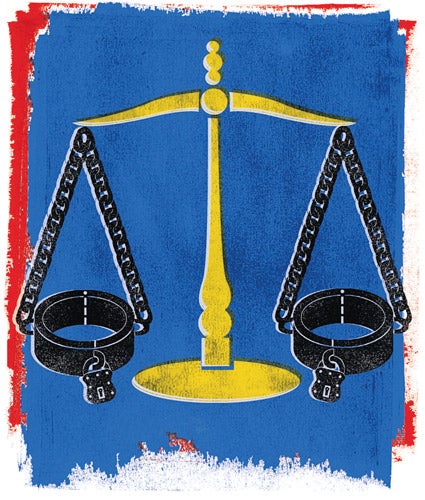
Within the next few weeks it is hoped that the final act of the long-running case of disclosure of information in the case of the torture of Binyam Mohamed is played out in the Court of Appeal. It has been an almost endless, and an endlessly shaming, process. The original case was brought by Mr Mohamed, held for five years in dark corners around the world, who claimed that he had been tortured and that the British intelligence service knew and were complicit in it. Of his torture there is little doubt. It was brutal, humiliating and sustained at the behest of the CIA. Of British complicity in this there is more and more evidence.
The recent round of submissions have concerned the Government's attempts to suppress some of the documents in the case on grounds of security. The Foreign Office has already lost last week the effort to stop publication of the details of the torture supplied by the Americans on grounds of breaching trust with the US intelligence services.
The latest submission – in which The Independent is involved – concerns not secrecy, not facts, not even diplomatic sensitivity but simple embarrassment. The key part of the draft judgment which the Foreign Secretary David Miliband – that constant champion of the doctrine of ethical foreign policy and an open society – sought to water down, is a clause in which the Master of the Rolls, Lord Neuberger, cast coruscating comments on the behaviour of the British authorities and implied that they had not been fully open with the parliamentary committee on intelligence.
His words have already come out. And damning they are, talking of the Security Services failing to respect human rights and developing a "culture of suppression" when it came to the public and Parliament. The sole purpose of trying to keep this part from the published judgment, craftily pursued by the government QC in the case, that chronicler of the blood and gore of the Hundred Years War, Jonathan Sumption, is to save the state from public humiliation.
We've been here before, of course. Ever since the run-up to the invasion of Iraq and the introduction of a continuous series of anti-terror rules and the removal of legal safeguards since, the Government has looked to the law not to keep it but to wriggle its way out of obeying it.
So with the Binyam case. Torture, and complicity in it, is against the law. There's no dispute about that, for all the egregious argument of those who would wish to say that it was a matter of justified circumstances. We adopted the European Convention on Human Rights in 1951 and passed a Human Rights Act in 1998 to give it extra force. Jack Straw might wish to circumvent it by talking of a new Constitution. The right might hate it. But the law it is.
Nor are the judges in this case involved because, as their more fanciful critics would suggest, they are exceeding their remit with an agenda of human rights of their own. The law has been brought into play because a British resident is suing the Government for aiding and abetting his illegal torture. The question of disclosure has been raised because the Government has tried to use security as an excuse for keeping the relevant documents away from Mohamed's lawyers and the public gaze. The judges eventually decided to release parts because their details had already been revealed in the US courts.
By doing so they will cause irreparable damage to our intelligence relations with the US, claims David Miliband, and appears to have prompted his opposite number in the US State Department to make a song and dance of it. But then let us be clear what he is saying. The US courts think it right to reveal details of torture. The US President, Barack Obama, says that the policy of rendition and the treatment of prisoners should be exposed to full public gaze with the release of documents. But over here a British Foreign Secretary says we can't possibly do that, because the US would object. Whose leg is he trying to pull?
What this is all about is not relations with our most important ally. It is about the culture of secrecy which the British intelligence services have long nurtured and still wish to protect. And what the Foreign Office's assiduous support of this case stems from is simply the desire to avoid its own part in the US-led programme of seizure of suspects and their interrogation being subject to public scrutiny.
Torture isn't a matter of niceties. You can argue the circumstances in which you might feel it useful or even necessary. You can try and épater le bien-pensant by writing "A Modest Proposal for Preventing Poor People in Britain from Being Endangered by Torturing Their Children and Their Mothers", only without Jonathan Swift's wit or intention to satirise.
You can sincerely believe it right to cripple the grannies and dismember the family pets in what you conceive of the greater community good. What you cannot do, as the Government is trying to, is get around the fact that Britain, along with most of the developed world, has decided to ban the practice.
And for good reason. After centuries of abuse, torture has been found to be neither productive nor containable. It rarely provides accurate intelligence. It produces fantasy and misleading information born out of the desperation of the victim. For all the discussion of the "ticking time bomb" and the films of Dirty Harry and Spooks, there is no reported case where an explosion has been prevented because of the use of torture.
What its proponents never like to answer is the question of just who would decide who should be tortured. The answer, of course, is the "state". And once you add that to the equation you are on a straight line to General Pinochet, Saddam Hussein and all those other characters whom successive British governments were wont to support in their heyday.
Attempting to define or confine the circumstances under which the suspect can be interrogated or the manner of the humiliation and pain that can be dealt out simply makes the unacceptable into the obscene.
What is so appalling about the treatment of Binyam Mohamed, whatever your thoughts about his motives, is that the whole policy of rendition was developed, and condoned if not actually supported by Britain, as a means of getting round the law. You couldn't torture a suspect in America or Britain, so you spirited them away to a country where you could. President Bush made suspected terrorists into combatants in a "war" so that they could be held indefinitely. Rendition made them into objects who could be dealt with in secret.
Ministers over here tut-tut and say that of course we'd never countenance doing such things ourselves. But we knew of the practice. We contributed to it by giving advice to the CIA and suggesting questions to be asked of the victim. And we were happy to use any information gleaned. Whether we went further and actually attended interrogations and aided them is what the Binyam Mohamed case is all about.
The Liberal Democrats have called for a full public inquiry. They are right. The betrayal of our most fundamental principles as a civilised nation is too important to be sacrificed behind a smokescreen of secrecy and the so-called "special relationship".
But then that is not the least reason why torture is so damaging to a society. It dehumanises and corrupts the torturer as much as the victim. All it has ever done is bring shame and discredit on any regime that has practised it. And that includes President Bush's and Tony Blair's.
Join our commenting forum
Join thought-provoking conversations, follow other Independent readers and see their replies
Comments
Bookmark popover
Removed from bookmarks