Andrew Grice: Cameron's words have fanned the flames, but his approach to foreign relations is a breath of fresh air
Mr Cameron judges that honesty strengthens rather than weakens Britain’s hand, and he may well be right
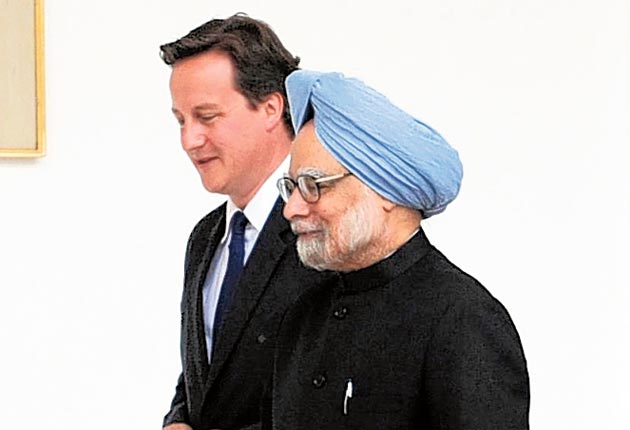
They whisper it softly, but even some Labour figures are being charmed by David Cameron. They don't like his politics, but his politeness. "I keep thinking he is about to pour me a sherry," one senior member of the Shadow Cabinet told me.
This week we learned there was steel beneath the diplomatic smiles, as the Prime Minister, relatively unknown on the international stage, made headlines around the world as he travelled to Turkey and India.
"Candid Cameron" described Gaza as a "prison camp" and accused Pakistan of "looking both ways" on terrorism. The venues of his remarks were instructive. Would he have lectured Pakistan about terrorism if he had been in Islamabad rather than enjoying the comfort and safety of its arch-rival in India? Would he have made his one-sided remarks about Gaza in Jerusalem? Would he have criticised France and Germany for blocking Turkish membership of the EU in Paris or Berlin? It's doubtful. Mr Cameron is open to the charge of telling his audience what it wants to hear.
His stinging remarks about Pakistan almost provoked its President to calling off a visit to Britain next week. Although Mr Cameron will doubtless charm Asif Ali Zardari at Chequers, Foreign Office officials are said to be "tearing their hair out".
William Hague doesn't have that option and the Foreign Secretary professes himself happy with the "Cameron Direct" approach of telling it like it is. Despite this week's headlines, the Foreign Office now shares the driving with No 10 on foreign policy again after being downgraded to a back-seat passenger under Tony Blair and Gordon Brown.
Mr Cameron has abandoned Labour's US-centric policy and is seeking new alliances with the emerging economic powers (as America is doing). On a visit to the US this month, he admitted Britain was the "junior partner" in relationship. A statement of the obvious, of course, but it made waves. Mr Blair or Mr Brown, needlessly haunted by Old Labour's anti-American ghosts, could never have said it.
Mr Cameron judges that such honesty strengthens rather then weakens Britain's hand and he may well be right. He was more open about his differences with President Barack Obama – on world trade and the speed of deficit-reduction – than his Labour predecessors would have been. Team Cameron suspects that Mr Obama's determination to carry on spending is partly about the mid-term elections in November, which will already be very difficult for the Democratic Party with unemployment so high. Team Obama notes that the UK's election is safely out of the way (and could add that the scale of the cuts now being implemented was not advertised beforehand).
After Mr Cameron had lowered expectations about the health of the over-analysed special relationship, Mr Obama exceeded them by talking it up. The warmth of the new partnership between two leaders, who are both arch-pragmatists, was overshadowed by the row over BP and the release of the Lockerbie bomber. But it is bankable and will help Mr Cameron in future. His remarks about Pakistan will also earn brownie points in Washington.
Yet the Prime Minister can't be accused of being "slavish" (his private description of Mr Blair's attitude to the US) or "needy" (his view of the Brown approach). He stood up for BP and, although it might have embarrassed Mr Blair and Mr Brown, didn't bow to US demands for a full inquiry into BP's alleged role in the release of Abdelbaset al-Megrahi because it would have further weakened the ailing company. Mr Cameron is not the first prime minister to realise that foreign affairs grabs a lot more of your time than you realised while in opposition. The penny dropped in Canada last month when he found himself sitting round a table with the other seven G8 leaders and suddenly realised he was a member of this powerful club.
He devoted little time to foreign policy before the election and didn't seem very interested in it. There was an impetuous dash to Georgia two years ago when Russian tanks rolled in and a rash call for it to be fast-tracked into Nato. Even Nato members didn't support that and it's a good job he was in opposition at the time, as it would have inflamed relations with Russia if he had been in power.
Mr Cameron will have learnt an important lesson in the past two weeks: you can sometimes get away with a gaffe in opposition but every dot and comma of what you say in government is analysed and magnified. The frenzy in some parts of the media about his statement that Britain was the "junior partner" in 1940 (before the US entered the Second World War) was out of proportion. He meant to say the 1940s.
But some of the Government's language on the exit strategy for Afghanistan has been loose. And some of his early actions seem more suited to the headline-grabbing that all oppositions must rely on – for example, his plan to recruit businessmen as UK ambassadors abroad to boost trade, which probably won't happen.
As well as learning to choose every word carefully, the Prime Minister will discover that diplomacy is not always best conducted by headline. Yet his overall approach deserves praise. The Foreign Office fuddy-duddies will tut-tut, but "Candid Cameron" is a breath of fresh air we should welcome as the right strategy for today's and tomorrow's world.
Join our commenting forum
Join thought-provoking conversations, follow other Independent readers and see their replies
Comments