Andrew Grice: What a difference a month can make in the life of a coalition
Inside Westminster
Before this month's elections and referendum, the Chancellor was "George" in the Liberal Democrats' internal discussions. Now he is "Osborne" or "the Chancellor".
Sometimes, little things tell us something big. The atmosphere inside the Coalition is suddenly more tribal and formal. It's business, not personal. As the Tories' chief strategist, Mr Osborne is blamed by the Liberal Democrats for authorising the No campaign's wounding personal attacks on Nick Clegg in the AV referendum.
The apparent love-in between Dave and Nick was never as personal as the media made out. It is a relief to senior figures in both Coalition parties to spell out their differences without fretting about what their partner would think.
After their rout in the elections and referendum, the Liberal Democrats now talk privately about "identity issues" where they diverge from the Tories, to remind voters they are a separate party, and "unity issues" on which they strongly support their Coalition partner. The Government's health reforms are an "identity" issue, while spending cuts are the most important "unity" issue. If the Liberal Democrats played games on the deficit-reduction programme, it would undermine their hopes of showing that "coalition works" and getting some credit for the economic medicine if it succeeds. There's no guarantee Mr Clegg's party would win brownie points. But they certainly wouldn't if they opposed the cuts now.
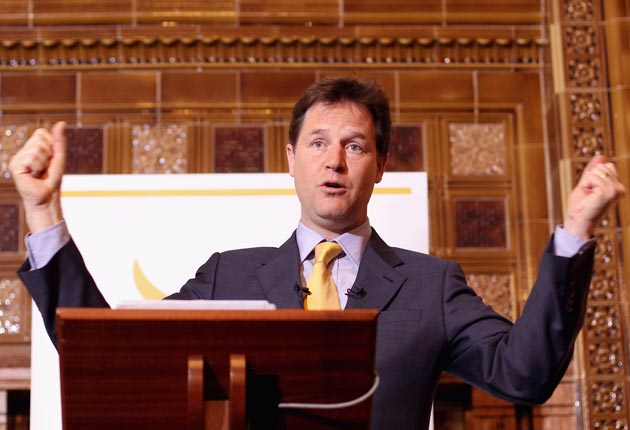
The Liberal Democrats seem happier in this new phase than the Tories. Mr Clegg has wisely put the NHS at the top of his shopping list. As he demands that the Health Secretary Andrew Lansley's plans be watered down, he holds the whip hand – literally. Mr Cameron needs the 57 Liberal Democrat MPs to get the NHS and Social Care Bill through Parliament. Mr Clegg is playing hardball, displaying to his party and the country the "muscular liberalism" he promised.
The "no surprises" rule that the two parties obeyed for most of their first year in coalition has gone out of the window. Mr Cameron was surprised to wake up to BBC Radio 4 headlines that Mr Clegg had made a thinly-veiled attack on him over the NHS. Number 10 was also unaware that the Liberal Democrat leader would announce on Thursday that MPs should have another detailed look at the Bill once amendments have been agreed. Tory backbenchers are seething. Their joy at winning the AV referendum and making gains in the English council elections has proved short-lived. Why, they ask, is Mr Cameron diluting the Tories' radical reform agenda for a small party that has just suffered a crushing double defeat?
Revealingly, the Liberal Democrats are delighted that some Tory MPs attacked Mr Clegg's latest statement about the NHS. In fact, they hoped more Tories would wade in. They welcome a trial of strength because the public will see them as on the right side of the argument. Mr Cameron's nightmare is that the public will view him as being on the wrong side.
The Prime Minister knows his hard-won trust on health is at risk. So do the Liberal Democrats. "If we recontaminate the Tories a little, it's good for us" said one Liberal Democrat aide.
Such remarks would not have been made before the 5 May watershed. Before then, there were a few "controlled explosions" – such as when Mr Cameron and Mr Clegg agreed to make contradictory speeches on immigration. Now there are uncontrolled explosions.
Holding the Coalition together is suddenly much harder work. It is not coming off the rails. But the new phase has provoked speculation about how and when it will end.
The Tory backbench rumour mill suggests that Sir Gus O'Donnell, the Cabinet Secretary, is dusting down the rules about how a "confidence and supply" arrangement would work. This would mean Liberal Democrat ministers leaving the Government and Mr Clegg's party supporting the Tories in crucial Commons votes in return for an agreement on key policies. Ending the Coalition would not mean an immediate general election. A Bill is going through Parliament that should ensure it takes place in May 2015, which suits both parties.
The Tory grapevine suggests the Coalition could be scaled down to a "confidence and supply" deal a year or even 18 months before the election. Perhaps it is just wishful thinking, a symptom of Tories' frustration at the Liberal Democrats calling the shots on health.
Yet Liberal Democrat strategists, who had drafted a "confidence and supply" agreement for either Labour or the Tories before last year's election, admit the idea could be revived for the "decoupling phase" ahead of the next one. On the one hand, it might help their product-differentiation drive. On the other, it might allow the Tories all the credit for a tax-cutting eve-of-election Budget.
"It is an end-game question, a long way down the track," said one Clegg ally. For now, the two party leaders have their hands full making sure the uncontrolled explosions do not blow the Coalition show off the road. But there are growing signs it might end before the 2015 election.
Join our commenting forum
Join thought-provoking conversations, follow other Independent readers and see their replies
Comments
Bookmark popover
Removed from bookmarks