Dominic Lawson: Does more money make us happier? Of course it does
If your policy is one of austerity it is advisable to use something other than economic growth as a measure of your success
A pocket cartoonist, when on form, can achieve more with a single sketch than the contents of a thousand weighty editorials. Thus, Pugh in yesterday's Daily Mail brilliantly encapsulated the eternal dispute about the exact connection between money and happiness: a doctor is telling his patient, "If the Prozac doesn't work, I'd like you to take this £5 note."
This was the artist's distillation of a 250-page report by a dozen academics, published by the Institute of Economic Affairs, ("...And the pursuit of happiness: Well-being and the Role of Government") which seeks to debunk the Coalition's adoption of a General Wellbeing Index to supplement or even replace Gross Domestic Product as a measure of its success.
The IEA chose yesterday as its launch because it knew that newspapers for the past few years have been in the habit of publishing stories based on the notion that the third Monday in January is the "most depressing day of the year". This all stems from the work of Cliff Arnall, a self-styled "happiness guru", who in 2005 produced pseudo-scientific gobbledegook purporting to prove that this would always be the day of maximum misery for Britons. No matter that two years ago Arnall admitted his theory was "not particularly helpful": while it certainly does us no benefit to be told we should be feeling gloomy, it's an ill wind that blows nobody any good. Yesterday, one newspaper used the bogus Blue Monday to plug the wares of a company which offers "light therapy... to help beat the blues"; and the IEA, as noted, has found it useful as a means of drawing attention to its counterblast against David Cameron's "happiness agenda".
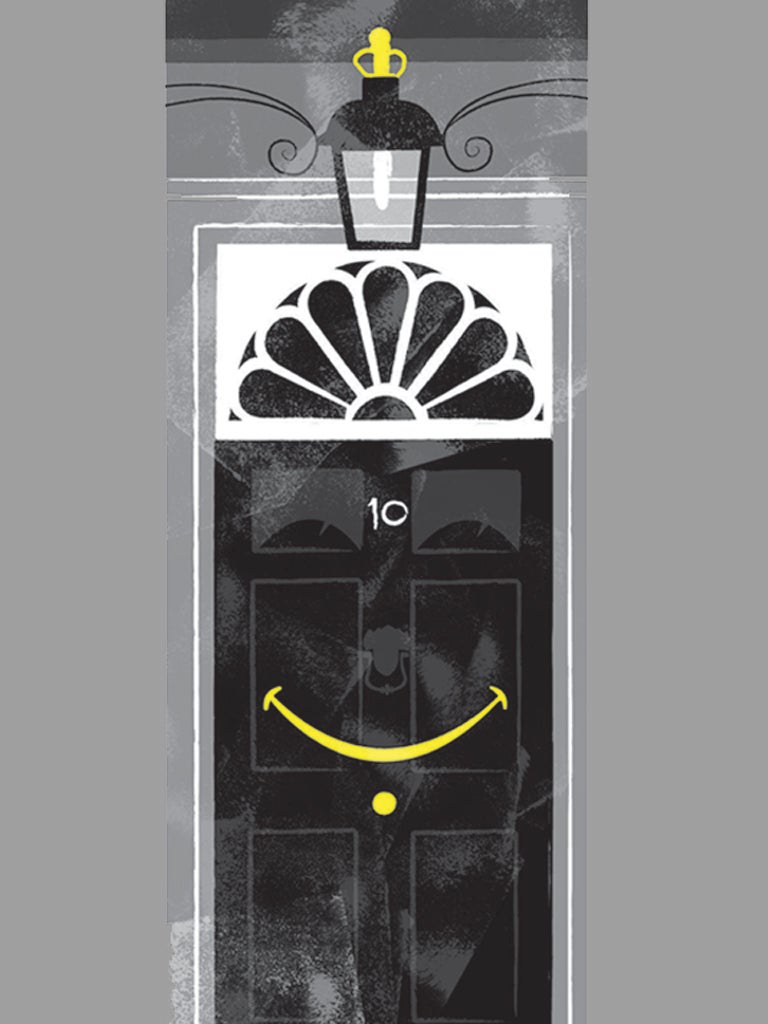
Those who follow such matters will recall that last year, on orders from 10 Downing Street, the Office for National Statistics launched a survey, asking hundreds of thousands of families "how happy they are" – and other related questions. This was all in furtherance of Cameron's 'happiness agenda', following on from a speech he made in 2010 invoking Robert Kennedy's remark that "Gross Domestic Product measures everything... except that which makes life worthwhile" and his earlier claim that as Prime Minister he would focus on "GWB [General Wellbeing] rather than GDP".
There are at least two distinct reasons why the Conservative leader is pursuing this agenda (aside from the possibility, odd as it might seem, that he genuinely believes in it). The first is that if your policy is one of retrenchment and austerity, it is advisable to come up with something other than economic growth as a measure of your success. The second is that Cameron has always sought to "decontaminate the Tory brand association" with the idea that it is dedicated only to personal enrichment. What better way to emphasise that than by associating the party with touchy-feely happiness gurus, rather than with free-market think-tanks... such as the IEA.
As Philip Booth, the co-ordinator of the IEA's ideological fight back against Cameron's tidal wave of sentiment, points out, the Prime Minister attacks a straw man by stating that previous governments had been solely concerned with economic growth: "If that were the case, we would have had much more liberal planning laws."
The value of GDP as a measure of achievement (whether or not credited to government rather than the private sector which actually generates the income the state redistributes according to its own interpretation of the popular will) is precisely that it is measurable. Ever since Jeremy Bentham in the 18th century constructed his "felicific calculus", with its components of "intensity, duration, certainty, propinquity, fecundity, purity and extent", it has been clear the measurement of happiness is a doomed venture: what we call happiness – itself a challenge – is not something that can be converted into numbers or units.
It is also not as self-evident, as most people now seem to suppose, that individual happiness is the most important thing in the world. Dr Martin Seligman, a pioneer of "positive psychology", has recently acknowledged this, denouncing what he terms "happy-ology" and concluding that: "What humans want is not just happiness... if that were all people were interested in, we should have been extinguished a long time ago."
While the Daily Mirror, eternal critic of anything emanating from the Conservative Party, is hardly unbiased, it is right to characterise the Prime Minister's happiness index – complete with nationwide surveys – as a "potty waste of money". It cited this response from one of its readers to the Office for National Statistics' question "What would make you happier?": "Better quality pies and chip butties... cheese and tomato toasties with ketchup on the side, white bread. Bacon sandwiches, actually sandwiches in general."
To the extent that there is an interesting political argument to be had in this point at which economics collides with psychology, it lies in the attempts by some on the left to demonstrate that high levels of income inequality lead to the greater unhappiness of the greatest number and that, therefore, to the extent that government gets involved, it should act more to reduce those inequalities, chiefly through fiscal measures. (Of course, it already does so, with a "progressive" tax policy, under which many millions are net recipients of tax credits while, at the top, the highest earners are required to forgo half of their gross income.)
The fashionable argument that inequality foments unhappiness is, however, bedevilled by a lack of rigour in terminology. As Professor Paul Ormerod points out in his contribution to the IEA's book, there is a distinction between the general inequality that exists between the richest and poorest in a nation, and the relative inequality between individuals living in close proximity to each other. The former has gained the greatest attention as an alleged cause of unhappiness, but it is the latter which is more significant in real life, or as Ormerod puts it: "Relative income involves jealous glances over the garden fence, while income inequality requires envy of the distant rich." If it is true, as Ormerod argues, that the former is a much more potent source of misery, what is government to do about that? Nothing at all, I would argue, except perhaps to say that jealousy of the next door neighbour's bigger garden is most unattractive.
As for the perennial question of whether more money makes people happier, one can't beat the nine-word summary of professors Blanchflower and Oswald: "Money buys happiness. People also care about relative income."
Join our commenting forum
Join thought-provoking conversations, follow other Independent readers and see their replies
Comments