Donald Macintyre: So what will it take for Israel to stop fighting?
Politicians in Jerusalem are split over the aims of the war
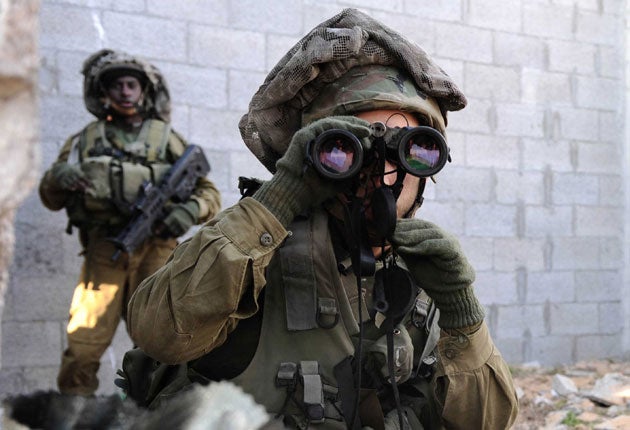
It remains to be seen whether the civilian carnage which culminated in the attack on a UN school yesterday will bring the end of the war any closer – or dent the determination of those in Israel who would like to press on with it until Hamas is not only damaged but removed from its control of Gaza. Certainly a relatively incoherent international community has been slow in producing a credible mechanism for ending it.
That in turn has made it more likely the war will drag on, encouraging the kind of mission creep in which some Israeli politicians seek to replace the goal of ending rocket fire with the holy grail of regime change.
Even before the catastrophe yesterday, the question of how long and with what aims the conflict would be pursued was delicately balanced. It looks as if – with an election due next month – at least two central players see the outcome rather differently.
Tzipi Livni, the dove of Lebanon, has become the hawk of Gaza. Her pronouncements have suggested a distaste for any ceasefire agreement negotiated with Hamas and more than a hint that she would be prepared to see Operation Cast Lead enlarge its scope as well as its aims. But Ms Livni, while the likeliest member of government to beat the opposition contender Benjamin Netanyahu to the premiership, is not the only, perhaps not even the most important, figure in the war cabinet.
Israel's Defence Minister Ehud Barak, who has had more direct experience of war at all levels of his distinguished military service than most of his colleagues put together, arguably has most to lose if the war goes badly wrong. He has a locus too. It was Mr Barak who showed most interest in the French 48-hour ceasefire proposal last week; and there are at least some signs that he is more fixed on its more limited aims now.
He could yet prove to be to Gaza what Tzipi Livni was to Lebanon – and rather more effectively so, given he has political responsibility for the military. Nor is he necessarily at odds with the military chief of staff, Gabi Ashkenazy, who Haaretz reported was cautious in presenting the risks of the ground operation to the cabinet on Friday and was "likely to be satisfied with a quick end" to it.
Mr Barak has another strength in this argument, if he makes it. Neither the EU nor the US speaks to Hamas, which leaves the hope with Egypt of an early end to this war. Mr Barak and his director-general, Amos Gilad, have the most open lines to President Hosni Mubarak's apparatus in Cairo.
The outlines of a potential deal are clear and laid out in an International Crisis Group report published yesterday, in which a complete ceasefire is proposed (with a 500m secure zone between militants and Israel's borders, and a greater international effort to end weapon smuggling from Egypt). Israel is pressing for more, and would baulk at suggestions that, with an EU presence at the crossings, there would have to be co-ordination between Hamas and the Palestinian Authority forces that would operate them. Israel also wants a more robust international force, especially along the Egyptian border. A mere monitoring presence, or what Israeli spokesman Mark Regev described as a "ceremonial" force, would fall well short of demands.
There are some signs, however, that even if Mr Mubarak may have welcomed Operation Cast Lead, the Egyptians are gradually becoming more seized by the urgency of pressing Israel to compromise on some of its aims, while promising in return serious action to stop the smuggling. This could deepen the potential split between Ms Livni and Mr Barak, one which is by no means only electoral.
Mr Barak has always been more realistic about the feasibility of removing Hamas – which would hardly cease to be a problem simply because it was removed from power in Gaza. Ms Livni, who is much less sceptical about the worth of negotiations with Mahmoud Abbas's Palestinian Authority, is more absolutist in her rejection of a ceasefire with Hamas.
She may still win the day. The goal of "regime change", however unrealistic, is by no means off the table. But the best hope is that yesterday's bloody events will stiffen the resolve of an until-now seemingly impotent international community to underwrite Egypt's efforts at mediation before it is too late. And that this war is ended before it slides into something even worse.
Silence from the left
It is the psychological difficulty of appearing unpatriotic and the perceived electoral costs of bucking majority sentiment as Hamas missiles land on Israel that has led to a thus-far muted dovish response to the war, writes Ben Lynfield.
The thousands of protest marches by Jews and Arab Israelis at the weekend were shunned by Meretz, Israel's main dovish party, which is competing for soft left votes in the 10 February election with the Labour Party of Defence Minister Ehud Barak, who is directing the Israeli offensive on Gaza.
In recent days, Meretz legislators have amplified their calls for a ceasefire, saying that the ground offensive could go badly wrong. But left-wing politicians, as well as some of the leaders of the Peace Now movement, are in a bind. They know that this war, like the 2006 war against Hizbollah in Lebanon, already appears to be turning into a costly mistake. But speaking out against it is also costly.
"When people are under threat they don't like to listen to more moderate views," said Yossi Sarid, a former leader of Meretz. However, he predicted that soon the public will be more amenable to anti-war arguments "as people realise there is no clear-cut end".
The players and their objectives
1. Stop Hamas rockets Backed by Defence Minister Ehud Barak and Israeli chief of staff Gabi Ashkenazi, who want a quick end to the ground offensive to minimise army casualties and the return of Corporal Gilad Shalit, captured by Hamas.
What's the downside? International protests likely to mount as long as civilian casualties rise in Gaza. Could damage Barak's political future in election next month against more hawkish colleagues such as the Foreign Minister, Tzipi Livni.
2. Teach Hamas a lesson Backed by Israeli President Shimon Peres but already the reality as 11-day military assault has failed to stop Hamas rockets.
What's the downside? Vague war aim lacking exit strategy and could result in Israeli troops being caught in Hamas killing-traps inside Gaza. Unlikely to result in ceasefire. But ambiguity could allow room for diplomacy on Israel's terms which would impose new security arrangement on Hamas.
3. Topple Hamas Backed by Foreign minister Tzipi Livni, Prime Minister Ehud Olmert and Likud opposition leader Benjamin Netanyahu who is competing against Livni in poll. Plan aims to put peace negotiations back on track, with Fatah in charge.
What's the downside? Requires lengthy military operation with risk of casualties that could alienate public opinion after Lebanon war. Likely to radicalise Palestinians which would contradict other Israeli aim of separating extremists from moderates.
Join our commenting forum
Join thought-provoking conversations, follow other Independent readers and see their replies
Comments
Bookmark popover
Removed from bookmarks