Hizbollah turns to Iran for new weapons to wage war on Israel

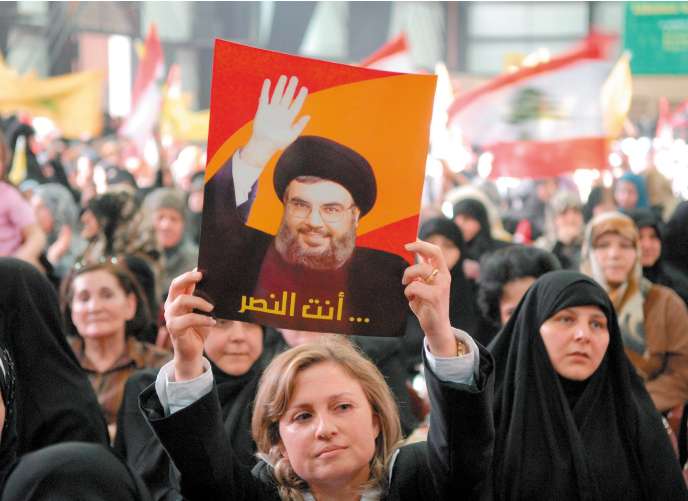
The Shia "martyrs" of this hill village are normally killed in the dangerous, stony landscape of southern Lebanon, in Israeli air raids or invasions or attacks from the sea. The Hizbollah duly honours them. But the body of the latest Shia fighter to be buried here – from the local Hashem family – was flown back to Lebanon last month from Iran.
He was hailed as a martyr in the village Husseiniya mosque but the Hizbollah would say no more. For when a Lebanese is killed in live firing exercises in the Islamic Republic, his death brings almost as many questions as mourners. Yet it is an open secret south of the Litani river that thousands of young men have been leaving their villages for military training in Iran. Up to 300 men are taken to Beirut en route to Tehran each month and the operation has been running since November of 2006; in all, as many as 4,500 Hizbollah members have been sent for three-month sessions of live-fire ammunition and rocket exercises to create a nucleus of Iranian-trained guerrillas for the "next" Israeli-Hizbollah war.
Whether this frightening conflict takes place will depend on President Bush's behaviour. If America – or its proxy, Israel – bombs Iran, the response is likely to be swift and will come from the deep underground bunkers that the Hizbollah has been building in the fields and beside the roadways east and south of Jezzine.
For months, Sayed Hassan Nasrallah, the Hizbollah leader, has been warning Israel that his organisation has a "surprise" new weapon in its armoury and there are few in Lebanon who do not suspect that this is a new Iranian-developed ground-to-air missile – rockets which may at last challenge Israel's air supremacy over Lebanon. For more than 30 years, Israel's fighter-bombers have had the skies to themselves, losing only two aircraft – one to a primitive Palestinian SAM-7 shoulder-fired missile, the other to Syrian anti-aircraft guns – during and after its 1982 invasion.
After its 1980-88 war with Iraq, Iran introduced a new generation of weapons, one of which – a development of a Chinese sea-to-sea missile – almost sank an Israeli corvette in the last Hizbollah-Israeli war in 2006.
Can the Hizbollah shoot Israeli jets out of the sky in the event of another conflict? It is a question much discussed within the 13,000-strong United Nations force in southern Lebanon – essentially a Nato-led army, which contains French, Spanish and Italian troops as well as Chinese, Indian and sundry other contingents – which would find itself sandwiched between the two antagonists.
There are no armed Hizbollah fighters in their area of operations – Nasrallah respects the UN resolution which placed the peacekeepers between the Israeli border and the Litani in 2006 – but the UN mission, along with its soldiers, will be gravely endangered in the event of another war.
If its aircraft could no longer bomb at will over Lebanon without fear of being destroyed, would Israel stage another costly land invasion – highly unlikely after the bloodying its troops took in 2006 – or use its own ground-to-ground missiles on Lebanon? For if the latter option were chosen, it would bring a whole new dimension to Lebanon's repeated wars. Long-range missiles have proved hopelessly inaccurate in Middle East conflicts and the Iran-Iraq war. But whatever political sins they still commit, the Lebanese – despite their current crisis – appear to have rejected any return to civil war. In such a war, no one could repeat the old lies about "pinpoint accuracy".
The government of Fouad Siniora may be trapped in its own "Green Zone" in central Beirut – it even refused to attend the Arab League summit in Damascus – and parliament is suspended after 17 vain sessions to elect a president. A series of prominent Lebanese MPs and journalists have been murdered or attacked since 2005 but Syrian troops have left and the Lebanese army still manages to keep a form of order on the streets. However, the Syrian intelligence presence has been maintained in Lebanon – and Syria is Iran's only ally in the Arab world. This does not mean that war is inevitable.
So the future of Lebanon remains – as it did in 2006 – in the hands of the United States and Iran. Just as the Israelis constantly warn of war, so the Hizbollah still promises revenge for the car-bomb murder of its former intelligence officer Imad Mougnieh in Damascus in February. Regularly, the Israelis warn that they will respond to attacks but that they will "choose the moment and the place and the means".
And sure enough – following the Hizbollah's pattern of using Israel's own words – Nasrallah said on 24 March that the Hizbollah would "choose the moment and the place and the means" to retaliate for Mougnieh's death.
And each month, the Hizballoh improves its new bunkers north of the Litani. Some now sprout aerials but they may be "dummies" for Israel's pilots to attack. Deep underground telephone land-lines have been laid to those which are visible and to those others which are beneath the surface. The Hizbollah learned a lot from the 2006 war. Then its secret bunkers were air-conditioned with beds and kitchens attached. But when Israeli troops discovered a handful of them, they also found copies of their own Israeli air force reconnaissance photographs, complete with Hebrew markings.
The Hizbollah had obviously bribed or blackmailed Israeli border guards for the pictures – from which they could tell at once which bunkers the Israelis had identified and which remained unknown to them.
Which is how, in 2006, its guerrillas sat safely through days of air bombardment in the latter, while allowing the Israelis to blitz the "known" fortresses to their hearts' content. Who knows if the Hizbollah has not since collected a new batch of photographs for the coming months?
Join our commenting forum
Join thought-provoking conversations, follow other Independent readers and see their replies
Comments
Bookmark popover
Removed from bookmarks