'Lebanon's Madoff' bankrupted after bouncing $200,000 cheque to Hizbollah
Businessman promised customers a 40 per cent return on their investment
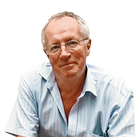
Everyone trusted Salah Ezzedine. A billionaire Shia Muslim businessman and financier from southern Lebanon, he organised pilgrimages to Mecca, ran a major Beirut publishing house and a children's television station, held major investments in east European oil and iron conglomerates, and – much more to the point – was a close personal friend of very senior leaders of the Hizbollah. Indeed, many members of the world's most powerful and successful guerrilla movement, along with the families of their "martyrs" in the war against Israel, placed both their faith and their inheritance in Mr Ezzedine's hands.
To the deep embarrassment of the Iranian-financed and Iranian-armed militia, however, Mr Ezzedine turns out to be an "Abu Madoff", declaring himself bankrupt, to the tune of $1.195bn (£760m), after promising his trusting investors an astonishing 40 per cent interest on their deposits – which, according to judicial officials in Lebanon, he eventually could not pay.
The Hizbollah have remained as silent as the grave – of which there are a lot in Lebanon – as well they might. For both Mr Ezzedine's radio station and his publishing business were named after Hadi Nasrallah, son of Hizbollah's general secretary, Hassan Nasrallah, who was killed leading a brave but suicidal attack on Israeli occupation troops in southern Lebanon.
But things were worse than this. It now appears that Mr Ezzedine's financial collapse became inevitable after he wrote a $200,000 cheque to Hussein Haj Hassan, one of Nasrallah's closest political advisers and a Hizbollah member of parliament. The cheque bounced. The response to this within Hizbollah's bunkers can only be imagined.
The movement, created in 1982 as a result of Israel's Lebanon invasion, had built up its prestige in the Arab world on its squeaky-clean reputation for financial and political probity. Middle East dictatorships and the third-rate leadership of the Palestinian Authority may salt their millions away in foreign bank accounts, but not the incorruptible Hizbollah. Or so the world thought, until the scandal that burst around Salah Ezzedine. He is now being interviewed by the Lebanese judiciary, and is allegedly being held in the grim old prison at Roumieh, north of Beirut.
The story seems a familiar one. Flushed with massive profits in the oil business, Salah Ezzedine – so say economists in Beirut – began investing the savings of Lebanon's Shia population, rewarding them with 40 per cent interest on their deposits – with the money from yet newer investors attracted by the rewards of his scheme. Whether Salah Ezzedine did this with the calculation of a Bernard Madoff or with a charitable desire to spread his own wealth among the largest single community in Lebanon, we do not know.
The Hizbollah – the "Party of God" in Arabic – has been strangely silent this past week, an unusual characteristic for such a publicity-conscious movement whose own millions – faithfully shipped in US currency bills to Beirut from Tehran – rebuilt dozens of Shia Muslim villages destroyed in Israel's bombardment of southern Lebanon in 2006. Hizbollah members could be seen handing out bundles of newly minted hundred-dollar bills to villagers and thousands of home-owners in the Dahiya area of Beirut whose property was "rubble-ised" in Israel's bombing. Many of these civilians, Lebanese newspapers are reporting, have now lost their money with Salah Ezzedine's collapse.
While traditionally ignored by the country's government and living in the stony hills of southern Lebanon – many grow tobacco crops – as well as the Bekaa valley, members of the Shia Muslim community have been emigrants to west Africa, Brazil and Holland and have made fortunes abroad (especially on the Antwerp diamond market). The size of their remittances home is made manifest in many of their ancestral towns. Villas of unseemly conspicuous wealth – replete with marble colonnades, Greek pillars and manicured lawns – sit on desolate hillsides, sometimes only metres from the Israeli border.
Of course, there is another reason why Hizbollah might want to keep quiet just now. Many Muslims believe that bank interest is un-Islamic, which is why the Lebanese Shia put their money in businesses run by Salah Ezzedine, who was known as a "pious" man – an optional extra for all friends of the Hizbollah – and whose Haj pilgrimages had become an essential element of that fixed part of the Muslim calendar in Lebanon.
Join our commenting forum
Join thought-provoking conversations, follow other Independent readers and see their replies
Comments
Bookmark popover
Removed from bookmarks