Robert Fisk: A man who lived by his word – and died by it
Most of the audience for my David Roberts lecture were Lebanese – not surprising, since this is the British-Lebanese Association – so I pulled out my old copy of the biography of David Roberts, Scottish lithographer, romantic, the man who brought the might as well as the detail of Egypt's and Lebanon's dynastic and Roman ruins to early 19th-century Britain.
So there I was in Kensington Town Hall this week, recalling how Roberts, travelling by pack animal from Sidon to the Bekaa via Jezzine en route to the temples of Baalbek, was waylaid by armed men. Plus ça change, etc. There was a look of mild humour on the faces of the throng in front of me. Only afterwards did my host quietly explain that my talk was honouring former British ambassador to Beirut David Roberts, who in civil war Lebanon may indeed have been waylaid by armed brigands – though surely not as old as those who stopped his namesake. Well, as I always say, there's always a "whoops!" factor in Lebanon.
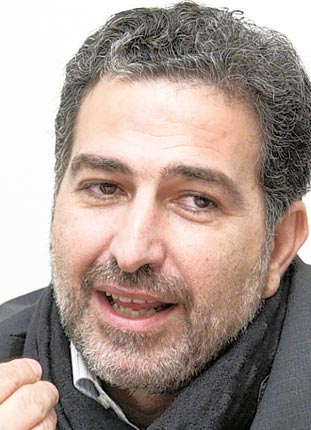
So I talked about the Lebanon in which I have lived for 34 years, whose courageous, kind people taught me how to survive other, more terrible wars in Iraq and Afghanistan. Lebanon had almost killed me several times, I said, but it had also saved my life. And I talked about Samir Kassir, who was murdered in Beirut, who flew like a moth through the latest chapter of Lebanon's history. Fêted, admired, jealously despised, a beacon of freedom in a place without oxygen, his genius almost inevitably consumed by his country's violence. At 45, he was a journalist's dream: writer, philosopher, academic, intellectual, reporter. And yes, he was also what we would call a street reporter, fighting off threatening calls from the secret police while condemning the Syrian intelligence apparatus.
In retrospect, I think Samir Kassir misunderstood his future killers, whom he had clearly identified before he died as the Syrian military-intelligence apparatus. He broke one of the cardinal rules of journalism. As a reporter or columnist, you can take on governments or armies or corrupt politicians or secret policemen or clergymen or multinationals. But the one thing reporters must never attempt is to take on organised crime. Kassir's enemies in Lebanon created and lived in a world of bribery and stolen wealth which spread like a web over the Middle East, to Egypt, to Iraq, to Jordan, even to Israel. To offend Syria was to offend the Saudis. And the Iranians. This was not about individuals – Arab kings and princes rarely give orders for the murder of politicians and journalists. (The slaughter of vast masses of rebellious citizens – nationalist or Islamist – is another matter.) We are talking about corporate crime.
This involves a multimillion-dollar nexus of wealth which defends itself against any assault. Money protects itself, ruthlessly and lethally. The pen is not mightier than the sword. The sword is far more powerful. Special pleading on behalf of Renaissance men – for the literary, historical, brave figures who might cure the malaise of the Arab world – is useless. This was the reason for Kassir's death. He called Lebanon one of "the laboratories of modernity". True. And dangerous. "But can't you tell us anything hopeful?" a Lebanese woman pleaded with me afterwards. Alas, I said. There is no hope right now. And please forget the theatricals of the Washington Israeli-Palestinian "peace" talks, a hollow affair to help Obama's mid-term elections rather than Middle East justice. (If not, why weren't these "direct" negotiations begun months ago?) What am I supposed to do? Lie and see "light at the end of the tunnel"? Or tell the truth, and hope that someone realises that it's time to get serious? It's not a melody you can sing to MPs.
To Roux restaurant, then, to talk to Tory MPs and Nazenin Ansari, diplomatic editor of Kayhan – the English anti-regime version of the Iranian daily, not the pro-crackpot president version in Tehran – and to point out that the do-good days are over, that it's justice or nothing. American congress members and business folk turn up in Middle East on "fact-finding" tours but all they want to do is hoover the odd fact which they can squeeze into their pre-packed, State Department fantasies. This is a bit different. I'm impressed that most of these Brits know the Middle East, travel there, understand all too well – without being Palestinian groupies – that the Palestinians are victims of massive injustice. Tory MP Brooks Newmark travels often to Lebanon, Syria, Israel, the occupied Palestinian territories. He chats happily to Hizbollah and Hamas representatives. Verboten, the Foreign Office has now told him.
Chatting to these "terrorist" chappies is OK in opposition – not when your party is in power; which is, of course, exactly the moment Brooksy should be talking to them.
So I did my "no hope" bit – Kwasi Kwarteng (MP for Spelthorne) didn't seem to like this. So I asked why MPs (and governments) are fixated by 24-hour news and press conferences, why they can't plan, long term, in the Middle East. How come Churchill created a cabinet committee to organise the government of post-war Allied-occupied Germany in 1941 – four years before the end of the war – when we hadn't got a plan for Iraq four hours before we crossed the Tigris river? Brooksy put dangerous hope in the Pakistani military and told me there would be no Israel-Hizbollah "hot" war in Lebanon next year. I feared he was wrong.
And so to Limehouse to talk to the man – and his friends – who won The Independent's charity bid for Fisk last Christmas; and, at last, amid bright musical agents for bands (quite literally), I find reality. I read them the Conrad-like letter home of a US Marine officer in Iraq, trying to explain to his dad why the occupation doesn't work – "Our common sense is not common to this people ... I do my best but I twitch with an urge for the folly of intrusion" – and we all agree that the Middle East future is bleak indeed. Not least an Argentine-Israeli lady who – while under no Arab illusions – bravely speaks out against the injustice of Israel's rulers. She also makes the best chocolate in the world, describing the recipe as I scoff a plate of it. She promises to send me the recipe. Hope from the Middle East.
Join our commenting forum
Join thought-provoking conversations, follow other Independent readers and see their replies
Comments
Bookmark popover
Removed from bookmarks