Robert Fisk: 'Europe has a duty to educate the US about Middle East'
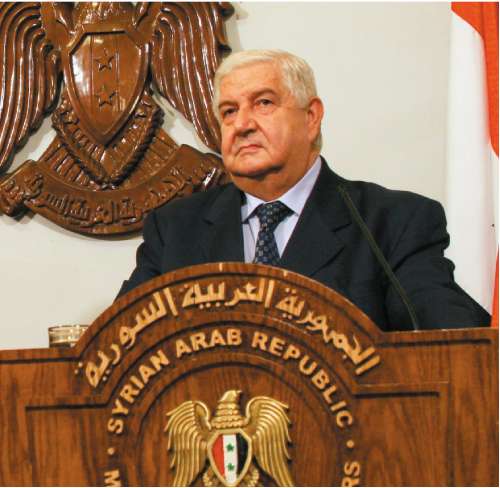
Walid Moallem leans forward in the armchair of the Paris Intercontinental Opera. "It's all on the record," he snaps. It usually is. The Syrians can be up- front when you least expect it. Syria's Foreign Minister is one of their top negotiators, a man who knows Israel's diplomats almost as well as they know themselves, who understands all the traps of the Middle East.
Tell me who murdered Rafiq Hariri, I ask him. And Mr Moallem grins bleakly and reaches into his jacket pocket. His beefy hand emerges clutching a wad of pale green Syrian hundred-pound notes. "Tell me the answer and you can take all my money," he says.
He may see evil among Syria's enemies but he will speak no evil, certainly not of the French. "We are building trust with the French," he says. Syria is ready to co-operate on the prevention of illegal immigration, against "what you in the West call 'terrorism'" and opening a developed economic partnership. And Mr Moallem can be a bit preachy into the bargain.
"You in the West have a moral duty in Europe to educate the United States more about the Middle East. If they don't listen to you, they will not listen to us. They will continue with their mistakes." I don't think they're going to listen, I mutter. But Mr Moallem is in full flow.
"When we announced our position in the Security Council against the invasion of Iraq, the Americans adopted a policy of isolating Syria. We know that the United States is a superpower and many countries prefer to follow its policies without question. We say: 'We differ ... we belong to a region where we are in the middle of the eye of the storm. The United States is 10,000km far away from us. We are directly involved and influenced by regional issues. We consider dialogue, despite differences, is the most important in diplomacy. The message of President Assad to France is that the old policies are wrong, that only dialogue can solve difficult issues."
So, what about the opening of a Syrian embassy in Beirut and a Lebanese embassy in Damascus? "We reached agreement in principle to establish diplomatic relations. Unfortunately, after that, relations between the Syrian and Lebanese government were negative. A lot of Lebanese leaders tried publicly to accuse Syria of many issues [sic] of which Syria is innocent." Were these issues, I ask Mr Moallem, perhaps – well – were they assassinations? "Innocent!" he thunders. "At least, they provide no proof of their accusation. In a negative atmosphere, you cannot establish diplomatic relations. But after the Doha agreement [which called for a unity government in Lebanon and a veto over cabinet decisions by the pro-Syrian opposition] we hope that a positive atmosphere will be created. So now we are talking about two states, two independent sovereign states on an equal footing. The will of each side is to be respected."
And the Hariri tribunal to find his murderers? What did Assad and Sarkozy say about this? "Never mentioned – not once," Mr Moallem replies.
"The French President asked President Assad to help, through his relations with Iran, in inviting international public opinion to understand that the Iranian nuclear programme is a peaceful one ... We stand firmly against the race of nuclear, biological or chemical weapons in our region."
So what was the mysterious target of Israel's bombing raid on Syria? "It was a military location," Mr Moallem said slowly. "I can assure you that if it was a nuclear site, it would – after bombing – leave radiation. Do you really think, if our intention was to do this [develop nuclear weapons], we would allow the IAEA inspector to come from Vienna to examine the site?"
Mr Moallem's pound notes remain on the table. But for how long?
Join our commenting forum
Join thought-provoking conversations, follow other Independent readers and see their replies
Comments
Bookmark popover
Removed from bookmarks