Robert Fisk: Hizbollah rules west Beirut in Iran's proxy war with US
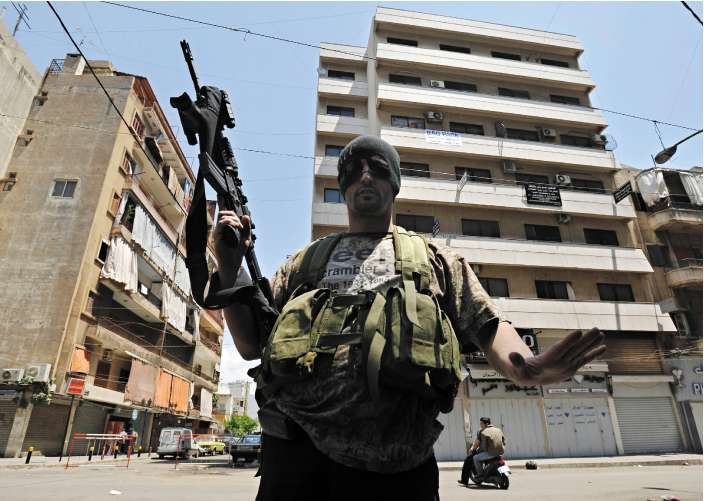
Another American humiliation. The Shia gunmen who drove past my apartment in west Beirut yesterday afternoon were hooting their horns, making V-signs, leaning out of the windows of SUVs with their rifles in the air, proving to the Muslims of the capital that the elected government of Lebanon has lost.
And it has. The national army still patrols the streets, but solely to prevent sectarian killings or massacres. Far from dismantling the pro-Iranian Hizbollah's secret telecommunications system – and disarming the Hizbollah itself – the cabinet of Fouad Siniora sits in the old Turkish serail in Beirut, denouncing violence with the same authority as the Iraqi government in Baghdad's green zone.
The Lebanese army watches the Hizbollah road-blocks. And does nothing. As a Tehran versus Washington conflict, Iran has won, at least for now. Walid Jumblatt, the Druze leader and MP and a pro-American supporter of Mr Siniora's government, is isolated in his home in west Beirut, but has not been harmed. The same applies to Saad Hariri, one of the most prominent government MPs and the son of the murdered former prime minister Rafik Hariri. He remains in his west Beirut palace in Koreitem, guarded by police and soldiers but unable to move without Hizbollah's approval. The symbolism is everything.
When Hamas became part of the Palestinian government, the West rejected it. So Hamas took over Gaza. When the Hizbollah became part of the Lebanese government, the Americans rejected it. Now Hizbollah has taken over west Beirut. The parallels are not exact, of course. Hamas won a convincing electoral victory. Hizbollah was a minority in the Lebanese government; its withdrawal from cabinet seats with other Shias was occasioned by Mr Siniora's American-defined policies and by their own electoral inability to change these. The Lebanese don't want an Islamic republic any more than the Palestinians. But when Sayed Hassan Nasrallah, the Hizbollah chairman, told a press conference that this was a "new era" for Lebanon, he meant what he said.
Mr Hariri's Future Television offices were invested by the army after Hizbollah surrounded it on Thursday night, its staff evacuated and the station switched off. When I turned up there yesterday morning, I joined a queue for manouche – Lebanon's hot cheese breakfast sandwiches – at Eyman's bakery in Watwat Street. I patiently waited behind four black-hooded gunmen from Hizbollah's allied (but highly venal) Amal movement only to find uniformed Lebanese soldiers representing the government patiently queuing at the next window. Law and disorder, it seems, both have to eat.
But I found far more powerful symbolism in Hamra Street, one of west Beirut's two main commercial thoroughfares. More than 100 Hizbollah men were standing or patrolling the highway, clad in new camouflage fatigues, wearing new black flak jackets and new black, peaked, American-style baseball caps and – more to the point – what appeared to be equally new American sniper rifles..
No, this is not a revolution. No, this is not a "hijacking" of west Beirut or the airport, which remains cut off by burning tyres on roads guarded by Hizbollah militiamen. But the government's supporters deserve some space. Several pointed out that the Israelis closed Beirut airport in 2006. So what right did Hizbollah have to do the same to the Lebanese now? And, according to Saad Hariri, Mr Nasrallah – when he called Mr Jumblatt "a thief and a killer" – was "authorising his murder and clearly stating that, 'I am the state and the state is me'." No wonder, then, that Mr Jumblatt fears for his life and that Mr Hariri claims the Hizbollah's coup de folie is a form of fitna, the Arabic for chaos. "I invite you, Sayed Nasrallah, to take back your fighters from the streets and to lift the siege of Beirut to protect the unity of Muslims," he said. "Israel will be rejoicing at the blockade of the country and the collapse of its economy."
Marwan Hamade, Mr Siniora's Telecommunications Minister – and victim of an attempted assassination in 2004 – admitted he had turned a blind eye to Hizbollah's underground phone system but could no longer when he realised that Hizbollah now maintains 99,000 numbered lines.
Mr Nasrallah also insisted on the reinstallation of Brigadier General Wafiq Chucair as head of security at Beirut airport, since he was not a member of Hizbollah. General Chucair was suspended after Mr Jumblatt claimed he worked for Mr Nasrallah's outfit, a demand which prompted Mr Jumblatt to say he did not know General Chucair was so important to Mr Nasrallah that it was worth closing the international airport.
And so it goes on. There was an unusually good editorial in the French-language daily L'Orient Le Jour, which asked how the Hizbollah – literally "the party of God" in Arabic – could have war as its raison d'etre yet be a factor of stability and security in Lebanese domestic affairs. "And this party, can it really call itself the 'Party of God' without creating, in the long term, the distrust of all those other children who count themselves to be from the same unique and one God?"
No, this is not a civil war. Nor is it a coup d'etat, though it meets some of the criteria. It is part of the war against America in the Middle East. The Hizbollah "must stop sowing trouble," the White House said rather meekly. Yes, like the Taliban. And al-Qa'ida. And the Iraqi insurgents. And Hamas. And who else?
Join our commenting forum
Join thought-provoking conversations, follow other Independent readers and see their replies
Comments
Bookmark popover
Removed from bookmarks