Robert Fisk: On the trail of a dead British major in Vichy Lebanon
Search for the past
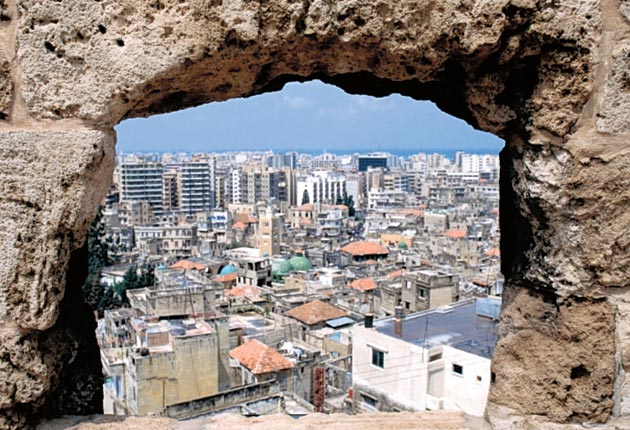
I was up in Tripoli again the other day – the venerable castle-crested, deep-souked Lebanese city with its broken steam locos, not the hot, mind-bleached, former Italian fascist version that Gaddafi runs – to poke around another graveyard.
It was the final Tripoli cemetery I had to visit since 1982, hunting for the last mortal remains of Major Anthony Palmer of Special Operations Executive, disappeared with 23 Jewish Haganah commandos on 18 May 1941, en route to blow up the Tripoli oil refinery. But the cemetery keeper had been born long after the Second World War. No archives. No luck.
So I went home to Beirut to read Colin Smith's riveting book, England's Last War Against France, in which he recounts our bloody battles against Pétain's Vichy regime. Mers el-Kébir, Dakar, Madagascar and, yes, Syria and Lebanon. But opening Smith's book at random, what was the first name I read? Why, Major Anthony Palmer of the Royal Dragoon Guards. He had set sail from Haifa aboard a converted fishing boat called the Sea Lion and was never seen again. "The best theory is that they touched off a mine or their demolition charges exploded," wrote Smith.
Well, not quite. When Pétain surrendered to the Germans in 1940, Lebanon, a French mandate, went Vichy too. Later in 1941, the Brits and Aussies and some Jewish units invaded and set up shop in Beirut. But Palmer set off for the Tripoli refinery, which was channelling oil to Rashid Ali's pro-Nazi regime in Baghdad, less than a month before that invasion.
Fast forward to another invasion, Israel's devastating 1982 attack on Lebanon – using the same invasion routes as the Brits in 1941 – to destroy the PLO. But after killing about 17,500 people, most of them civilians, at least one Israeli officer devoted his time to another war. And exhausted after weeks under fire in the ruins of West Beirut, I still spotted a tiny advertisement in Lebanon's French-language L'Orient-Le Jour. "Wanted notice," it read. "In May 1941, the boat of Major Lord (sic) Anthony Palmer, an English officer and his 23 seamen was found by Vichy forces. Anyone with knowledge of this matter is asked to contact the following telephone number."
I called and was asked to meet a Lebanese Christian who subsequently invited me to meet "Israeli intelligence". He gave me the address of a luxurious mansion above Beirut. There I found Israeli troops in the grounds, but was shown into a book-lined library where an Israeli lieutenant colonel sat behind an oak-panelled desk. And beside him lay two large, blue-covered files on the disappearance of Major Palmer. The colonel introduced himself as Shlomo Ben Elkanah. Only years later would I discover that he was something of an expert in finding corpses. After the 1967 Six-Day War, he had questioned Bedouin Arabs in newly captured Rafah in the Gaza Strip in an attempt to find the body of Avshalom Feinberg, a member of a pro-British Jewish underground organisation in 1917 who died in a battle with Arabs while trying to contact General Allenby's British forces. In 1967, the Bedouin pointed to a palm tree and Elkanah dug it up. There were the bones of Feinberg, the tree embracing his skeleton because it had sprouted from the dates which the dead man had in his pocket.
Now Elkanah was trying to find the graves of Palmer and the 23 dead Jews who were also aboard the Sea Lion. He wanted to bring the remains of the Haganah men – one of whom had been Elkanah's friend – back to Israel, which regarded Operation Boatswain in 1941 as the first military action of the Israeli army. The operation had been arranged between a Palestinian Jew called David Cohen and de Gaulle's Free French forces in London.
And to my amazement Elkanah showed me his files. These papers suggested that the Sea Lion reached the coast of Tripoli but was intercepted by "the French and Italian (sic) coastguard". One of his reports said four of the Jewish commandos were killed and their bodies washed ashore, but when Palmer turned back south he was stopped by an Italian submarine. A British intelligence officer called Perkins, according to this document, then told a Jewish Agency official, Reuven Zaslani, that Palmer and his surviving 19 men had been taken prisoner. The paper said that Palmer then escaped his French guards, was recaptured on the island of Arwad off the Syrian coast, was returned to Lebanon and executed without trial at Jounieh, just north of Beirut. At the time, a German radio broadcast referred to the capture of "a British agent and 20 Jews" by Italians.
Elkanah showed me another paper. This recorded that Moshe Sharett – later Israel's foreign minister – handed a report to Perkins that a "Jewish messenger" called Joseph Fines saw the clothes taken from the bodies of the four dead Jewish sailors and believed the rest of the crew, including Palmer, were taken away to an unknown destination. Then the British authorities declined to allow Perkins to continue his investigation. Because, perhaps, the few Vichy French soldiers in Lebanon who transferred their allegiance to de Gaulle had been involved in the killing of Palmer?
In 1982, the Israeli army captured Beirut but stopped short of Tripoli. Could I, Elkanah wanted to know, drive up to Tripoli – still under Syrian and Palestinian guerrilla control – and take a look around the city's cemeteries? Could I find a mass grave, perhaps? Journalist I may be. Agent I am not. I waited till long after the Israelis had left. Then I began to prowl the graveyards of Tripoli, sniff for the municipality archives, talk to middle-aged men who supported Vichy and who remembered 1941. They knew nothing. Or they said they knew nothing. Two of the Jews were said to have been buried in sand dunes, a third in a "cemetery for foreigners". I haven't found it. Elkanah is himself now dead. But Sharett, according to his files, was later told that the British "regretted to confirm that all the people in question had disappeared and that there was no hope that any could still be alive". How did they know? Who told them? Their newly won Vichy friends, perhaps?
But, ye gods, all those tangled wars ... 1917, 1941, 1967, 1982. Next week – I promise -- that whatever I write in this column, I WON'T MENTION THE WAR!
Join our commenting forum
Join thought-provoking conversations, follow other Independent readers and see their replies
Comments