Robert Fisk: Our language has a way of turning women into men
Gender politics
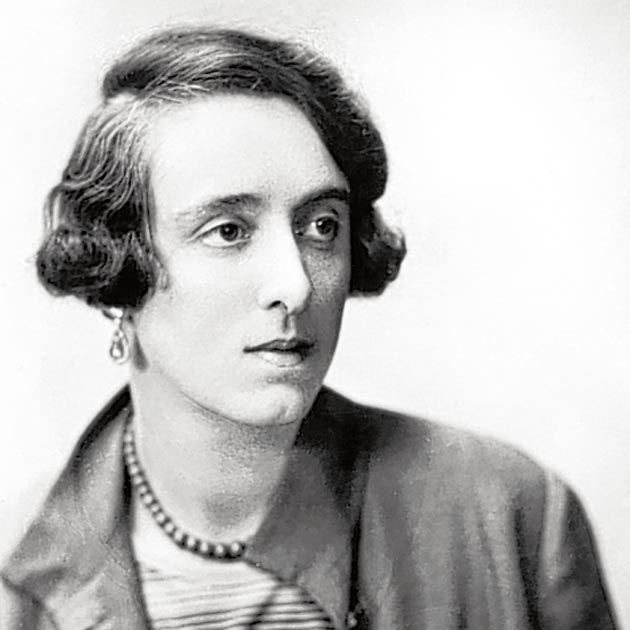
A week ago, in my front-page story on the Hiroshima commemoration, I planted a little trap for our sub-editors.
I referred to Vita Sackville-West as a "poetess". And sure enough, the sub (or "subess") changed it – as I knew he or she would – to "poet". Aha! Soon as I saw it, I knew I could write this week about the mysterious – not to say mystical – grammar of feminism and political correctness. At least, I guess feminism was the start of it all, for was it not in the Eighties and early Nineties that newspapers started turning feminine nouns into male nouns? This was the age, was it not, when an "actress" became an "actor", when a "priestess" became a "priest" – which does sound more sensible – and when a "conductress" became a "conductor". A policeman and policewoman have turned into "police officers" (even if they are constables). Even in Irish, a "Bean Gárda Síochána" (policewomen or woman civic guard) turned a few years ago into a "Gárda" – simply Guard or (I suppose) "policeperson".
I've always been bemused by this desire of women to turn themselves, semantically speaking, into men. 'Twas never the other way round. Gary Cooper, Errol Flynn, John Wayne, Leonardo DiCaprio and Brad Pitt have never demanded to be called "actresses", nor did Sir John Barbirolli ask to be a "conductress". Now don't get me wrong. I can see the misogyny of dictionaries that always put the masculine first ("actor, actress"), but if I'm reading a film or theatre review, I like to know straightaway – if an actor's/actress's first name is "Jo", for example – whether they are a man or a woman. As it is, the moment I read "actor", my eye skips down the paragraph to find out their sex. The Independent likes to use 'actor' for both sexes. Yet this Wednesday, our Daily Quiz referred to "actress Kathleen Turner". And, if feminism had been a Tudor conviction, what would we have called the men who played women in Shakespeare's plays – since all female theatrical roles were then played by males?
But are all "seamstresses" now to become "seamsters" or do we just use the all-purpose "tailor"? I have to add, my Webster's Ninth New Collegiate Dictionary could turn me into a feminist. For it describes a seamster as "a person employed at sewing" but a seamstress as "a woman whose occupation is sewing". Men are paid to sew, you see. Women just do it because, well, that's their job in life. Here, it's the verb – not the noun – that's the giveaway.
We got round the "steward"/"stewardess" problem on airliners by inventing the all-purpose "cabin attendant", which I'm quite happy with – not least because it gets rid of the idea (which remains patently true in the case of many airlines) that women are chosen to work as stewardesses for their looks. But again, no one worries about "journalist" or "gardener". There is no female version, so we rest easy. It's curious, though, that Private Eye and others are happy to use that dreadful word "hack" – a hateful description which only encourages readers to distrust us – and also do not hesitate to use "hackette".
But let's take all this across the channel where – heaven preserve us – the difference between male and female is written into the very grammar of the French language. Indeed, in French you must learn the masculine or feminine definite article with every noun as if it is part of the same word. Worse still (for feminists), of course, every object in French must be masculine or feminine. My colleague Guy Keleny (see below) has pointed out to me a weird sexual rhythm to French military units: they go masculine-feminine-masculine, etc. Thus la compagnie is followed by le régiment which is followed by la division. It is also an odd fact that most French words for sexual organs are feminine. But by my count, so are most French words for war – but only just. Try la guerre, l'attaque, la bataille, l'artillerie, la fosse commune (mass grave), l'armée, la marine (navy), la défense, l'infanterie, la cavalerie, la roquette, la flèche (arrow), la blessure (wound), la tranchée, la flotte, la catastrophe or, for that matter, la mort. But yes, I know, there's le pistolet, le bouclier (shield), le canon, le convoi, le cuirassé (battleship), le contre-torpilleur (destroyer), le croiseur (cruiser), l'obus (shell).
But there's no hesitation in France in calling an actress une actrice (or une comedienne) or to call a woman pilot une aviatrice. In fact, if anything the French are increasing the verbal differentiation between men and women. Recently a female minister wanted to call herself la ministre (it didn't catch on) and at one point it was suggested that if Ségolène Royal became president, she would be Madame la présidente. Le Figaro once carried the outraged suggestion (male, of course) that the French would soon be talking about l'arrivée des sapeurs-pompières (the arrival of the fire (brigade) women). Not surprising, perhaps, that one of France's most romantic films is called Un Homme et Une Femme.
On the other hand, even the English language still distinguishes between "man" and "woman", king and queen, his and her majesty. The Duchess of Cornwall is still a duchess (even if she sometimes behaves like a duke). At least Brits don't have to cope with German genders, which include neuter as well as masculine and feminine.
It's all a question in English, I suppose, of differentiating between the degree to which a feminine noun can be justified on the grounds that there are two separate job markets (acting, for example) and the notion that a separate designation for women is belittling. Myself, I've always regarded men as pretty horrible creatures and women as infinitely saner. Why they want to turn themselves into men remains a mystery. I shall consult Guy Keleny on this, The Independent's enemy of Mrs Malaprop. Or Mr Malaprop, as I suppose we shall now have to call her.
Join our commenting forum
Join thought-provoking conversations, follow other Independent readers and see their replies
Comments