Robert Fisk: The Arabs have their gulags too
How many Independent readers can name a single man imprisoned in the Arab gulags?
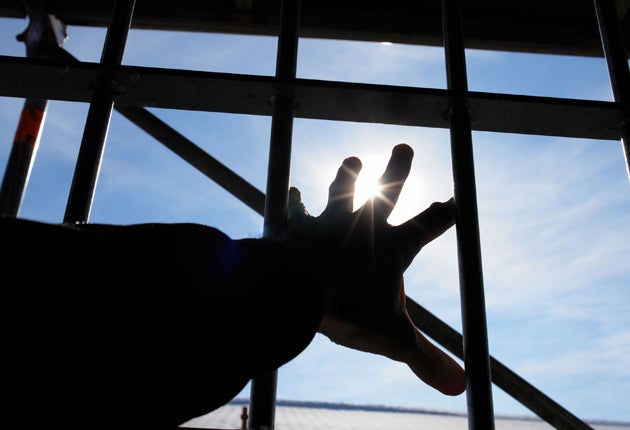
We know all about Guantanamo. We know about "black" prisons. You only have to read the evidence from the latest drum-head "trial" at Guantanamo – a man called Khadr, arrested by the Americans for killing a US soldier at the age of 15, found chained in a tiny cell at Bagram by an American medic, hooded and crying – to know what Western "justice" still means.
But let's flip the curtain a bit and take a look at the other side. For there are Guantanamos galore in the Muslim world and, by and large, we don't care a damn about them.
How many Independent readers can name a single man imprisoned in the Arab gulags? How many tourists to Egypt know that in the Tora prison complex, prison guards have forced inmates to rape each other? How many men have been "renditioned" to Egypt and Syria and Morocco by the Americans or by our Muslim "allies"? So this week, let's be specific. Take the cases of Bahaa Mustafa Joughel, Syrian identity card number 01020288992, and Mohamed Aiman Abo Attot, Syrian ID no 01020265346. Haven't heard of them, have you?
Here, according to their families, are their stories. Bahaa Joughel, born in Damascus in 1976, is married with two children and used to live in Pakistan with his family, his sister and her daughters. A partial cripple, Joughel worked on computers and ran a small IT company from his home. Again according to his family, he engaged in no political activities. On 30 January 2002, Pakistani security police raided their home in Islamabad, apparently under the orders of a US officer. Joughel disappeared for five months, his family told only that he was being "investigated" by the Americans. But the Joughel family was later shocked to learn that he had been "renditioned" to Syria scarcely three months after his arrest – on 4 May 2002, to be precise – and jailed at the "Palestine" branch of Syrian military intelligence. This institution makes the adjective "notorious" irrelevant. He spent 20 months in underground solitary confinement – tortured in his grave-like concrete cabin, his sight damaged by his confinement, just as Canadian Maher Arar was after the Americans sent him to Syria around the same time – before being transferred to Sednaya prison. He was released on 12 February 2005, but was forbidden to leave Syria and then re-arrested on Christmas Eve the same year. No charges have ever been made against him.
But prisoners at Sednaya staged an uprising – we still don't know the details – which was put down with great brutality. For months, his family lived in terror of hearing that he was dead. Then two months ago, in March, he was allowed to call his wife from prison. He said there may soon be a family visit.
So now to Mohammad Attot. He is 51 and is Joughel's brother-in-law, and was serving in the Syrian army during the early1980s when the Muslim Brotherhood staged a savage uprising against Hafez el-Assad's Syrian regime. It was crushed with equal savagery and Attot was warned that he was to be arrested. Again, his family says he was uninvolved in politics. He fled to Beirut and from there to Turkey where he married and had four daughters. Attot spent 13 years in Turkey, rarely found a job because he could not obtain a full residence permit – he worked for some time cleaning medical instruments – but was suddenly arrested by the Turkish authorities and handed over to the Syrians, even though his wife and children were Turkish. From 1993 to 2005 – a total of 13 years, longer than any Guantanamo prisoner has been held – he was moved between the "Palestine" and Sednaya prisons and then, one early morning in November 2005, he called his family in Turkey and said he had been released. They never dared to discuss the details of his arrest but then, on 6 July the following year, he was suddenly re-arrested. His family was given permission to visit him in 2008 – but when the Sednaya rising took place, the visit was cancelled.
A former prisoner has confirmed that he saw Attot at Sednaya almost six months ago – so, like Bahaa Joughel, we know he is still alive. But it has been the same old story. No further news. No known reason for this obscene term of imprisonment. No charges. No trial. His Turkish wife Laila says only that her husband "received the worst kind of torture" during his first imprisonment which left him physically and psychologically broken. After Assad's death in 2000, his son Bashar, now the president, personally ordered that the vilest tortures of his father's regime should be ended – which may have saved Attot's life.
Laila says that when she spoke to him over the telephone during his brief release from jail, "we communicated with tears". His sister has since told her that Attot's name is now listed by a Syrian human rights group, that he was a cardiology patient and that he had been sentenced to 15 years. For deserting the Syrian army in the 1980s? No one knows.
I have contacted the families, and in Pakistan I met and spoke to Hasene, one of Attot's daughters who now lives in Pakistan. Joughel is her uncle and the families have pleaded with human rights groups to help them both. All Hasene would say to me this week was that she believed in human rights and in the work of these groups and that she and her family all held out hope. Brave people, all of them. But do we care?
Join our commenting forum
Join thought-provoking conversations, follow other Independent readers and see their replies
Comments
Bookmark popover
Removed from bookmarks