Robert Fisk: The never-ending war against cliché and jargon

Asked to give a talk on the Middle East last week, I read on my invitation: "We want to bring visionaries, innovators, doers, funders, connectors, and their community into one space...With all of these people gathered into one space, it's inevitable that sparks will happen, ideas will find momentum, and positive change will take [sic] birth."
Now I have not the slightest intention of participating in this particular "space". I won't have anything to do with an invitation written in so clichéd a language, including all the trappings of pseudo-academese psychobabble and happy-clappy optimism. These are words of emptiness and exclusion, of elitism and trend, of a conference held for the sake of holding a conference. Of nothing.
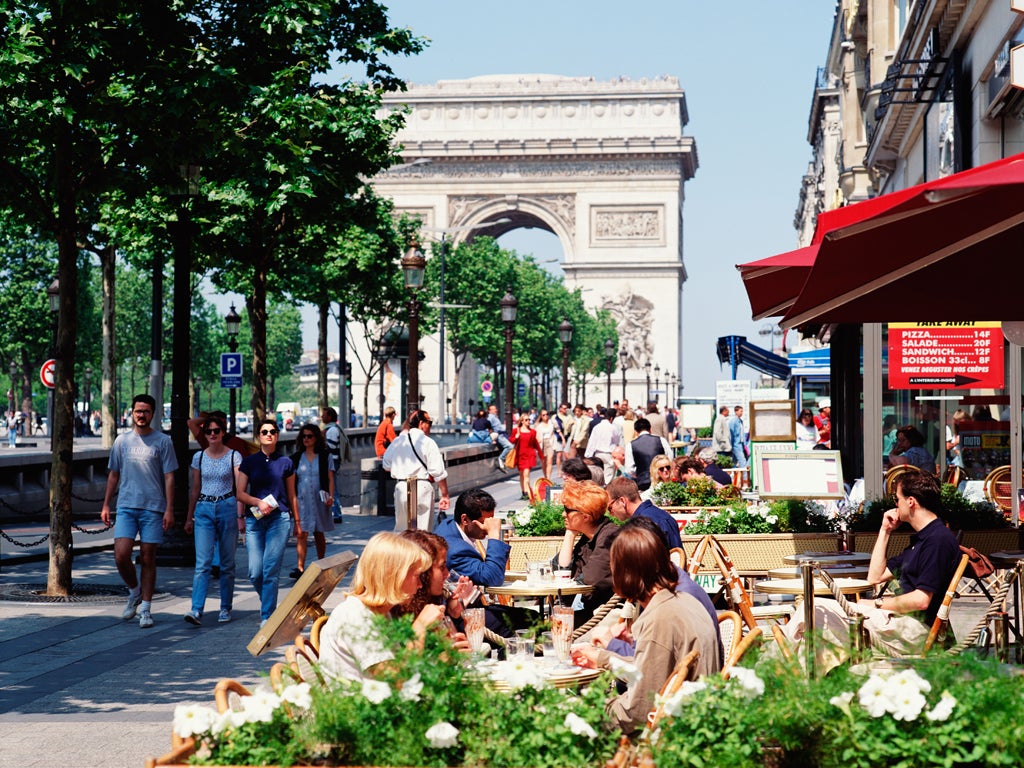
I've raged before about "space", except for its use in "spaceman" or "spaceship". But it has now become a contagion. In just a few days I've made a collection of examples from people who choose words for up-to-date verbal prestige rather than meaning. In Moscow this week, Joy Neumeyer, reviewing a Dali exhibition, wrote that the curator has "transformed the museum space into a surrealist installation". "Space" is totally redundant here. From Paris, I learn that the Champs-Elysées is a "commercial space". In The Oldie, I note that in Camden Market, a flag of Che Guevara now "shares space" with a Duke and Duchess of Cambridge-themed Union Flag.
In Beirut, an American University professor tells the world that the late Lebanese historian Kamal Salibi "created a space in which Lebanon's singularity is underlined by placing Lebanon in its Arab context...", while another Arab writer informs his readers that the Syrian regime's "assets" are "bunched into an increasingly smaller and smaller space". In The Irish Times, I read that a Sligo bookshop, much loved and now closed, was a "shared space", while a spokeswoman for Dublin Port says her company needs "a long quayside space" ("space" surely once more redundant).
Even the London Review Bookshop in Bloomsbury is now, according to its presumably literate publicists, "an attractive space" – when surely "is attractive" or merely "attractive place" would have made more sense. Last week, I even found a "workshop space" available at a conference, thus combining two of my most hated words in one phrase. The British Museum, I note, is advertising "interactive [sic] workshops" on 11 November. Stay away, O readers. Workshops are for carpentry.
Even old clichés are constantly being revived. "Crackdown" died for a while, but is now in daily use for an "Israeli crackdown" or a "Syrian crackdown" or a Cameron "crackdown" on crime (presumably of a less lethal kind). A writer in The Lawyer said last week that lawyers were "up in arms" about a website. My God, I used to write in the Sunday Express about villagers who were "up in arms" about proposed motorways that would cut through their "greensward" – and that was more than 40 years ago!
I fear we will always have to live with this trash. I am constantly advised of boring academic conferences whose participants will hold "plenary sessions" – as if they were at the Big Three talks at Yalta or Potsdam. The Irish Times (again) tells me of New York City Fire Department families who are only now "coming to terms with" their 9/11 tragedies. After which they will presumably be expected to "move on". Cameron added a new version of this when he last week spoke of "an international agenda that should be progressed" over Libya. Which PR idiot decided to use "progressed" in his speech? Or was it Cameron, the PR man himself?
It goes on and on. Sewage turns into "raw sewage" when people decide to swim through it on the Thames – "treated sewage" being, I suppose, beneficial to health – while politicians continue to "fight for their political life" and Africans die from the "deadly Ebola virus" (the non-deadly version probably being as harmless as the common cold).
Someone at the Belfast Buildings Preservation Trust announced last month that "my background is in lobbying and public affairs, about encouraging people to think outside the box". I really – truly – believed that "thinking outside the box" had had a stake run through into heart. I thought another ghastly cliché had expired until I read that the television presenter Tim Lovejoy had found that Ho Chi Minh City was "outside of my comfort zone".
Is there any end to this tosh? A publisher's blurb for a new Middle East book – on The Dream in Islam, an important subject – ends with the observation that by "exploring patterns of dreams ... a cross-cultural, psychological, and experiential [sic and AAAAGH, both at the same time] understanding of the role and significance of such contemporary critical political and personal imagery can be achieved".
There's only one reaction to this stuff. The moment the clichés come up, throw the invitation in the bin or tear up the page. The Duke of Gloucester, George III's brother, once offended the writer of The Decline and Fall of the Roman Empire by greeting him with the imperishable words: "Always scribble, scribble, scribble. Eh, Mr Gibbon?" He didn't deserve that. We do.
Join our commenting forum
Join thought-provoking conversations, follow other Independent readers and see their replies
Comments
Bookmark popover
Removed from bookmarks