Robert Fisk: The new focus of Syria's crackdown has seen similar bloodshed before

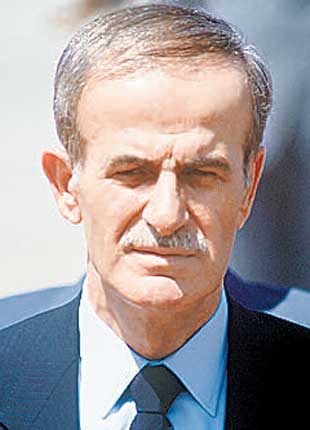
History comes full circle in Syria. In February 1982, President Hafez al-Assad's army stormed into the ancient cities to end an Islamist uprising. They killed at least 10,000 men, women and children, possibly 20,000. Some of the men were members of the armed Muslim Brotherhood.
Almost all the dead were Sunni Muslims, although even senior members of the Baath party were executed if they had the fatal word Hamwi – a citizen from Hama – on their identity cards. "Death a thousand times to the hired Muslim Brothers, who linked themselves to the enemies of the homeland," Assad said after the slaughter.
Years later a retired Dutch diplomat, Nikolaos Van Dam, wrote a detailed study of the Baath party and its Alawi leadership, The Struggle for Power in Syria, and stated presciently of the Hama massacre, that "the massive repression... may very well have sown the seeds of future strife and revenge". Never a truer word – and if the activists' estimate that there were 250,000 citizens on the streets of Hama at the weekend to demand the end of the Assad family's rule is correct, then the seeds of future strife were indeed planted in the historic city's soil 29 years ago.
I remember Hama's first siege, when I managed to enter the city by driving down the international highway and getting right in among the Syrian tanks – which were shelling the most beautiful mosque in Hama – because two army officers asked my driver to drop them off beside the river Orontes, where their units were fighting the brotherhood. The soldiers gave me and my driver tea as we took in this terrible scene.
The fighting had gone on for 16 days; girl suicide killers were taking military lives by exploding hand grenades next to them when they were taken prisoner. I only had a few minutes to see all this. Rifaat al-Assad's defence forces in their drab pink uniforms sat on their tanks. Some of them had been badly wounded – they had bandages on their arms. A woman refugee got into my car with her child, but when I tried to give it food, she snatched it and scoffed the lot. She was starving. These, of course, were the parents of the weekend's demonstrators. Perhaps the hungry child was on the streets of Hama three days ago.
The situation was similar yesterday, after 500 troops surged into the city, wounding at least 20 after opening fire. But it's not an Islamic uprising this time – the insurgents of Hama were killing the families of Baath party members in 1982 – but the very name of the city sounds like a tolling bell in the history of the Assads' rule. In those days, Assad let the press into Damascus – which is how I drove to see friends in Aleppo and return via Hama – but this time the regime has simply closed the frontier to almost all reporters.
In 1982, there was no YouTube, no Twitter, there were no mobile phones. Not a single photograph of the dead was ever published. Some of Syria's tanks now appear to be brand new imports from Russia. The problem is that the people's technology is new too.
Join our commenting forum
Join thought-provoking conversations, follow other Independent readers and see their replies
Comments