Ian Birrell: Mind your language: words can cause terrible damage
When did people with disabilities cease to matter in the battle against bigotry?
Racism was rife in the playgrounds of my youth. It seems incredible looking back, but if someone would not share their sweets or lend a few pennies to a friend in need of crisps, they might be mocked as "Jews". Or even "Yids". Sometimes, children would go so far as to rub their noses in a "Shylock" gesture to emphasise the point.
It must have been hellish for the handful of Jewish pupils. Thankfully, as we grew older and began to learn the brutal history of anti-Semitism, the taunts dried up. Today, such behaviour is stamped upon. A lexicon of loathsome words has been driven underground as we make faltering steps forward towards a more tolerant society.
Sticks and stones break bones, but words wound. This explains why there are such howls of outrage when a low-rent celebrity makes a joke about "Pakis", or when a newspaper columnist delivers a diatribe against homosexuals. Casual racism, crude stereotyping and abuse towards a minority is not just offensive, but corrosive.
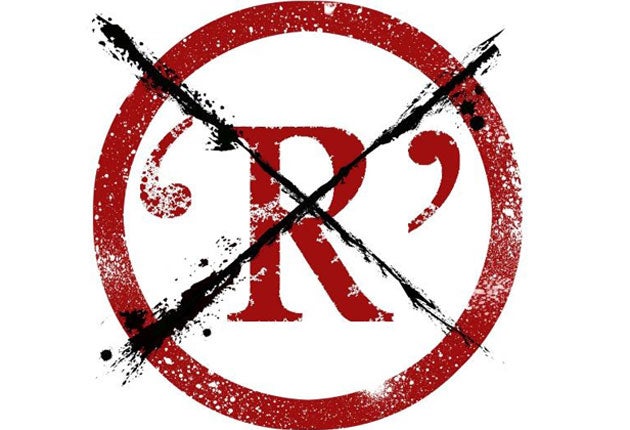
So why is it acceptable against people with disabilities? When did they become such a forgotten minority that they ceased to matter in the battle against bigotry? A group so exiled still from mainstream society that it has become acceptable to fling around hateful words such as "retard" and "spazz" without a murmur of disquiet. Not just in the playground, where these words and many more like them are commonplace, but online, in the office, in the home and in Hollywood.
This week, we had two of the hottest young actors, Robert Pattinson and Kristen Stewart, describe rumours of their romance as "so retarded". Last month, Guy Ritchie used the same word to describe his former wife. Previously, it was Lindsay Lohan, Courtney Love, Russell Brand and Britney Spears. Imagine how their careers would have nose-dived if they used language offensive to gay or black people.
Go on to YouTube and look at all the videos of people dancing "like a retard". Or go on to MySpace and find an oh-so-funny gallery entitled "Adopt Your Own Retard". Or go on to any one of dozens of internet sites and laugh at the jokes about "retards". Or go on to the most popular political blogs and see the word bandied around as a term of abuse; one left-leaning site failed to spot the irony of a rant about "homophobic, racist retards" in a recent posting on the BNP.
It is not just the new media polluted by such unthinking contempt. Listen to radio phone-in shows. Or watch the film Tropic Thunder, which uses "retard" or "retarded"17 times and makes gags about actors going the "full retard". Or check out the Black Eyed Peas song "Let's Get Retarded" with its chorus "Everybody, Everybody, Let's get into it, Get stupid, Get retarded". This from a band whose main creative force was one of the most influential figures behind the mobilisation of support for the election of Barack Obama as President of the United States.
But then, even the first black president makes derogatory jokes about the disabled, while a leading French politician yesterday used autism as a form of political abuse against the Tories, and a supposedly-liberal newspaper splashed it across its front page without comment.
In America, the fightback has begun. The Special Olympics has launched a campaign to drive the word "retard" into disuse, asking people to pledge never to use the word. Many of the pledges are from children such as Samantha, who has a sister with special needs. "All my life I have heard people saying the r-word. It makes me really upset. No one understands how hurtful it is until you have someone close to you being called that."
As the parent of a child with profound mental and physical disabilities, I share Samantha's view. It is deeply upsetting to hear words once used to describe my daughter thrown around as a casual insult. But far worse than my own bruised sensitivities, language reflects how we view the world, reinforcing the exclusion of people with disabilities from the rest of society.
When people with physical disabilities are figures of fun and mental incapacity is a term of insult, is it any wonder my daughter gets unpleasant stares wherever she goes? Is it any wonder parents complain over the appearance of a children's television presenter missing part of one arm? Or a major fashion chain insists that a similarly-disabled worker is hidden out of sight of customers? Or that a college allows classmates to hold a vote to ban a student with Down's syndrome from a barbecue party, as happened this summer?
People should bear in mind that barely one in six disabled people are born with their disability, and the number of people with disabilities is rising. Despite this, there is so little interaction with disabled people that a recent survey by Scope discovered a majority of Britons believe most people see them as inferior people. Given this scarcely-believable finding, it is unsurprising that people with disabilities find it so much harder to get jobs, are far more likely to live in poverty, will be paid less and bullied more if they do find work and, increasingly, are victims of hate crime.
Six weeks ago, Britain was engulfed in outrage over the terrible story of Fiona Pilkington, who killed herself and her disabled daughter after years of hostility from her neighbours. But the reality is that disabled people are regularly mocked, taunted, harassed, hurt and humiliated, with the most vulnerable – those with mental disability – suffering the worst. There are even cases of torture and disembowelment, of a woman urinated on and filmed as she lay dying in a doorway.
Hate crime is the most extreme articulation of the prejudice that disabled people endure on a daily basis. Its roots lie in contempt, fertilised by misguided feelings of superiority. So will anything really change while retard is an acceptable term of abuse, and autism is used to denigrate political rivals?
"We are giving people permission to say and do hateful things," said John Knight, director of policy and campaigns at Leonard Cheshire Disability, who himself had to endure screams of "spastic" from two aggressive men in the street just a fortnight ago. "And it's getting worse. If we don't address low-level abuse, we let people think it's acceptable, allowing it to proliferate and become mainstream."
An investigation into crime against the disabled revealed that nearly two-thirds of people with mental health problems had been abused in the street in the previous two years, with about a quarter suffering sexual harassment or physical assault. But only 141 disabled hate crimes were successfully prosecuted in a year, compared with 778 homophobic cases and 6,689 racial cases. The Home Office does not even bother collecting statistics on disability hate crime, unlike racially or religious-based offences.
We are retreating in the fight to offer respect and inclusion to more than one million of our fellow citizens. John Bangs, head of education at the National Union of Teachers, admitted to me that the promotion of disabled rights had fallen back in the past decade while schools concentrated on racism and homophobia. And as the struggle for inclusion in society gets harder, the stares get more pronounced, the insults more widely heard, the harassment worse – and more and more people with disabilities will abandon their personal battles and withdraw to their ghettos.
Is this really what we want? Or should we at the very least start to mind our language?
Your Independent
Do you agree with Ian Birrell? Do you have any special insight into these issues? Give us your views or your stories and we'll publish a selection of responses. Write to: yourindependent@independent.co.uk
Join our commenting forum
Join thought-provoking conversations, follow other Independent readers and see their replies
Comments
Bookmark popover
Removed from bookmarks