Commentators

Mostly Cloudy with Showers 6° London Hi 9°C / Lo 6°C

Ian Birrell: Why I don't believe that the NHS is sacrosanct

In this heartfelt polemic, based on his family's experiences in the health service, our writer argues that it suffers from deep flaws – and we are wrong to ignore them
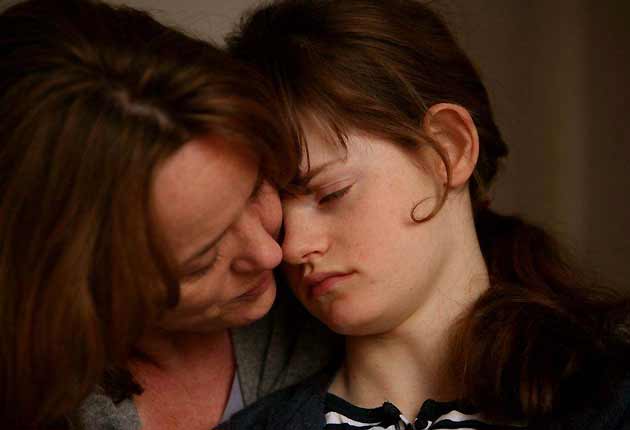
Ian Birrell's 15-year-old daughter Iona with her mother, Linnet

David Sandison

Ian Birrell's 15-year-old daughter Iona with her mother, Linnet

It was a simple thing. Another blood test, some more investigations into whatever flawed gene or missing protein might be the cause of my daughter's troubled life, with her terrible seizures, her blindness, her inability to walk or talk or eat unaided. Over the past 15 years, there have been many such attempts to identify her condition.

One year later, we asked the doctor, a top geneticist at one of the world's most famous hospitals, what had happened to the results. His office told us a rambling story about financial restrictions and the need to send such tests to a laboratory in Germany. They said there was little he could do but promised to pursue our case.

It was a bare-faced lie. The precious vial of blood had been dumped in storage and forgotten. The following day it was despatched to a laboratory in Wales and 40 days later the specialists came up trumps. They identified her condition, an obscure genetic mutation called CDKL5.

The breakthrough was rather mind-blowing, giving us some peace of mind and the chance to talk to families of the hundred or so other children worldwide identified with the condition. It was also life-changing, since it means our other child and close relatives are in no danger of passing on the condition. Indeed, had we known sooner we might have even tried for more children.

But the most shocking thing was not the lying. Nor even the incompetence. It was our total lack of surprise at the turn of events, since after 15 years suffering from the failings of the National Health Service we are prepared for almost any ineptitude.

Of course, everyone loves the NHS now. It is officially sacrosanct. Our doctors are deities, our health care the envy of the world. And anyone who says anything different is an unpatriotic schmuck who should go and join those losers in the United States. (Although American doctors terrified of litigation would have done all the tests possible on my daughter if I'd sufficient insurance, and would think twice about lying to patients.)

So forgive a harsh dose of reality. I used to share these delusional views, wrapped in a comforting blanket of national pride over Bevan's legacy. But that was before the birth of our daughter sent us hurtling into the hell of our health service. Since then, hours and days and months and years have been spent battling bureaucracy, fighting lethargy and observing inefficiency while all the time guarding against the latest outbreak of incompetence.

Despite my daughter being under palliative care, my wife currently spends two hours a day struggling against the system, to say nothing of the other endless appointments that go with being primary carer of a severely disabled child. Right now, following some dramatic hormonal and physical changes, we are waiting to talk to one of our daughter's doctors: the first call went in three weeks ago, followed by three more phone calls and one email. No reply yet.

Or take the request for a bigger size of nappies, urgently needed because of our daughter's sudden weight spurt. A simple thing to sort, you might think. Not in the parallel universe of the NHS. It has taken four weeks, three phone calls, two home visits from community nurses to assess our needs and fill in the requisite forms – and still looks like being one more week before there is any hope of delivery. It may seem comical, but the result is a distressed child and endless extra laundry.

The warning signs of what lay ahead came on our first visit to Great Ormond Street, when there was a young couple who had travelled down from the north-east of England in front of us, their tiny sick baby almost lost in its blankets. "Didn't anyone tell you – your appointment's been cancelled?" the receptionist told them breezily. They looked at each other despairingly.

Such insensitivity is all too typical. When my daughter was seven she underwent a major review at a specialised unit in Surrey, spending three days and nights with sensors connected to brain-scanning devices glued to her head, under constant video surveillance while my exhausted wife comforted her and stopped her ripping off the electronic pads. A huge strain, but worth it given the hope of a breakthrough. When we went to get the results a few weeks later, there was the usual wait. After eventually summoning us, the neurologist asked why we were there. Then she opened our daughter's notes and asked what was wrong with her. Then she couldn't find the results. We stormed out, me in fury, my wife in tears.

There are countless other examples. The celebrated neurologist who measured our heads before blithely asserting that our daughter – suffering up to 30 fits a day – would just have a slightly lower IQ than the average person. The GP who gave her an MMR injection against our wishes, despite warnings it might prove fatal. The nurse who, having been told our daughter was blind, asked if she would like to watch a video. And that is to say nothing of the endless minor irritations: the over-crowded waiting rooms, the blasé receptionists, the unanswered emails, the blinkered attitudes to people with disabilities.

It used to be said money was the problem, but that fails to explain why American health outcomes are not drastically better, given their profligacy. Or indeed, why Scottish death rates from heart disease, cancer and strokes were so much worse when spending levels were one-fifth higher than in England; it cannot be blamed entirely on haggis suppers. And it is striking that for all the money poured in recently, there is little evidence of further improvement in cancer survival rates, for example, or of solving the postcode lottery.

There is no doubt that nearly tripling the health budget in a decade has led to visible advances, especially in the infrastructure. Some of the new hospitals are vast improvements on the crumbling Victorian buildings they replaced, and seemingly small things such as spruced-up waiting rooms and toys for children make a big difference. Unfortunately, it is equally clear that billions have been wasted, poured into a centralised monopoly that focuses on the manipulation of a target culture rather than delivery and innovation. It was little surprise to learn that more managers than doctors were hired last year. And all too often these managers seem to reinforce rather than challenge the patronising attitudes that often predominate, while failing to tackle glaring waste.

One visit to the gastroenterology department of a major teaching hospital summed up many of the enduring problems. Like any hospital regulars, we booked the first appointment to ensure the wait would not be too long. The young consultant was courteous and empathetic, going out of his way to explain the pros and cons of the invasive surgery under discussion. At one point he needed to call a colleague, so picked up the receiver of an old phone on his desk rather than the high-tech device jutting out of his computer screen. He explained that the new system cost £3m but didn't work properly, so no one in the hospital bothered to use it.

After 10 minutes, we left his consulting room. The waiting area felt tense, with harassed parents, bored children, raised voices and too few seats. This unfortunate doctor had to see more than 50 patients during his two-and-a-half hour clinic – or one patient every three minutes, with no time for reading notes, let alone a break. And we had already ruined his schedule. No wonder people were getting exasperated.

These are, of course, just snapshots over more than a decade. We may have been desperately unlucky, and friends who have suffered heart problems, cycling accidents or had very premature babies will testify to flawless treatment. But then I know of other friends with equally terrible experiences of arrogant doctors, disinterested nurses, lost files and suchlike. I could tell you of the single mother in Scotland rung in the middle of the night and asked if she would like doctors to resuscitate her profoundly-disabled child – and then they did nothing until the mother reached the hospital and berated them. Or the parents of another child with a life-threatening tumour whose care was a litany of mistakes, but when they complained to the hospital's chief executive the notes went mysteriously missing. Or the elderly cancer patient constantly ignored by her doctors. And so on and so on.

For all the rhetoric, this is daily reality in our health service. This is not to denigrate the many fine workers, both on the frontline and behind the scenes. We have come across doctors, nurses, paramedics, therapists and many others who have been supportive, caring and inspirational. Some have gone way beyond the call of duty to help in times of distress or difficulty, such as our palliative care team and the community nurses. But equally, we have come across too many ground down by a sclerotic system that crushes out the idealism or caring nature that presumably made them join the health service.

Clearly there is systemic failure. And it is a question of management, not money. Some of the worst problems encountered have been at the hallowed Great Ormond Street Hospital for Sick Children, which uses the strength of its brand to suck up money and increase its reach. Many in the medical world are infuriated by its endless growth, but scared to take on the behemoth. But behind the soft-focus fund-raising and cuddly image lurks inefficiency and, all too often, needless insensitivity.

Indeed, should you feel moved to give money to help sick children, I would advise you to give to the children's hospice movement instead. As I write, my daughter is at Shooting Star in Hampton, Middlesex, a particularly deserving recipient. It is interesting to note that this sector, which derives a paltry five per cent of its income from statutory sources, does not seem bedevilled with the woes that afflicts so much of the public sector.

Anyone who has used health services in other Western nations knows that visiting the doctor or a hospital does not always have to be a frustrating experience. It is possible to run a health service around the needs of the patients, with appointments kept, notes read and consultations in a pleasant, friendly environment.

Given the swelling black hole in public finances, ageing population and rising costs of health care, Britain needs a serious debate about the future of the NHS. Sadly, the indications of the past fortnight are that we are too infantile to have such a discourse. A deranged Tory MEP became engulfed in the crossfire over Obama's reforms after some fatuous remarks in the US media, and back home – in a depressing foretaste of the election campaign – Labour uses it to smear the Conservatives, and panicked Tories rush to pay homage at the altar of Aneurin Bevan.

For all the supposed cost-effectiveness of the NHS, no other country has followed our model, despite what some Republicans might claim. Instead, we should be looking at what we can learn from abroad. No one in their right mind would want to import the American system here. But there are elements to admire: their popular community hospitals, the emphasis on effective diagnosis, even aspects of the much-derided compensation culture. And turning to Europe, there are systems that enshrine consumer choice, meld public and private systems, are cheaper than our own and have better health outcomes.

France is famous for its centralised approach to government. It also performs well on almost all health rankings, and has been top-ranked by the World Health Organisation. Its insurance-based scheme appears a chaotic blend of public and private partnership, but in reality is a sensible solution that blends the interests of patients with the need for some centralised direction, professional autonomy and safeguards for the poor. Like elsewhere in Europe, it has found a way that for all its faults harnesses the benefits of competition within a universal, patient-centred system. We are fumbling our way there, but it is one step forward and three back.

So what should be done here? I can only offer a few suggestions towards a wider debate. Firstly, it seems obvious that any organisation employing 1.5 million people is going to struggle with the concept of dynamism. I suspect the Chinese People's Liberation Army and Indian Railways – two other similarly-sized employers – suffer from similar deficiencies. Surely it makes sense to break up the monolith, thereby introducing genuinely competitive elements while retaining the principle of state-financed care that is free at the point of use. The more patient choice, the better the service will be. And trust me, patients can make highly-complex choices when it comes to their own health.

Secondly, the target culture should be made less proscriptive and the quality of managers raised. I don't mind managers, just bad managers. Thirdly, these managers and all the medical staff should be given greater freedom to experiment and innovate. This means some failures, but it is vital in any giant organisation. And the Government provides a safety net. Fourthly, there needs to be as much transparency as possible, covering everything from spending to surgical outcomes. This is the information age, after all – and it is our money and our health service.

Fifth, health workers must all realise they are meant to be serving the public. I wonder if medical schools should place greater emphasis on personal skills rather than just narrow academic criteria. And has the drive towards graduate nurses necessarily been a total boon for the care of patients? Finally, politicians should stop trying to micro-manage the NHS – and in return voters and, yes, the media should stop blaming them for everything that goes wrong.

Over the years, I have raised these issues with many politicians. I suggested to William Hague when he was Tory leader that he just tell the truth to the electorate and admit the NHS was a disaster zone. He laughed, and replied that he couldn't possibly say such a thing: "You're far too right-wing on health for us."

Later, I wrote an article for a weekly journal that ended with a challenge to the then Chancellor, Gordon Brown, at the time that Tony Blair and Alan Milburn were coming to terms with the need for root-and-branch reform. Unfortunately it was delayed a couple of weeks, coming out on the day of a group breakfast at Number 11. As I entered the dining room, Mr Brown gave me a wolfish smile and ushered me to sit down between him and Ed Balls, before the pair took me to task for the next half hour. Both seemed unabashed statists when it came to health, who saw more money as the answer to all problems and had little sympathy for the idea of introducing competitive or patient-led elements.

Likewise, David Cameron's experiences have turned him into a cheerleader for the NHS. He is angered by the failures of specialist education and shortfalls in respite provision, but was genuinely moved by the healthcare offered to his late son, as I know from many discussions with him. Days after becoming leader of his party we met for dinner. "I am not going to do what you want on the NHS," he said. "I will reform it if I get the chance, but I won't rip it apart."

Then there was the senior Labour Cabinet minister who told me about the nightmare he was enduring with his elderly relative. "I used to think you had been driven a bit nuts on the health service," he concluded. "Now I think you don't go far enough. It's awful. Absolutely bloody awful. We've got to do something about it."

I won't hold my breath.

Like the health secretary, I am an Everton fan. And like Andy Burnham, the national health service and Everton are among the most cherished institutions in my life. My daughter is still alive, for which I give thanks to the support, dedication and friendship of many in the health service. But it is precisely because I am such a fervent admirer that I believe it is so shameful that the NHS is allowed to limp on in its current state. For too many people, especially many of those most in need of its help, it is something of a disaster zone. The NHS is a sick institution, and cheap political point-scoring will do nothing to solve the problems. We need to find a cure.

i.birrell@independent.co.uk

Post a Comment

View all comments that have been posted about this article.

Offensive or abusive comments will be removed and your IP logged and may be used to prevent further submission. In submitting a comment to the site, you agree to be bound by the Independent Minds Terms of Service.

Comments

Page 1 of 3
<<[1] [2] [3] >>
Ian Birrell: Why I don't believe that the NHS is sacrosanct
[info]endconsumerism wrote:
Friday, 21 August 2009 at 01:04 am (UTC)
I sympathise with you , as the father of an autistic boy with severe learning difficulties.
But I am also a GP and as a father and as a doctor I have to say I disagree with you . I think you have been dealt a lousy hand , but the NHS is not to blame.
The fact is that healthcare is all about winging it and making do. There are simply insufficent resources anywhere in the world to cope with the unlimited demands of consumers who are not billed for the services they consume.
I think the US government would be mad to start up a NHS equivalent, there is so much wasted on scroungers demanding dandruff shampoos and house visits whilst the needy make do without things they are entitled to.
Prescription charges should be re-introduced for non-essential items....if it is worth it for someome to go to a GP to get a prescription to save £6 then it is valuing a GP consultation, real market value £75 ,at £6 .That is barmy.
The more the state bends over backwards to help ,the more it gets abused, and then the important stuff, like your child's health, gets overlooked.
If some patients can and do pop in to see their GP every week because it is free that is also barmy.
In some parts UK they are now laying on free transport for hospital VISITORS while hospitals elsewhere are closing down.
People wait until out of hours to get transport laid on for free to the emergency GP centres.
NHS24 is a classic example of an expensive and unnecessary service pandering to neurotics.It should charge £1 a minute which is what it costs to run and then there would be no queues.
Billions of pounds are wasted on interpreters, equal rights facilitators , opinion surveys, mobility cars,endless relocations and demolitions and refurbishments, unnecessary anbulances,re-organisations and name-changes.
The endless pandering to consumers' whims insead of encouraging them to ration their selfish demands originates from the fact that there are no votes in telling people to put up and shut up!
Give taxpayers a tax-break if they do not use the service and benefits recipients a benefits boost if they do not consult more than necessary , or if they do not request frivolous items , or do not fail to attend expensive hospital tests and appointments.
In the UK people are now so full of themselves that they ignorantly argue with experts ......the public do not recognise they are not omniscient and professionals are derided day after day. A quarter of consulting time is spent arguing with idiots who think they know better, and that includes intelligent middle-class idiots refusing to give their children antibiotics or vaccinations.
It is not allowed nowadays to tell people to get real.
The patient's views and treatment wishes over-ride any notion of whether it makes sense or not.
There is no facility on the NHS complaints system to tell a patient that they are a manipulative. obnoxious , psychopathic liar and a troublemaker. No, the patient is now always right and has to be appeased and the healthworkers have to be sent on communication skills courses to be re-educated.
It has all gone barmy and points to the self-destruction of the NHS unless it refuses to pander to consumer greed or starts charging realistic fees.Asa free service it has no value for a huge and vocal minority.
It is time the NHS started charging neurotics for plaguing the NHS with their incessant self-obsessed and greedy concerns.Often their demands are totally disproportionate to their real needs,
And people like yourself receive substandard care and your concerns are unheard because the background bleating of the worried well is deafening.
Re: Ian Birrell: Why I don't believe that the NHS is sacrosanct
[info]1maia wrote:
Friday, 21 August 2009 at 02:46 am (UTC)
But, i think there are votes in not spending all the nhs money on rebranding and modelling nhs services on boutique hotels: it's just that these votes, for core services well funded and not meddled with by politicians, patients or media scares, are well to the socialist of any party you can vote into office. Jade Goody will dictate health policy as long as there is easier publicity in talking about her than doing anything. It is not the electorate's fault that spin has come to decide everything, those who do so bear moral responsibility. A party differentiating 'need' from 'want', for instance hospital and gp transport for the blind versus single mmr shots, would be genuinely popular - at least try it.
And after my mother was told she had two weeks to live by a doctor who hadn't bothered to check if the lump was benign or malignant and suffered a break down, i have gone off arrogant doctors.
(no subject) - [info] - Friday, 21 August 2009 at 01:38 am (UTC) Expand
Re: I agree...what a waste of taxpayers money on you.
[info]pliny_ii wrote:
Friday, 21 August 2009 at 01:36 pm (UTC)
What is sound about saying that every person has a affirmative legal obligation to provide medical care for every other person in society? What is sound about reducing the quality and quantity of care available by embarking on a massive national program that creates disincentives for both doctors and patients to behave in ways that would further social good? There is nothing sound about the principles underlying NHS. Indeed, NHS, as a service, is much better than the rotting principles that undergirds it. That the system hasn't utterly collapsed under its own slothful weight is a mark in favor of the strong English spirit.
[info]1maia wrote:
Friday, 21 August 2009 at 02:26 am (UTC)
Ok, mainly i agree with you, but the nhs is about free at the point of delivery. One could change everything else and keep that. It is hard at present to both argue for the nhs and against its creeping privatisation under NuLabour and ruin by funding management over frontline care.
In carework they never staff for what they need, they staff for if nobody had holiday entitlement or was ever off sick, and a bit under. Legally you can't leave if someone does not turn up to replace you on shift. People end up working random shifts without notice and doing more than one person's load, 'burn out' as we called it or disappear into management. People try to escape the neverending stress by running off to do paperwork, you hide in the toilets, it's ridiculous. They fill the gaps with agency staff who've never been there before and don't know where anything is or what they're supposed to do.
Great Ormond St. etc. They're teaching hospitals, i.e. research=universities, they care about their RAE rankings and getting more funding for their cutting-edge research. Which is very good but not of interest to most patients.
Finally, Europe. Don't kid yourself about it, i've lived and worked in Italian health care (don't get me started-how about mental patients tied to beds and starved? with the whole town knowing about it?) and experienced the Dutch (first thing from the ambulance: 'where are your insurance documents?' and inept). The French left (ok, Le Monde) claims their health system is two-tier, with results in the public hospitals getting forever worse. Don't imagine foreign gods do not have clay feet!
[info]1maia wrote:
Friday, 21 August 2009 at 02:37 am (UTC)
I meant to also say, that the stressful jobs in health care are always, you are told, worth doing because you get more rewards than money - that is, that such working conditions and pay are acceptable because you know you are helping. But a tendency to self-sacrifice is not a sustainable career motive- you need to be quite hard to deal with the stress, so the tough alone survive, which as you say is bad for patient care.
The competetive element in Germany is like the competitive element in our railways - no supplier offers any information about any other supplier, and as neither is connected to the insurer, even finding out about what treatment is possible is for you to research. Then you look for who provides it and if the insurer will pay for it. Lots of choice, but my friend said after her mum became senile and needed full time care, just researching the options had cost her two weeks' holiday spent hunting fulltime.
I think the problems you mention are about accountability - has the blood been sent? Have all possible tests been done? The monolithic public sector is very easy to hold accountable. The private company is not - consider those people in (Portsmouth????) who had an eye operation performed by a private clinic supplementing an nhs - you know, one of those out-of-hours private services they added a bit back - the eyes got infected or in some way they were blinded in the eye, only to find they could not sue the private american company for compensation, unlike the nhs.
The NHS - comment back
[info]ircloke wrote:
Friday, 21 August 2009 at 03:15 am (UTC)
Ian,

A well balanced script that tries even handedly to be fair to the NHS given its aims but at the same time be constructive in criticsm and lets face it everything can always be improved. I have lived in the US and the UK and now reside in South Africa. My children were delivered in the US and my wife was diagnosed with an ectopic pregnancy there and previously in the UK was treated by world renowned neurolgists for epilepsy in the UK.

The US works because of the payment system, doctors are courteous as are nurses and I do not object to the co-pay of 15-20$ per visit which is refunded for those on Medicaid. Diagnosis is prompt and if required urgent, as an example I was diagnosed with pneumonia in the US and treated immeadiately, in the UK my NHS doctor told me I had a cold and should come back in two weeks time which by that time I was almost submitted straight into casualty after I went private. My wife was 6 weeks pregnant in the US, went to see the her obygen (gynacologist in UK), who was concerned, immeadiately scanned her and was submitted that day for surgery on an ectopic pregancy. The NHS does not scan routinely until 3months I think at best - by this time this could have killed her. The US system isn't perfect however, there are too many operations carried out because of insurance cover and there is the gap usually between the lower paid who are covered by medicaid and the middle class who are covered by private insurance.

The NHS by contrast is a statist monoply that was invented back in the 1940's, how many services have changed since the 1940's, just look around us, change is everywhere and this constant we can't change the NHS is a major concern. As you rightly point out if this was so good then surely others would have copied it. Experiences with the NHS vary, I have had various friends who have had trouble with child delivery, one who had the heart monitor disconnected by a nurse not recognising that the placenta was wrapped around the neck and causing the child to be permanately paralysed. Despite the hospital recognosing this they denied it and lengthy court action resulted. Once off you could explain this as things happen but numerous other accounts come to light. My father had surgery on a fractured ankle. The elder generation trust the NHS even despite having private health plans, and it took him 6 months of soreness before he went private whereupon the new doctor performed an x-ray and found that the ankle surgery had not been performed correctly. The NHS had washed their hands and said job done, move on and not even checked their workmanship.

Too often the failure to look constructively at the NHS prevents changes being made. Yes we have a great service, its not free though - you pay through your higher taxes, but it can be improved. The service of 1940's to catch all is not appropriate for the service of 2010. We can't afford it as a country and also the cradle to grave care system has gone. We need to evolve into a system where co-pays are required for those who can afford it, centres need to be located / closed where they are not needed and 1.5million people are freed to perform their jobs. The unfortunate thing is that given the hysterical reactions of the political class to any type of criticsm of our beloved NHS, witness twitter, prevents any positive changes taking place. Change can be good and just as you are not driving a car made in 1940, neither should we be using a service whose aims are unchanged from the 1940's.
Subjective love of the NHS leads us all to suffer
[info]lush_laroo wrote:
Friday, 21 August 2009 at 05:31 am (UTC)
What a horror story a nightmare of shoddy treatment especially from the Consultants, my heart goes out to your daughter and your family
Most telling line that encapsulates all that is wrong with the NHS is when you say:

"health workers must all realise they are meant to be serving the public":

A telling true statement that means even going to the doctors is a very unpleasant and stressful experience and one I try to avoid at all costs.
If you have had like me experience of private health services in the USA and Australia you will understand exactly what I mean

Never will I forget at my local hospital waiting to be seen for progressive deafness the nurse quietly saying the next name to the packed waiting room,which led to much embarrassment and distress as people who could not hear missed their turn, this is a microcosm of the NHS in practice, a monolith of vested interests, rude nasty nurses, arrogant rude doctors especially consultants and administrators by the thousand dedicated to extracting the maximum in financial benefit.
I dream of replicating the French model but the British seem to have a very warped view that the NHS is sacrosanct despite its obvious failings as so well put by your daughters experience akin to the NRA (National Rifle Association) in the USA.
Despite a murder rate by shootings viewed in Europe as a civil war in any other country a sick reverence for the right to carry arms allows for this senseless slaughter to take place again a parallel with our NHS where this morning I read deaths by MRSA in the UK are greater than those who die in road accidents which number in the thousands.
What more do I need to say when faced by the reality of the last statement.
Confirmation of uncaring "professionals" in the NHS
[info]lush_laroo wrote:
Friday, 21 August 2009 at 05:38 am (UTC)
Having read "endconsumerisim" 1.04am need I say more?
What a nasty, uncaring arrogant hating all patients attitude what a confirmation of my last comments.
He sound just like my local GP and the reason why I stay as much as possible.
I cannot wait to get back the USA and to see a smiling caring polite Doctor.
NHS
[info]rightnotleft wrote:
Friday, 21 August 2009 at 06:26 am (UTC)
I have come to the conclusion to reform the NHS it will be first necessary to destroy the Labour party as a credible political force. Maybe one of the best reasons to vote for any other party. In a post Labour world, rational debate could take place about health provision. Ideas such as the following could then at least be considered.

It's possible to classify different types of crime and deal with them accordingly. Health problems should also be classified. The available funds would be fed into the most seriously conditions and in waterfall fashion surplus funds would spill over down to lower levels. When funding was short conditons at the lowest level would collect contributions from patients - means tested if necessary. Professionals at each level would supervise the level above them to ensure they weren't holding back funds unecessarily.

The above system would be largely self-regulating. Funding between levels would be based on medical condition. The level of co-payments would fluctuate according to the need for more serious conditions. Government would only determine the total amount available to the health service.

I can think of many snags to the above system. But it has the one big advantage that no serious condition would go untreated and minor conditions would still be trearted albeit with some contribution.
Re: NHS
[info]chanch5 wrote:
Friday, 21 August 2009 at 11:10 am (UTC)
"necessary to destroy the Labour party as a credible political force"

The last three or four party leaders have been doing an excellent job of that.
it never was
[info]gowithwi wrote:
Friday, 21 August 2009 at 06:49 am (UTC)
Try the NHS 30 years ago . Before U.S OF A health insurances decided to make a buck
in this country. Dismantling has been happening for a long time . Gradually
a social service, yes social, has been turned into some kind of market force.
Instead of care, you get 4 forms ,ten junior administrators ,3 accountants ,2
managers, to answer too ,before you even get to see someone, that can help you
with your cracked skull. A clever strategy ,designed 30 years ago to get
the NHS exactly to this breaking point. People make a country. Politics
should concern themselves with the health and education of the people and
nothing more. Forget that expensive amount of money spend on administration.
Why spend all this money, invading foreign countries,because bush and blair say so.
the NHS system is brilliant . It is the modern politician with his/her greed
that becomes the tool of the insurances .

[info]ajwimble wrote:
Friday, 21 August 2009 at 07:27 am (UTC)
I would certainly agree that the NHS is not sacrosanct. I am agreat believer in the principle of universal access to healthcare, but the NHS is only one way to deliver. Much of Eurpoe use alternative methids that seem to work quite well. Even if the NHS is the best way to deliver universal health care, it is still far from perfect so it is always right to question the way it works and how it could be improved.
Teach about caring.
[info]francetta wrote:
Friday, 21 August 2009 at 07:35 am (UTC)
I think what the NHS needs a good dose of 'figs', to clear its 'digestive'system, in other words a clearing out. I too have experienced what I can only say is quite bizarre, quite recently ( wait for it). My pre operation was due, and I received the letter for the appointment in Hemel hempstead hospital.
The minor op was for back problems, so imagine my astonishment, not to say bemusement, when I read that as I was about to undergo heart surgery, this pre op.appointment was necessary.
Eventually I managed to get through to the appropriate department to say this was an error which needed correcting. The response from the receptionist was mind boggling, telling me not to worry as they had run out of standerd letters and this one had been sent as a replacement under these circs.! I am still waiting for a response to my complaint three weeks later.
Yes, I think the NHS needs an overhaul, but how and where to begin is the question. There is good and bad within the system, the task is to clear out some of the bad and indifferent pratices that to happen, and which lead to major errors being made, sometimes life threatening. My small sample may be the tip of the iceberg, but it does show holes exist that must be cleared up.
No the NHS is not and neither should it be, sacrosanct and untouchable, none the less I still beleive the overall principle is right.
European alternatives
[info]rgk66 wrote:
Friday, 21 August 2009 at 08:33 am (UTC)
One of the problems with the NHS is that it is free at the point of delivery, which creates (in theory and sometimes in practice) almost unlimited demand. Here in Sweden you pay for a vist to your GP (about £15-£20), your dentist (£60 for a check-up) and you pay for your first consultation at the hospital (£20-£30). You also pay for your presciptions, up to a maximum limit. And all adults pay - those on low incomes then have to reclaim the cost. Then of course theres our taxes (58% top level, for all earnings over £3000 per month). What do we get? Good healthcare, clean hospitals, short queues. Still not short enough for some, but better than the UK. Making people pay gets rid of those who needn't really go to the doctor, and the taxes pay for the quality. Also, you can choose where to go - most hospitals, GPs and dentists are not state owned (they are often trust owned), and consequently there is some competetion which helps keep standrds high.

So why can't the NHS be like this? Simple - the NHS was only intended to be a safety net (like the US Medicare/Medicaid) and not a system for all, and its set up reflects this. If the UK wants good public health care then I think it needs to consider how this should be organised and funded. Perhaps some sacred cows (like free at the point of demand) need to be reconsidered...
[info]mwreid wrote:
Friday, 21 August 2009 at 09:03 am (UTC)
What a heart rending tale.

Birrell is spot on. If we had the French system we would enjoy a far better and safer system.

The fundamental difference is that there the state provides money in the form of universal insurance. The patients then decides who to go to and spend it. Health is essentially all private.

It is also clean, waiting list free, and far safer. It isn't perfect but the French experience is on a different planet from the UK.

But ... doctors get paid less - there are more of them - and there is no monolithic state run employer employing 1.5m people. Those 1.5m NHS employees have a huge vested interest in resisting refrom -half of them (the non medical half) would not be needed in France.

The French don't spend any less than us - but they spend more of it on medicine and far less on ''managers''.
NHS: Not Great, Not Terrible
[info]flacksteen wrote:
Friday, 21 August 2009 at 10:09 am (UTC)
It is bad to generalise from one’s own experiences as Ian Birrell does. Despite all the sad individual cases one should look at the figures (at least at those which are fairly reliable, such as OECD statistics). As everyone’s opinions are coloured by their own experiences I can say that I have lived with the NHS most of my life, but spent 20 years in the USA, firstly insured under various commercial insurance schemes, and latterly under Medicare. I have a chronic complaint which requires regular treatment. I recently returned to live in the UK.

The simple fact is that the NHS does not provide a wonderful service, but it is not dreadful either. Comparisons are always difficult but it certainly seems that outcomes for certain types of problem (for example prostate cancer) are much poorer here than in the USA, or in continental Europe. American medicine tends to go over the top; if you present your doctor with symptoms he will conduct far more tests than in the UK. Many of these may be completely unnecessary, but when the tests are done the doctor is able to tell you with confidence about your condition. In the UK there is a tendency to rely on experience and diagnose the illness for the symptoms presented and, maybe, one or two tests. The doctor then hopes that he got the diagnosis right, and that if he did not the consequences will not be serious. And herein lies a major problem. In the USA there is a very good support system for doctors: MRIs, CAT scans, blood tests, X-rays and many other diagnostic services are available more or less on tap. In the UK the money has been spent on the doctors, not enough is left over to give them the back up they need.

And here we come to the nub of the problem: attitude. Doctors will, usually with justice, say that there is nothing much they can do about waiting times and administrative delays. Such matters have, in large part, been removed from their hands and given to bean counters. The latter are interested in abstract notions of efficiency, not in helping patients. It is true that there is a woeful shortage of resources, but there is an even greater shortage of ability to administer those resources. Such facilities as exist are underused because the NHS does not possess the administrative talent to exploit them properly. (My local hospital in the USA, owned and run by the county, had its first operations at 6 am each day and continued until it was finished, whatever time that was, most of these operations were done on people who did not pay for them and often had no insurance.) The NHS administrators' only job is to manage ‘something’ (not ‘someone’). The patients are just a statistic, rather than a human being with a worrying problem they would like solved as soon as possible.

Attitude extend to patients too. The NHS is free at point of service, although it is not free. My local doctors’ surgery, with five doctors, posts statistics about missed appointments. In a month 75 doctors’ appointments will typically be missed – about 15 for each doctor. This translates into a slap into the face for the doctor – and about £375 a month of revenue for the practice (the NHS costs a doctor visit at around £25). If we got rid of the concept of ‘free at point of service’ – charging, say £20 for a doctor visit, repayable a month later if you actually turn up, then a lot of appointments would not be made in the first place. Most other single payer health services, with noticeably better services, do this. The sacred cow of a free NHS needs to be revisited. It is not free: we all pay for its inefficiency in many ways. The worst price we exact is form those leat able to pay it: the seemingly endless, worrying and debilitating delays caused by waiting for tests or specialist appointments.

The Secretary of State for Health needs to look at payment for service, and at sanctions for those who abuse the NHS.
A new deal for the NHS
[info]mrjol wrote:
Friday, 21 August 2009 at 10:18 am (UTC)
As a father of a young daughter my heart goes out to Mr Birrell and his family. No one should have to go through what has happened in this particular case. He describes a system of failure, incompetence, waste and untruths. There are no excuses for this, whatever the health system in place.

There is no free healthcare anywhere in the world. The NHS is paid for by all of us through taxes on what we earn and/or contribute to the economy. If our contribution remained proportionately the same but was laid out in front of us ie. through small charges, refunded for those unable to pay, at the point of accessing the service, we would think more carefully about when to enter the system. Small 'charges' would not put off those genuinely needing to access the primary care system. The NHS is sacrosanct in terms of the principle of universal access to all. This has been confused with the 'free for all' concept discussed by politicians and the media. we have lost sense with the real value of the NHS, of what we pay for and what we get.

I remember the 4 hour waits and crumbling walls of my 1980s hospital clinic visits. It is about an hour now and the decor is more pleasant. Investment has made a difference. However 'customer' or 'patient' service remains sporadic with some staff in hospitals hating their jobs so much you feel as if you have a swear word tattoed on your forehead when simply asking a supplementary. Take the pressure off the system and those who work in it by reducing through traffic. Pay needs to drop for GPs as we need to direct funding genuinely to preventative care and educating the populace to care for their own needs before even entering the GP surgery. That will leave those with genuine symptoms to be treated quicker, with care, empathy and sympathy. This will avoid situations such as those described by endconsumerism. It is not about spending more or less. It is not about ending the principle of universal care. It is about putting the resources in the right place and being honest with people that if you have a free for all you will often get a bad service when you get there.
Motive, motive , motive
[info]sillofthedoor wrote:
Friday, 21 August 2009 at 10:33 am (UTC)
I agree with most of your points but find it hard to agree that destroying the NHS will get any better results than the endless restructuring which have lead to at least some of those points, the micromanagement pandemic to name one.

It all comes down to motive and while many of the changes introduced along the way are motivated by kneejerk reactions to tabloid type campaigns, or a desire to fit in with todays fashionable theory, the NHS is at it's core a service.

As such it all over the American system which is at its core a profit maker for insurance, medical and pharmaceutical companies with bits of service rather resentfully added on.

The French and much of old Europe have it far better than the NHS of course, because they have kept, despite our insistence that it is wrong, to the original intent of a national health service. They retain the concept and ethics of a health system there to serve its people. In that france's health system is more "socialist" than ours even though it uses a mixture of private and public systems. It puts people first.

Under the Tories our health service was run down, illustrated by Thatcher's ideal that there was no such thing as society. Under Blair, it was turned schizophrenic trying to be both a service and fulfill a profit lead free market model, ua reaction also to charges that it was wasting money, non the less it detracted from the its core puprose in being. Somehow we have to get back to not just the idea of service, which is freely bandied about by all, but understanding the idea of service.

There will still be the problem of resources meeting demand as there is everywhere, but the answers forthcoming will be more relevant. Further as endconsumerism alludes you do not serve the health of others by pandering to their every whim, medicine should help people to stand on their own two feet.

It all comes down to motive, if we are doing it for the right reasons, any mistakes along the way become obvious, and it doesn't matter what model is used because it will follow the lines of our intent. Without that core sense of purpose it gets lost.
Re: Motive, motive , motive
[info]popskihaynes wrote:
Friday, 21 August 2009 at 04:23 pm (UTC)
Stop this nonsense !

"As such it all over the American system which is at its core a profit maker for insurance, medical and pharmaceutical companies with bits of service rather resentfully added on."

Unless you have lived and worked there, this is a totally ignorant sentence. The average goodbye when you leave a Dennys or some such place will be "Have a Nice Day" and it is not synthetic, it is truly genuine, there is absolutely no Country in the World that prizes "value for money service" more than the USA and that includes in medicine. My only brother Michael both lived and died in New York after a 4 year illness. That was 1978 at a hospital called Lennox Hill and I can assure you that the real "value" of that experience was as a father bringing up young children and the NHS, we weren't even within spitting distance in terms of simple human honesty like: "You do know that your brother is dying and there is nothing further that we can do for him ?"

I have no experience of the current system within the US but I believe after 2 years, the American Government (Federal I assume), picks up the bills. My brother was married to an American but had opted to have "Permanent Residency" rather than becoming an American Citizen, likely an odd choice because the consequence was and he was ill for 4 years, the insurance company could pass the cost of treatment on to the Federal Government but not being an American Citizen this was not possible.

Because at the time he was studying for an American Phd, his health cover at the time of the incident that started all this, he was covered by his wife's employment "employee insurance". Every January, they had to write out a cheque for $1200 and then everything else was paid for. At year 3, the American Insurance Company could have "washed their hands" and Michael would have been bought back to the UK for further treatment but, they didn't and kept funding his treatment until he died two years later.

Yes, it is a business and there maybe problems connected with that but please, never have the arrogance to assume that American citizens do not ask for and even demand, "quality treatment and care" for their money.

Sir, you are a complacent "a**e" who thinks himself so superior to others but in reality are a complacent ignoramus. Yes the French have "retained" what ? There is a French dimension but French friends of mine who understand the issues will tell you that for the average, the in methods of funding, France has adopted NHS principles which is why they have spare capacity.

"Under the Tories our health service was run down, illustrated by Thatcher's ideal that there was no such thing as society."

You are clearly in your dotage, these two elements have no connection except in the decrepit mess that your intellect has become. I have no brief to defend the woman but in all honesty, this "remark" has most often been used totally out of context, sorry Muppet, she said it under different circumstances and on a rather different topic but there you go. If you repeat a lie often enough as Adolph Hitler found out, you can convince the weak minded that it is truth.

Thatcher didn't "run down the NHS", frigging old idiots like you kept breathing was and remains the real problem. The NHS and the "Welfare State" was set up in a world which I remember clearly as a child serving on the Altar during the 1950s. Chap retired from a physical working life at 65, died at 67 and I served at his burial. Like Road Tax isn't spent on roads, NIC isn't spent on "whatever", today's taxes pay today's costs and benefits which includes the NHS and, that has to change. How it changes will be a problem but then I guess, you will have shuffled off this mortal coil.

No it is not just about motive because that has an "emotional" bias, it is about "resource management" and that can be described in various ways such as "rationing", "excess investment" and the beat goes on. But having looked after my Parents into their late 80's and I in my early 60's, God willing I will not live so long, let me die the moment I can no longer wipe my own arse ! Can you ?

Re: Motive, motive , motive - [info]sillofthedoor - Friday, 21 August 2009 at 08:34 pm (UTC) Expand
Waste ...
[info]andrewholt wrote:
Friday, 21 August 2009 at 11:20 am (UTC)

I work in the IT industry. I have worked for the NHS twice. Once as an employee, and once as a contractor.

The institutional waste is staggering. Upon everything lies the stultifying effect of bureaucracy.

The structure of the NHS was conceived in the days when central planning was believed to be the way forward, after all it worked to win the war, now let's win the peace.

As a result you have an organisation that is rigid and inflexible. Unable to cope with a changing world in a timely manner, and in no way reflecting the needs and situation of anywhere in particular.

The NHS needs to become a decentralised organisation. There was a time when this looked like a possibility (my first time at the NHS) but this trend was reversed.

Real autonomy for the regions, what is a health issues in Newcastle may not be one in London.

Co-operation between regions on standards (like medical records) but no over-arching programs, such as the National Program for IT (NPfIT).

Decision making led by clinicians not professional managers and accountants.

Real change needs to come, not just cosmetic, and stop throwing ever increasing amounts of money at them.
NHS
[info]rooster281 wrote:
Friday, 21 August 2009 at 11:21 am (UTC)
Be very vigilant if you have relatives over the age of 80 going into hospital. My father died of hospital pneumonia and wasn't seen by a doctor for 12 hours in spite of having a high fever, and he was IN hospital. That experience left me wiser and I had to battle to keep my mother alive after a stroke.

Initial recovery was reversed after an infection from insertion of drip needles and she was abandoned in a side ward, where she received only a saline drip for 30 days. No food, other than the Complan I smuggled in at visiting time. They said she couldn't swallow properly because of the stroke. I later found out she was not being tested properly, they just inserted a damp swab into her mouth whilst she was laying down and if she coughed it was the proof she could not swallow properly. She should have been sitting upright and allowed a small drink of water. She was able to drink Complan from the feeding cup I hid in my bag, but I would have been thrown out if they had found out. A ward sister told me that people could last much longer than that without food. Without my intervention, I feel that would have been tested out.

After I got vicious and nasty with them, involving local politicians and threats of the media, she was scheduled for a stomach "peg" for feeding, after the specialist said she had been too long without food. It was to have been the next day, but didn't happen. When asking the ward sister when it would be done, I was told she was "on the list" and it was not down to them, but could be up to two weeks.

When I asked why the specialist's request for a minor op "tomorrow" had not been carried out, she gave me the classic line that: "tomorrow in the NHS doesn't necessarily mean the next day." I erupted and became even more vicious and nasty, sending an e-mail threatening immediate media involvement to the Chief Executive. The feeding tube was installed the following day. When I visited her she was in much pain because pain relief had not been administered according to schedule, something discovered by the ward secretary when she checked my mother's record sheet after my query.

That was four years ago now and my mother lives with us.
[info]skorpy wrote:
Friday, 21 August 2009 at 12:31 pm (UTC)
I agree. The NHS is fabulous but deeply seriously ill and getting worse. My gripe is with local Primary Care Trusts who do not care and do not enjoy ny trust. They lose letters yet act on the contents of what they claim not to have received and seen. The hospital is great, they even give me carbon copies of letters to my GP but apparently my GP never got the top copy I saw posted. For this mistake my 7.30 am op was cancelled at 5 minutes notice and the local PCT was billed for their trouble. For another mistake I sit here in great pain hardly able to read the screen. Care is absent from the NHS my taxes pay for.
Yet my experience is slighthly different. Official complaints made by email were answered within the week, and within a fortnight a letter from my GP arrived that failed to address the issues correctly. I know I could sue the NHS but fail to see what good that would do for anyone.
It is an unelecetd dicatorship making decisions about my health care without asking me and without my consent, in spite of published guidelines saying they do.
PCTs must be abolished and the management culture swept away to make way for the new - preferably in my lifetime!
Free Market
[info]pliny_ii wrote:
Friday, 21 August 2009 at 01:05 pm (UTC)
The cure is the free market. Despite what foreigners have been led to believe by a lying President and his cohorts in the Democratic Congress, free market American care is the best in the world. The problems American health care has, especially the price, is not the result of the free market component, but the government component, which distorts the market by spending half of all health care dollars in inefficient wasteful programs like Medicare and Medicaid (America's NHS). The government needs to be removed from health care provision 100% in order to return sanity to the system. Only a pure free market will deliver the most benefit to the most people for the cheapest price. The more government intrudes into the system, regulating or paying for service, the more tragedy will stalk patients trying to get care.
Re: Free Market
[info]xiv_gemina wrote:
Friday, 21 August 2009 at 10:52 pm (UTC)
If you want to kill the poor, then the American system is, indeed, the 'cure'.

American health care is brilliant for those who are lucky enough to be able to afford it, but one in five of the US population can NOT afford ANY of it - so they get NO health care. How many others have only go the most basic of coverage from their plans?
And those Insurance companies make billions of $ of Profit each and every year....

The 'Insurance' model - with its Loss Adjusters, increased premiums for anyone likely ever to need treatment, removal of cover for chronic conditions and need to generate Profit at every turn - is the *worst possible way* of funding health care.

This country had 'Free Market' health care as recently as the 1930's.
I suggest that you look at the statistics for the era before you advocate it as any kind of 'solution'.

Alternatively, you could do one of the following 'thought experiments':
How 'productive' do you think that your employee will be if they are faced with the choice of feeding their family, or paying the fees charged by a For-Profit Corporation for treating their sick child?

How productive will your employee be if they cannot afford either to treat their own infectious ailment, or to take any time off work sick?

How productive will *the rest of* your employees be after an infectious employee turns up for work when they cannot afford any time off work sick or to treat their ailment?

Don't like those choices?
Explain why, when 20% of your population has NO health care, you STILL spend more of your GDP on health care than we do.

Your system (with its 'kill the poor so that the rich can get even richer' attitude) is not only morally unacceptable, it is inefficient. It kills more people, and it wastes more money whilst doing it.
You can keep it well away from my country, ta.
Re: Free Market - [info]beukooz - Saturday, 22 August 2009 at 01:36 am (UTC) Expand
Re: Free Market - [info]pliny_ii - Saturday, 22 August 2009 at 03:25 am (UTC) Expand
50 million US citizens without health insurance...
[info]freddyfresh wrote:
Friday, 21 August 2009 at 01:30 pm (UTC)
....let's face facts, the US has the healthcare system of a third world country.
Re: 50 million US citizens without health insurance...
[info]scot4999 wrote:
Friday, 21 August 2009 at 03:39 pm (UTC)
You will have to provide fact to make a claim like that. I pay $169.00 a month for health through my employer. I get the best medical coverage and dental in the world. Never wait in lines, go to the best doctors, best hospitals and the like. Co-pays are low and service is high. Never a bad experience.

Cost have risen in the US, yes. But lets be real, it hasn't risen much more than it has in the socialized countries like Canada and GB. We have better survival rates in most if not all cancers and diseases. Our Infant mortality is high but that is due to the fact that we can save more premies than before.

The conclusion is that you shouldn't make generalities on things you nothing about, Freddyfresh!

It is sad to read these post of everyone all agreeing that Govt run health in GB is wasteful, slow, mean, ect. All agree that bureaucracy is the problem but all still agree that it is great. Govt run business never work, never. Why continue to support it. It doesnt need fixing it needs eliminating. there isnt one govt run program in the states that is sustainable. Post office is insolvent, medicaid is bankrupting states, medicare was supposed to cost 10 billion in 10 years but has cost 110 billion in 10 years. Why would anyone convince themselves that a new ever larger govt run entity would do any better? Or that you can just tweak it to make it better? You cant you can only do the one proven thing that keeps cost down... privatize it and get govt out of it. U.S Health would be much more affordable if Govt would stop over regulating and let companies insurance buy out of state or reign in litigation or many other things that are artificially driving up cost due to govt intervention. The same principle worked for computers, television and all other goods under free market principles.
Re: 50 million US citizens without health insurance... - [info]arlarson - Friday, 21 August 2009 at 07:41 pm (UTC) Expand
Re: 50 million US citizens without health insurance... - [info]beukooz - Saturday, 22 August 2009 at 02:44 am (UTC) Expand
[info]mwreid wrote:
Friday, 21 August 2009 at 01:41 pm (UTC)


We shall never sort health care out until we can discuss health care separately from the NHS.

The NHS is the largest employer in the world bar the Chinese Army and Indian Railways we are told.

It has around 1.5m employees. We spend more on it than on Education or Defence.

Its members complain about resources. For crying out load how many more people and money does it need to have enough ?

This needs a fresh approach. And we should start by looking at good services - like France - and copying their good systems.

But there are huge vested interests in the status quo. All those highly paid managers will wave shrouds if their jobs are threatened.

Fiddling with the NHS is not the answer . It needs rebuilding anew for modern times.


What's the fuss?
[info]eve_ntual92 wrote:
Friday, 21 August 2009 at 01:47 pm (UTC)
What's the fuss here? The state and privates sectors are equally good. My spouse is terminally ill with a brain tumour. It only took them seventeen years to make the diagnosis - (yes, that was seventeen- 17 - years) - but my goodness they got there in the end between them! And that was in both private and NHS sectors. When the diagnosis was finally made, the NHS almost got it right but we had to pay a fortune to the private sector to have an MRI and brain biopsy done. Come on guys, we lead the world! Rejoice, as you order cardboard coffins for your loved ones and flog your house to keep the medics "the best" of the best!
Re: What's the fuss?
[info]beukooz wrote:
Saturday, 22 August 2009 at 01:40 am (UTC)
I guess in the UK 17 yrs is great to learn that you have a deadly illness. But in the US, you could have found out in a week or two. And yeah it may have cost you about 1K us dollars for the MRI, but gosh, you could make that back and again a 100,000 times in 17 years. Possibly then your wife could be on chemo or radiation or surgery to remove the cancer and be in remission.

I wish the best for your wife and your family, but don't settle when you can have better.
[info]mwreid wrote:
Friday, 21 August 2009 at 01:58 pm (UTC)
From the NHS website today

''The NHS is the largest employer in Europe. It employs approximately 1.3 million staff and provides an enormous range of services to over 57 million people. In 2007, the annual budget was around £90 billion.''

That is £1500 a year (£30 a week) each. So much for a free service.

For that much money you could probably put the whole country into a BUPA group insurance scheme and make them all private patients -and get change.
Too Many Luxuries
[info]housewifeonly wrote:
Friday, 21 August 2009 at 02:17 pm (UTC)
So many criticisms of the NHS deal with extreme cases - all very sad cases to be sure. But what about everyday issues? Mammograms and smears every 3 years! No screening for prostate cancer. No screenings for bowel cancer. Even the worst health care insurance in America allows annual screenings for these and other diseases. And what do we have instead? Pregnant teens being offered the option of a water birth! Aroma therapy in NHS hospitals! Ambulances being used as taxis! Specialized nurses being dispatched on a train to stay in a hotel to take a taxi to the homes of new teen mothers to teach them how to look after baby... for 5 days!! I know such a nurse and she says she mainly concentrates on waking the family up by 10 am and encouraging the mom, her live-in boyfriend, the grandmother and her live in boyfriend to stop watching telly and look after the baby. Such programs are enormous expenses that are luxury items in a system that kept my husband waiting, in pain, for 9 months to get a hip replacement! It might be nice to have all these luxury items if we had all the money in the world - but clearly we do not. The NHS should concentrate on the medicine!
Page 1 of 3
<<[1] [2] [3] >>

Columnist Comments

andrew_grice

Andrew Grice: Enough of the philosophy, Mr Cameron.

Think-tanks play an important role in politics. But they have their limits.

christina_patterson

Christina Patterson: Very nice - but forgiveness is overrated

Sometimes, as Lydon sang, in his post Sex Pistols band, 'anger is an energy.'

mary_dejevsky

Mary Dejevsky: Why not call Blair now and wrap it up?

The enquiry already seems like a sideline as the queues dwindle.


Loading...


Most popular in Opinion