Johann Hari: A personal apology
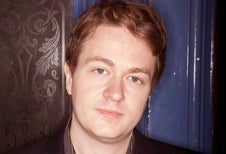
I’ve written so many articles over the years laying bare and polemicising against the errors and idiocies of other people. This time, I am writing an article laying bare and polemicising against the errors and idiocies of myself. If you give it out, you have to take it. If you demand high standards of others, you have to be just as damning when you fail to uphold them yourself.
I did two wrong and stupid things. The first concerns some people I interviewed over the years. When I recorded and typed up any conversation, I found something odd: points that sounded perfectly clear when you heard them being spoken often don’t translate to the page. They can be quite confusing and unclear. When this happened, if the interviewee had made a similar point in their writing (or, much more rarely, when they were speaking to somebody else), I would use those words instead. At the time, I justified this to myself by saying I was giving the clearest possible representation of what the interviewee thought, in their most considered and clear words.
But I was wrong. An interview isn’t an X-ray of a person’s finest thoughts. It’s a report of an encounter. If you want to add material from elsewhere, there are conventions that let you do that. You write “she has said,” instead of “she says”. You write “as she told the New York Times” or “as she says in her book”, instead of just replacing the garbled chunk she said with the clear chunk she wrote or said elsewhere. If I had asked the many experienced colleagues I have here at The Independent – who have always been very generous with their time – they would have told me that, and they would have explained just how wrong I was. It was arrogant and stupid of me not to ask.
The other thing I did wrong was that several years ago I started to notice some things I didn’t like in the Wikipedia entry about me, so I took them out. To do that, I created a user-name that wasn’t my own. Using that user-name, I continued to edit my own Wikipedia entry and some other people’s too. I took out nasty passages about people I admire – like Polly Toynbee, George Monbiot, Deborah Orr and Yasmin Alibhai-Brown. I factually corrected some other entries about other people. But in a few instances, I edited the entries of people I had clashed with in ways that were juvenile or malicious: I called one of them anti-Semitic and homophobic, and the other a drunk. I am mortified to have done this, because it breaches the most basic ethical rule: don’t do to others what you don’t want them to do to you. I apologise to the latter group unreservedly and totally.
If it was the other way round – if a journalist I disapprove of had done something analogous – I’d be withering. I’d say, it’s not hard: get your quotes right, and don’t be mean about other people in a way you find painful when it’s directed at you. Spare me the self-pitying excuses. Plenty of people have your problems and pressures and none of your privileges, and they don’t do anything half as awful.
After it emerged that I had done this, some defenders of the powerful people I had taken on over the years for their wrongdoing saw an opportunity to try to discredit what I had written about them. Amid legitimate criticism of what I had done wrong, there were lots of untrue statements, but I’m hardly in a position to complain that some people saw it as an opportunity to take a free kick.
In 2007, I travelled through the Central African Republic to report on the fact the French government had been bombing the country. An anonymous claim was made that I had exaggerated the extent of the French bombing, and that I had fabricated a quote from a French soldier on the ground. Two representatives of the NGO that I travelled with came forward to The Independent’s investigation into my journalism and they said my description of the bombing damage was entirely accurate, and that they have photographs of it. They also explained that they witnessed me speaking to several French soldiers when the person making these charges was otherwise occupied.
The worst part of this for me has been thinking about two sets of people. The first are all the readers over the years who have come up to me and told me they like my articles and believe in the causes and the people I’ve been championing. I hate to think of those people feeling let down, because those causes urgently need people to stand up for them, and they need their defenders. The second are the people here at The Independent, whom I have watched for the past eight years working phenomenally hard to get their stories right and to produce world-class journalism. I am horrified to think that what I have done has detracted from the way they get it right every day. I am sorry.
But offering words of apology is not enough. Christopher Hitchens once wrote: “If you don’t want to sound like the Pope, who apologises for everything and for nothing, then your apology should cost you something.” I agree. So first, even though I stand by the articles which won the George Orwell Prize, I am returning it as an act of contrition for the errors I made elsewhere, in my interviews. But this isn’t much, since it has been reported that they are minded to take it away anyway. (I apologise to them for the time they’ve had to spend on this.) So second, I am going to take an unpaid leave of absence from The Independent until 2012, and at my own expense I will be undertaking a programme of journalism training. (I rose very fast in journalism straight from university.) And third, when I return, I will footnote all my articles online and post the audio online of any on-the-record conversations so that everyone can hear them and verify they were said directly to me.
In my work, I’ve spent a lot of time dragging other people’s flaws into the light. I did it because I believe that every time you point out that somebody is going wrong, you give them a chance to get it right next time and so reduce the amount of wrongdoing in the world. That’s why, although it has been a really painful process and will surely continue to be for some time, I think in the end I’ll be grateful my flaws have also been dragged into the light in this way. I would like to apologise again to my readers, my colleagues and the people hurt by my actions. I know that some of you have lost faith in my work. I will do everything I can now to regain it. I hope, after a period of retraining, you will give me the chance.
Join our commenting forum
Join thought-provoking conversations, follow other Independent readers and see their replies
Comments
Bookmark popover
Removed from bookmarks