The Independent's journalism is supported by our readers. When you purchase through links on our site, we may earn commission.
Johann Hari: Accept the facts – and end this futile 'war on drugs'
We are handing one of our biggest industries over to armed, criminal gangs
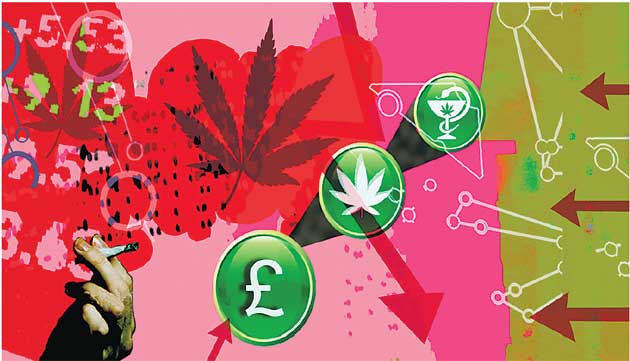
The proponents of the "war on drugs" are well-intentioned people who believe they are saving people from the nightmare of drug addiction and making the world safer. But this self-image has turned into a faith – and like all faiths, it can only be maintained by cultivating a deliberate blindness to the evidence.
The recent furore about the British government's decision to fire its chief scientific advisor on drugs, Professor David Nutt, missed the point. Yes, it is shocking that he was ditched for pointing out the mathematical truth that taking ecstasy is less dangerous than horse-riding, and that smoking cannabis is less harmful than drinking alcohol. But this is how the war on drugs has to be fought. The unofficial slogan of the prohibitionists for decades has been: The facts will only undermine the war, so invent some that show how successful we are, fast.
Look at the United States, the country that pioneered the drug war, and still uses its military and diplomatic might to demand the rest of the world cracks down. In 1998, the Office of National Drug Control Policy was ordered by Congress to stop funding any scientific research that might give the impression that we should redirect funding from anti-trafficking busts into medical treatment of addicts, or that there is any argument to legalise, regulate or medicalise drug use.
It's Nutt cubed: only tell us what we want to hear. So, to give a small example, the ONDCP spent $14bn on anti-cannabis adverts aimed at teenagers, and $43m to find out if the ads worked. They discovered that kids who saw the ads were more likely afterwards to get stoned, so the evidence was suppressed, and the ad campaign marched on.
What would happen if we started to build our drugs policy around the facts, rather than our desire for a fuzzy feeling inside? Prof Nutt only took baby steps in this direction before he was booted out. He argued that we should rank drugs by the harm they do, rather than by the size of the panicked headlines they trigger. Now the row is fading, it is possible to see how conservative he was. A must-read new report out this week – "After The War on Drugs: Blueprint for Regulation", by the Transform Drug Policy Foundation – follows the facts as far as they will take us. It shows that the rational solution is to take the drug market back from the unregulated anarchy of criminal gangs, and transfer it to pharmacists, off-licences, and doctors who operate in the legal economy. To see why this is necessary, we have to look at some of the facts our politicians refuse to see:
Fact One The drug war hands one of our biggest industries to armed criminal gangs, who unleash terrible violence across the country. When alcohol was prohibited in the US in the 1920s, it didn't vanish. No: armed gangsters like Al Capone stepped in and sold it – and they shot anybody who got in their way. Yet today, Wine Rack does not shoot up Threshers. Oddbins does not threaten to kill anybody who sees its staff selling wine. Why? Because it wasn't the booze that caused the violence; it was the prohibition. Once alcohol was reclaimed for legal businesses, the dealer-on-dealer violence swiftly stopped.
Where there is a huge profit to be made in a black market – it's 3,000 per cent on drugs today – people will fight and kill to control it. Arrest a dealer, and you simply trigger a new war for his patch, with the rest of us caught in the crossfire. In 1986, the Nobel-prize winning economist, Milton Friedman, calculated that there are 10,000 murders in the US alone every year caused this way. Legalise, and you bankrupt most organised crime overnight. With their profits in freefall, the gangsters don't suddenly become cuddly – but the huge financial incentives to remain a gangster wither fast. It's the drug war that keeps them in business, and legalisation that shuts them down. As Friedman said: "Prohibition is the drug dealer's best friend."
Fact Two Under prohibition, drug use becomes more hardcore. Before alcohol prohibition, most Americans drank beer and wine. After prohibition was introduced, super-strong moonshine became the most popular drink, as booze rapidly became 150 per cent stronger. Why?
The writer Richard Cowan called it "the iron law of prohibition": whenever you criminalise a substance, it gets stronger. Because they are smuggling and stashing a substance, the dealers condense their product to give the biggest possible kick while taking up the smallest possible space. It's at work today: it's why dealers invented crack in the 1980s. The researchers Matthew Robinson and Renee Scherlen found: "The increased deadly nature of drugs under prohibition led to 15,000 more deaths in 2000 [in the US alone] than [if] prohibition had not made drugs more dangerous."
Fact Three The drug war doesn't reduce drug use – but the alternatives can. Some people believe these two dark side-effects are a price worth paying if prohibition stops a significant number of people from picking up their first bong or needle. It was an understandable enough argument – until the evidence came in from countries that have experimented with ending the drug war.
On 1 July 2001, Portugal decriminalised the possession of all drugs, including heroin and cocaine. You can have and use as much as you like for your own needs, and if you are caught, the police might refer you to a rehab programme, but you will never get a criminal record. (Supplying and selling remains illegal.) The prohibitionists predicted a catastrophic rise in addiction, and even I – an instinctive legaliser – was nervous.
Now we know: overall drug use actually fell a little. As a major study by Glenn Greenwald for The Cato Institute found, among Portuguese teenagers the fall was fastest: 13-year-olds are four per cent less likely to use drugs, and 16-year-olds are six per cent less likely. As the iron law of prohibition predicts, the use of hard drugs has fallen fastest: heroin use has crashed by nearly 50 per cent among the young who were not yet addicted. The Portuguese have switched the billions that used to be spent chasing and jailing addicts to providing them with prescriptions and rehab. The number of people in drug treatment is now up by 147 per cent. Almost nobody in Portugal wants to go back. Indeed, many citizens want to take the next step: legalise supply too, and break the back of the gangs.
Portugal is no fluke. It turns out that wherever the drug laws are relaxed, drug use stays the same, or – where spending is switched to treatment – declines. Between 1972 and 1978, 11 US states decriminalised marijuana possession. The National Research Council found that the number of dope-smokers stayed the same. In Switzerland, a decade ago the government started providing legal centres where people could safely inject heroin – for free. Burglary rates fell by 60 per cent, and street homelessness ended. A study by The Lancet – one of the most respected medical journals in the world – found that the rate of people becoming new heroin addicts fell by 82 per cent. Why? Heroin addicts didn't need to recruit new addicts to sell to in order to feed their habit. The pyramid scheme of heroin addiction was broken.
So the drug war doesn't achieve its goal of reducing addiction. All it does achieve is horrific gang violence – and in some cases the cartels gut whole countries like Mexico and Afghanistan. It does unwittingly press people into using harder and more dangerous drugs. And it does waste tens of billions of dollars that could really reduce drug addiction, by spending it on treatment for addicts.
The prohibitionists are therefore left a contradiction between their message and the facts. They can either change their message, or try to suppress the facts. Last week, the British Government made its choice. But how long will this be tenable? The prohibitionists are – from the best intentions and the highest motives – unleashing a catastrophe. Human beings have been finding ways to get stoned or high since we lived in caves. In our attempt to end this natural impulse, we have created a problem worse than drug use itself.
There is another way. Imagine a country with no drug dealers killing to protect their patch or terrorising whole estates. Imagine a country where burglary fell by 60 per cent. Imagine a Britain where we spent all these billions treating addicts as ill people who need our help, not hunting them down as criminals who need punishment. We can be that country. We just have to come down from chasing the dragon of a drug-free world – and start looking soberly at the facts.
To support the campaign for drug regulation, you can join, volunteer for or donate to the Transform Drug Policy Foundation at www.tdpf.org.uk
Want to ask Johann Hari or other top Independent journalists a question? Click here.
You can follow Johann on Twitter at www.twitter.com/johannhari101 - j.hari@independent.co.uk
Join our commenting forum
Join thought-provoking conversations, follow other Independent readers and see their replies
Comments
Bookmark popover
Removed from bookmarks