John Lichfield: Even the French are starting to worry about healthcare
France has the worst health system in the world, except for all the others I've tried
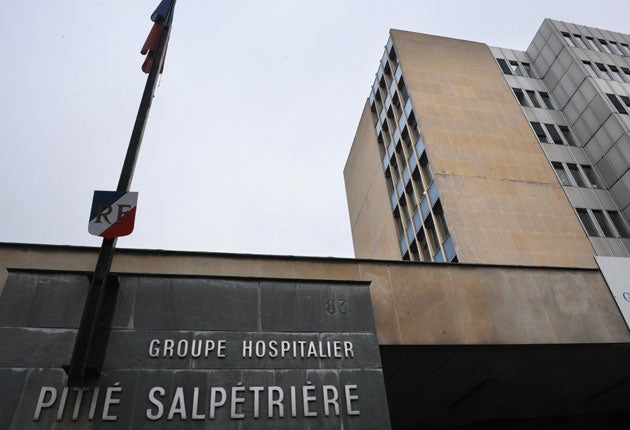
According to the World Health Organisation, France has one of the finest health services in the world. It offers, says the WHO, excellent care, generous provision, great choice, rapid response and coverage for all. According to the French, their model is falling apart, no longer egalitarian and facing bankruptcy. Both diagnoses are somewhat exaggerated. In a world of ageing patients, explosive medical costs and galloping scientific advance, there can be no such thing as the perfect health service.
My wife and I have lived in Britain, the US and France and have consumed medical care in all three. To paraphrase Winston Churchill: "The French have the worst health system in the world, except for all the other ones that we have tried."
Critics of President Barack Obama's Herculean efforts to cure the disgraceful state of healthcare in the US have had much fun mugging Britain's NHS. Quite apart from the outdated or mendacious statistics hurled around, the comparison with the British approach was deliberately misleading. Mr Obama has never suggested the cumbersome NHS model – state-run, funded from taxation and free at the point of access – should be imported to America.
Defenders of US healthcare reform have therefore tried to divert the conversation to include other developed countries, which come higher than Britain in WHO league tables: Canada, the Netherlands, Italy and France. All have systems of compulsory health insurance which bear some relation to the reforms which Mr Obama has, vaguely, outlined for the US.
In France, healthcare is funded not by taxation but by a levy on wages and payrolls (sécurité sociale, or Sécu). The assurance-maladie system is not run directly by the state but is in the hands of autonomous public bodies, run by unions, employers, insurers and health professionals. Doctors and many hospitals are independent entrepreneurs who work within the system but are not governed by it.
The result, in theory, is that French patients have great freedom of choice. Until 2004, they could consult as many doctors as they wished. They could consult specialists directly without going through a généraliste or GP. The public insurance scheme refunds the bulk of the cost: 70 per cent of a doctor's visit, for example, so long as the doctor charges the officially agreed rate. The rest is paid by the work-related, health insurance organisations (mutuelles) or private insurance plans, to which almost all French people belong. This top-up insurance is relatively cheap (perhaps £30 a week for a family) but also covers only the approved, or conventionné rate. If you choose to go to a more expensive doctor, you have to buy fancier private insurance or fund the difference yourself.
Technically, the French system is not "free at the point of access". French patients are "refunded" for what they spend. In practice, most families now have a carte vitale, a kind of health credit card that means the doctor, or hospital, is reimbursed directly by Sécu and the top-up insurance schemes. In many respects, the French system – for all the commitment to égalité and fraternité – is a middle-class health service. It works best for those who are clever enough and wealthy enough to know how to play simultaneously inside and outside the system and its arcane rules.
In Britain, the middle classes have the disagreeable impression that they are paying twice for healthcare: first through their taxes, then through Bupa and others. In France, the state Sécu system, broadly speaking, shares the cost of care with private health insurance and the job-based mutuelles. Even if you go to an expensive specialist, the nationally approved part of his or her fee will always be refunded by the public system.
The French system has, historically, been financed much more generously than the NHS. The assurance-maladie budget this year is €157.6bn (£138.2bn) compared to roughly £100bn for the NHS, covering the same population. France has nine hospital beds for every 1,000 people, compared to 4.9 in the UK.
Critics of the NHS complain that health funding in Britain will never reach adequate levels while it has to compete for resources within the same tax pot as, say, education and defence. In France, Germany and other continental countries, the state health system is – in theory – ring-fenced and funded by a separate tax on employers or employees. The problem is that the French model has reached the limits of what is economically sustainable. The burden on employers has become intolerable. A company might easily pay an extra €20,000 a year in Sécu charges to employ someone earning €50,000. Two-thirds of these pay-roll taxes go to pay for healthcare.
Even with this generous funding, the system is chronically in debt. An extra €10bn this year will have to be funded from taxes or state loans. Doctors have angrily resisted any attempt to reduce costs by placing "efficiency" controls on the kind of treatments that they offer. Until 2004, they resisted prescribing cheaper generic medicines. In the same year, some limits were finally placed on the "nomadic" rights of the notoriously hypochondriac French to visit as many doctors and specialists as they wished.
Costs tend to be squeezed by holding down the wages, fees and training places for the foot soldiers and NCOs of the system, such as généralistes, junior hospital doctor and nurses. As a result, doctors are still thick on the ground in large cities and wealthy suburbs, but increasingly scarce in the poorer banlieues and in parts of rural France.
Everyone – doctors, insurance companies, employers, unions, politicians – agrees that a healthcare crisis is looming. President Nicolas Sarkozy has done little about it so far, but has spoken in radical terms of what he plans to do. He suggests that more of the cost of healthcare should be transferred from the public-funded Sécu system to private and work-based insurance schemes. He suggests that the insurance companies and workplace-based mutuelles, not just doctors, should have more say – US-style – over which treatments are worth funding.
In truth, the French system is still, in many ways, excellent. It is more flexible and more generously equipped than the post-Blair NHS. It is infinitely more rational and humane than a US system, or non-system, where 16 per cent of the nation's GDP (five per cent more than France) is poured into healthcare and more than 60 million people are uninsured or underinsured.
The British and French systems, opposed in principle in many ways, are showing some signs of convergence. The French government is trying to persuade its citizens that the British (and Dutch) reliance on the primary carer, or GP, is preferable to the traditional medical promiscuity of the French. The Conservative Party has spoken of moving to a system – rather like in France – where the distinction between state and private health provision is less rigid.
Given the challenges faced by all healthcare systems in an ageing world, stealing successful prescriptions from friends and neighbours makes sense. Except, it seems, to the American right.
Join our commenting forum
Join thought-provoking conversations, follow other Independent readers and see their replies
Comments