Kanishk Tharoor: Britain is good at dealing with diversity
The UK copes with the issue of ethnic difference more maturely than its neighbours, whatever the BNP may want us to believe
If the first casualty of war is truth, the first casualty of domestic skirmishes is perspective. After last week's furore over the far-right and immigration in Britain, doom and gloom stalked the headlines. It seemed that the BNP and its odious "politics" had truly arrived, that the country will be forced to face, one way or another, its mono- and multicultural demons. But missing among the outrage and pieties of the past few days was a modest, but necessary, concession to reality: things in Britain are really not that bad.
Serious problems certainly remain to be tackled. The threats of radicalism among alienated Muslims and far-right bigotry among the "white working class" are very real. So too are the social tensions generated by immigration and the economic downturn. But in general, British society has handled (and continues to handle) the cultural convulsions shaking Europe in the 21st century with no small amount of grace and reason.
This is made particularly evident by a brief tour of other Western European countries that wrestle with similar issues of diversity and immigration. Look at the Netherlands, a state with a far older tradition of tolerance than Britain. There, the bleach-blond, anti-immigrant demagogue Geert Wilders and his "Freedom Party" led Dutch polls as recently as this March. Could Nick Griffin and his politics win a plurality of British public support? Not now, and probably never.
Britain is no stranger to communal strife and hostility, whether in the post-industrial north or in the heart of London. Racial and ethnic ghettos still exist here. But Britain's landscape of ethnic separation is not nearly as stark as that of France, for example. A yawning, poisonous chasm separates France's banlieues (and their often disproportionately immigrant populations) from its cities. People are far more interspersed in the UK. The mingling and collision of differences (both ethnic and socio-economic) is a natural and inextricable feature of urban British life.
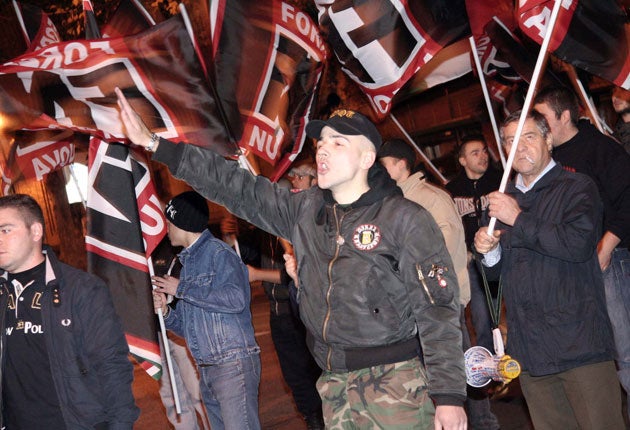
The capital city, for instance, would never elect a neo-fascist mayor, as did the citizens of its Italian counterpart. Some of us in cosy, north-east London brunch bars grumbled darkly after the election of Mayor Boris. But whatever his faults, he's no Gianni Alemanno. In 2008, skinheads and football hooligans helped to sweep Alemanno, a right-wing former street-fighter, to the mayorship of Rome on an uncompromising anti-immigrant platform. I doubt the politics of any major British city could be held hostage to such crude xenophobia. What passes for political discourse in Italy remains hardly imaginable in the UK, despite the best efforts of the BNP and others.
An unfortunate consequence of Nick Griffin's debut on Question Time was that it gave the impression that immigration and race are central preoccupations of British politics. They are not, no matter how much certain political figures and members of the media wish them to be. More so than most peoples, Britons across many levels of society are familiar with ethnic difference, willing to navigate around its pitfalls. One will not see in the UK a gaffe like that made last year by Spain's basketball team. In a bizarre homage to the forthcoming Beijing Olympics, the lanky Spanish players posed for a team photo while deliberately "slanting" their eyes with their fingers. That it was the press in the UK – and not in Spain – who more strenuously criticised this image underlines a telling gulf in worldly sensibilities.
I write these words of praise as a brown-skinned foreigner who has been subjected to more than one instance of racial abuse in his time in the UK. I know the BNP did not emerge from thin air, that ethnic violence has a long and ugly history here, and that racism remains a dangerous force in British society. Equally, I appreciate that cultural misunderstandings and friction (particularly regarding British Muslim communities) have left some Britons scrambling to the barricades. But it's worth taking a step back and considering the wider picture.
The success of the BNP in European elections, while disappointing and shameful, is by no means a real indicator of racial strife and dissonance in the country. It is far more attributable to the apathy and disillusionment that mainstream parties have bred in voters. At an even broader level, the growth of the far-right must be contextualised within a slow process of historical transformation. Britain finds itself in the midst of a fitful, but inescapable, metamorphosis into a constituent unit of the European Union. The accompanying pressures of devolution have exposed the dilemmas of "Englishness" and other identities, while the inevitable movement of people in the era of globalisation has made these dilemmas more difficult to untangle. The BNP (and the National Front before it) merely offers a lonely, extremist answer to a question it does not understand.
One need not delve so deeply into the mystical turns of history to see that the BNP and its cohorts are symptoms of changing times, not drivers of change itself. It would be misguided to gift them the anxious attention they crave. And it would be far more misguided for the political establishment to pander to the worst instincts of a supposedly disgruntled "white working class", a mythical lumpen-proletariat. Sensible, calm debate on reforming UK immigration policy should be encouraged in the lead-up to next year's elections. But if politicians ape the rhetoric of the BNP (as Gordon Brown did earlier this year), they will have done a great disservice to the maturity and vitality of a society that can only be, for now and for ever, multicultural.
Kanishk Tharoor is associate editor of openDemocracy.net
Join our commenting forum
Join thought-provoking conversations, follow other Independent readers and see their replies
Comments
Bookmark popover
Removed from bookmarks