Mary Ann Sieghart: We're all Greeks now when the right to park is under threat
How would we feel if we realised we had no democratic power over our economy?

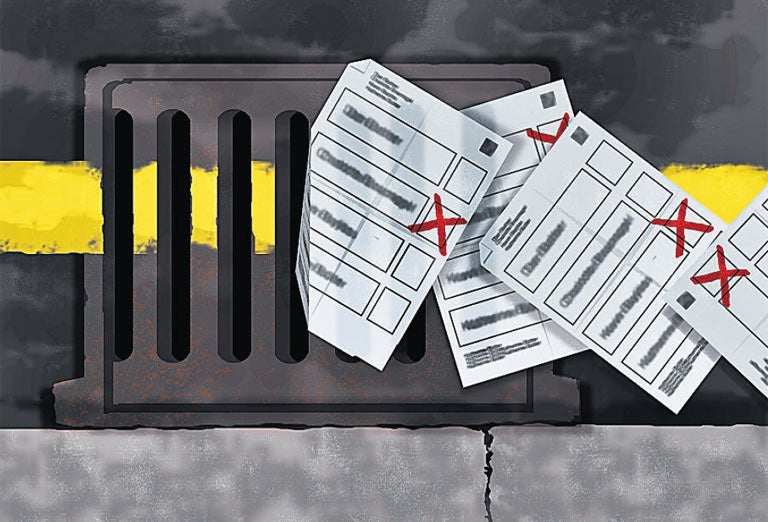
Shopping in the sales is stressful enough without having to lug all your bags home on the bus. If, instead, you drive into the West End of London today, you can park for free on any single yellow line or parking meter and ferry your purchases back in your boot. Treasure it while it lasts, for by this time next year, Westminster City Council plans to abolish free parking on Sundays, evenings and bank holidays. It will wreck the fragile ecology of the West End: the shops, theatres, bars and restaurants which fuel London's economy.
But if you don't live in the capital city, or ever go near it, bear with me still. For this isn't just a metropolitan tale. It's a bigger one about the absence of democracy and accountability – and the effect this can have on the blood pressure of voters.
People bringing their cars into the West End to shop, work or play will be expected to drive round and round, scouring the streets for the few empty meters or pay-and-display bays (single yellow lines having been put out of use) and then pay up to £4.80 an hour for the privilege of parking. Or they will have to pay to park in one of the few, rather scary, underground or multi-storey car parks. Many waitresses, bar staff and musicians have testified that this will put them out of a job. Women workers in particular are worried that they can't afford either to park and drive home safely late at night or take a taxi.
Customers are also livid. It's expensive enough to eat out or go to the theatre without having to cough up even more to park your car. And yes, you can use public transport, but the last Tube runs soon after midnight, and anyway many people feel unsafe walking home from their local station at night. The new charges will also hit many church worshippers and Sunday shoppers.
A huge protest campaign was launched, led by London's newspaper, the Evening Standard. But the Conservative-led Westminster Council was unyielding, even though no less a Tory trio than the Prime Minister, the Transport Secretary and the Mayor of London all begged its leader to back down. Boris Johnson even investigated seizing control of some roads from Westminster.
Eventually, the council was forced to delay the new charges by eight months, but only after local business owners challenged the decision in the High Court. Mr Justice Collins ruled: "There is a real risk of substantial damage to businesses and churches if it goes ahead." Now Westminster says it will bring in the new regime after the Olympics instead.
Now, I'm just an ordinary punter who lives in a different London borough and therefore has no vote in Westminster. I don't drive into town during the day because of the £10 congestion charge and the high cost of parking; I go everywhere by Tube and bus, which are fine in daylight hours. But I do use my car to drive to choir rehearsals on Monday nights in an area which will be hit by the new restrictions. And I also use it occasionally to take my family to the theatre or cinema or out for an evening meal.
So I am one of millions of greater Londoners whose daily lives will be affected by these new charges. But what is so frustrating is that we have no say in the matter. Nor do the businesses or churches – or even choirs – who will lose customers and congregations and choristers because of the unaffordable cost. There is nothing we can do except sign petitions and hope for the best.
The only people who do have a vote are residents of the borough of Westminster. And they aren't affected by the new charges. Either they don't need to use their cars because they live so close by, or if they do, they can park in residents' bays. So there is no way of forcing the local politicians who are taking these damaging decisions to change their minds.
This has made me unreasonably angry over the past few months. And it has set me thinking. If I can get so irate over single yellow lines, how would we all feel if we realised we had no democratic power over much bigger things in life, such as who our Prime Minister should be, or how our country's economy should be run?
Yet that is exactly the future being proposed for countries in the eurozone. For some, it's even the present. Greece and Italy have had new prime ministers imposed on them. And the most indebted countries have been forced to accept austerity measures as a price for being bailed out by the rest.
In an emergency, such as the current eurozone crisis, that sounds fair enough. The IMF, after all, has always set conditions on its loans. Creditors are entitled to ensure that borrowers reform their economies sufficiently to be able to pay back what they owe.
But the new fiscal compact that was agreed at the last EU summit will entrench these demands for ever. So, if one party during an election campaign in a eurozone country were to say – to pluck a slogan out of the air – that the other was cutting "too far, too fast" and that it proposed a slower rate of deficit reduction to encourage economic growth, it could be elected, and then what? Its economic policy, for which it had a democratic mandate, could be overruled by the EU – or the Eurozone 26, if David Cameron is still refusing to let them police their compact with EU institutions.
Put aside for a moment the boneheaded economics of insisting that all eurozone countries deflate at the same time. (Not only would this lead to depression, but it is logically impossible for all countries to be like Germany.) The political implications worry me just as much, if not more. Imagine a continent full of mass unemployment and plunging living standards. Imagine a political system in which a vote no longer makes a difference. Imagine a change of government which can't lead to a change in economic policy, however much voters want it to. Isn't that the perfect recipe for civil unrest? The last decade to combine economic depression with flawed democracy, after all, was the 1930s, and look where that led.
If I am prepared to take to the streets to protect my right to park on a single yellow line on Monday nights, how much further might continental Europeans go when they realise how little power they have left to protect their livelihoods and their democracies? We should all shudder to think.
Join our commenting forum
Join thought-provoking conversations, follow other Independent readers and see their replies
Comments