Nigel Hawkes: Did statistics damn Lucia de Berk?
Behind the numbers
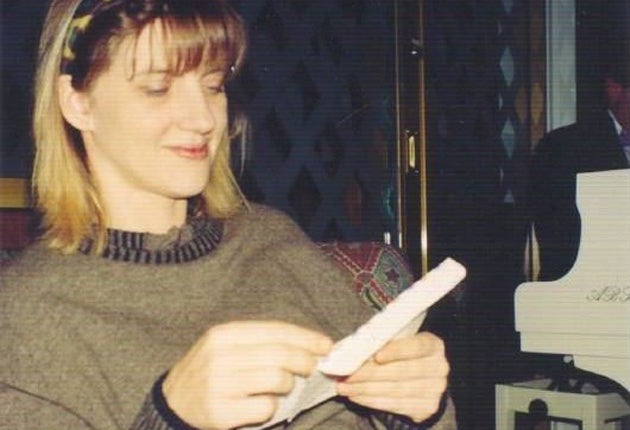
On Wednesday a court in Arnhem is expected to rule that Holland's worst-ever serial killer is innocent of the charges for which she was jailed for life in 2004.
Lucia de Berk, a paediatric nurse, was found guilty of seven murders and three attempted murders of children in her care at Juliana Children's Hospital in The Hague.
It was a case that has close parallels with that of Sally Clark, the mother convicted in the UK of murdering her two children. In the Clark case, the expert witness Sir Roy Meadow declared that the chances of Mrs Clark's babies having both died as a result of cot deaths was 73 million-to-one against.
In the Dutch case, the odds were even more stratospheric. The court was told by Dr Henk Elffers of the Netherlands Institute for the Study of Crime and Law Enforcement that more children had died on her shifts than appeared possible by chance. He put the odds of her presence being a mere coincidence at one in 342 million, a figure that seemed to have blinded the court to any alternative explanation of the deaths.
There was little other evidence to convict her, except for traces of toxic substances found in two of the exhumed bodies. These were equivocal because they could have been caused by the treatments the children had, and there was nothing to connect her directly to them, the court was told.
Lucia de Berk never admitted her guilt but was convicted in spite of there being no eye witnesses and no direct incriminating evidence against her. "Statistics drove the case from start to end," says the British-born statistician Richard Gill, professor of mathematical statistics at the University of Leiden in the Nertherlands. "Statistics and psychology. Lucia's conviction for serial murder, and even the 'proof' that there were any murders at all – let alone by whom – were almost entirely based on wrong statistical data, wrongly analysed, and wrongly interpreted."
Professor Gill, who has lived in the Netherlands for 35 years, has been prominent in a campaign to have the case overturned. In dismissing her appeal in 2004, the judges explicitly wrote that statistics had not influenced their verdict, and that every one of the deaths had been indisputably proven to be unnatural. But when, thanks to the campaign, an expert was finally appointed to review the deaths he found that they could just as well have been natural.
The conduct of the case, in Professor Gill's account, was extraordinary. Convinced she was guilty, the police and the managers of the Juliana Children's Hospital assembled a dossier in which it seemed every death became unnatural when it had occurred during, or after, a shift in which she had worked. For one of the alleged murders, it was established on appeal she had not even been in the hospital for three days around the time it occurred.
Using more appropriate statistical methods reduced the odds from one in 342 million to one in 48. A further analysis by Professor Gill further reduces the odds to one in nine. The odds, whatever they are, cannot prove guilt or innocence, but the contention of her supporters, who include the philosopher of science Ton Derksen and his wife, the doctor Metta de Noo, is that the original statistical claims led the police and the courts to conclude that any verdict other than guilty was unthinkable.
Lucia de Berk, who is in her late 40s, was released in 2008 when a retrial was ordered. She suffered a stroke while in prison, and is paralysed in one arm. "She's OK," says Professor Gill. "She became a grandmother this week, so she's very happy about that." She is not a blameless citizen: she had been convicted of an economic crime – misrepresenting her high-school grades in order to become a nurse – and she will as a result be ineligible for any compensation.
On Wednesday the Arnhem court is expected to conclude the case by declaring her innocent of the murders, a course of action urged on the court by the public prosecutors. It should bring to an end one of the worst miscarriages of justice in Dutch history, but will it clear her name? Many Dutch people appear unpersuaded.
Join our commenting forum
Join thought-provoking conversations, follow other Independent readers and see their replies
Comments
Bookmark popover
Removed from bookmarks