Patrick Cockburn: Lies, damn lies, and reports of battlefield atrocities
World View: Gaddafi is feeding his troops Viagra and ordering them to rape the womenfolk of the rebels ... well, maybe. Or is truth, as usual, the first casualty in this war?
In war, accounts of atrocities need to be treated with scepticism. Surveying a battlefield where he had once fought, the great Confederate general Stonewall Jackson turned to an aide and asked: "Did you ever think, sir, what an opportunity a battlefield affords liars?"
He meant that in war people, motivated by fear, self-interest or a simple desire to make sense of a confusing and terrifying situation, make things up. And in the midst of a fast-moving conflict it is more than usually difficult to prove them wrong.
In the first Gulf conflict of 1990-91 two notorious pieces of propaganda and misinformation greatly helped to rally support for the war by seeming to demonstrate the savagery and duplicity of the Iraqi government. The first was the appearance of a 15-year-old Kuwaiti girl before a US congressional committee to testify how, as a volunteer hospital nurse, she had seen Iraqi soldiers tip babies out of incubators and leave them to die on the floor. Her account was greeted with outrage until, some time later, it was revealed that the girl was the well-coached daughter of Kuwait's ambassador in Washington who had never left the US during the Iraqi invasion of Kuwait.
The second story took place a few months later, during the bombing and missile strikes on Baghdad. CNN's Peter Arnett reported that the US had destroyed a baby milk factory on the western outskirts of Baghdad, while the Pentagon furiously maintained the facility was making biological weapons. I visited the ruins of the plant on the same day as Arnett and I remember reading through letters about the baby milk business I found in smashed up desks in the factory office. Many were about abortive efforts to save the factory from bankruptcy, convincing evidence that the Iraqi authorities could scarcely have concocted overnight.
Governments have not become any more truthful in the 20 years between the war in Iraq in 1991 and in Libya in 2011. The story that most compellingly illustrates the evil nature of Muammar Gaddafi today is the allegation that he ordered his troops to rape women who oppose him and his acquisition of Viagra-type medicines to encourage them to do so. This tale had been around for some time, but gained credibility when the International Criminal Court's prosecutor, Luis Moreno-Ocampo, said he had evidence that the Libyan leader had personally ordered mass rape. This week the US Secretary of State, Hillary Clinton, said she was "deeply concerned" by reports Gaddafi's troops were engaged in widespread rape as a weapon of war.
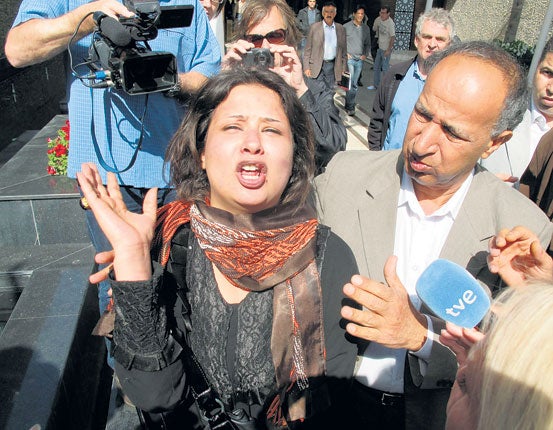
No doubt individual rapes have occurred. Most famously, Iman al-Obeidi burst into a foreign journalists' hotel in Tripoli on 26 March and gave a credible account of how she had been raped by pro-Gaddafi security men, before she was hustled away. But, despite the ICC allegations, so far Amnesty International and Human Rights Watch have not found evidence of such mass government-ordered rape despite extensive investigations. Diana Eltahawy, Amnesty International's Libya expert, told me that Amnesty researchers in Libya had found no evidence of such a policy.
Could women be keeping quiet about what had happened to them for reasons of shame or fear of being killed to preserve "family honour"? Ms Eltahawy says: "We spoke to women, without anybody else there, all across Libya, including Misrata and on the Tunisia-Libya border. None of them knew of anybody who had been raped. We also spoke to many doctors and psychologists with the same result." Liesel Gerntholtz, head of women's rights at Human Rights Watch, which has also been investigating the charges of mass rape, says: "We have not been able to find evidence. We have not been able to verify it." She emphasised that her group's researches were ongoing.
The one substantive piece of evidence for mass rape came last month in the form of a survey by Dr Seham Sergewa, a child psychologist who had been working with children traumatised by the fighting. She distributed 70,000 questionnaires to Libyans in refugee camps and received 59,000 responses. She says: "We found 10,000 people with PTSD [post-traumatic stress disorder], 4,000 children suffering psychological problems and 259 raped women." They said they had been raped by Gaddafi's militiamen, sometimes in front of their families. Dr Sergewa says she interviewed 140 women who had been raped. But, says Ms Eltahawy, when asked if Amnesty International could meet any of them, Dr Sergewa said "she had lost touch with them and she was the only one who said she was directly in touch with victims".
Some captured pro-Gaddafi soldiers, claiming they knew about the rapes as an official policy, have appeared on TV. But Amnesty found that when an Arabic-speaking investigator visited detention facilities without an official minder in the room they did not repeat the allegation.
As in Iraq, journalists have been over-credulous and Western governments self-serving in pumping out atrocity stories about the Libyan government regardless of whether or not there is any evidence for them. Another story from Libya, universally believed by the rebels, is that many of the fighters in the pro-Gaddafi units are mercenaries from central or west Africa. Ms Eltahawy says Amnesty has found no evidence for this. The only massacre by the Gaddafi regime, involving hundreds of victims, which is so far well-attested is the killings at Abu Salim prison in Tripoli in 1996, when up to 1,200 prisoners died, according to a credible witness who survived.
Battlefronts are always awash with rumours of impending massacre or rape which spread rapidly among terrified people who may be the intended victims. Understandably enough, they do not want to wait around to find out how true these stories are. I was in Ajdabiyah, a front-line town an hour and a half's drive south of Benghazi, earlier this year when I saw car loads of panic-stricken refugees fleeing up the road. They had just heard an entirely untrue report via al-Jazeera Arabic that pro-Gaddafi forces had broken through. Likewise al-Jazeera was producing uncorroborated reports of hospitals being attacked, blood banks destroyed, women raped and the injured executed.
The verification of atrocities matters so much because if people are to try to have them stopped they must be sure that what they are told is true and not propaganda. One toxic impact of the anti-German lies told by First World War propagandists was that when, 20 years later, the Nazis did embark on mass slaughter, the evidence of their crimes was at first treated with extreme scepticism.
Join our commenting forum
Join thought-provoking conversations, follow other Independent readers and see their replies
Comments