Paul Vallely: Europe is facing a fate worse than debt
As the eurozone crisis sees elected governments replaced by technocrats, democracy seems a high price to pay for market stability

This could be the worst crisis Greece has ever known, an over-excited reporter on the BBC opined the other day. There speaks a man without a history degree, riposted the broadcaster and historian Dan Snow. But you don't have to go back to the time when Alexander of Macedon massacred the Sacred Band of Thebans to find something worse. You could try 21 April 1967, when, on the eve of a general election, a group of right-wing army officers seized power in a coup d'etat after placing tanks in strategic positions around Athens and arresting top politicians and pretty much anyone they suspected might object.
There is, of course, something dramatic about a military coup and tanks on the street. But is it any more radical than what we might call the "market coup", which has suspended, if not overthrown, democracy in Greece in recent days? And not just Greece. In Italy, too, elected leaders have been replaced by rulers at the behest of the overheated financial markets. In the case of Italy, no one has objected too much because the man who has been replaced was a sleazy, manipulative, self-serving buffoon. But the change is one which ought to worry us.
There was general horror when George Papandreou, the outgoing Greek prime minister, announced he would hold a referendum to allow the people to endorse or reject the austerity package deal to save their country from bankruptcy. Citizens could not express their opinion, it was said, because there was no time: falling stock markets and rising bond interest rates would bust Greek banks before the vote could take place. Yet Mr Papandreou, in his cack-handed way, was raising a question that everyone was anxious to avoid: which is more important, economics or politics, capitalism or democracy?
The answer is clear. Political power in Europe has passed to a tiny elite of technocrats. Two days after the economist Lucas Papademos was sworn in as Prime Minister of Greece, another technocrat, Mario Monti, was asked to lead a new unity government in Italy.
Technocrat here is a euphemism for someone who has worked at or with the investment bank Goldman Sachs, nicknamed in financial circles "the vampire squid". Mr Monti was a member of Goldman's board of international advisers. Mario Draghi, the new president of the European Central Bank which controls eurozone monetary policy, is a Goldman man. So is Antonio Borges who, until Wednesday, was running the International Monetary Fund's European division. Mr Papademos is a former vice-president of that same European Central Bank; he is also the man who was running the Central Bank of Greece at the time when that country, like Italy, used complex derivatives to slim down the apparent size of its government debts in order to qualify to join the euro. The rules of the euro mandated that such debts shouldn't be above 60 per cent of the size of the economy. Who was behind that clever idea? The financial wizards of Goldman Sachs.
You don't have to smell conspiracy to be concerned here, merely a confluence of interests. Technocrats or politicians, they all sing from the same highly marketised hymn-sheet. Insanity, said Albert Einstein, is doing the same thing over and over again and expecting different results.
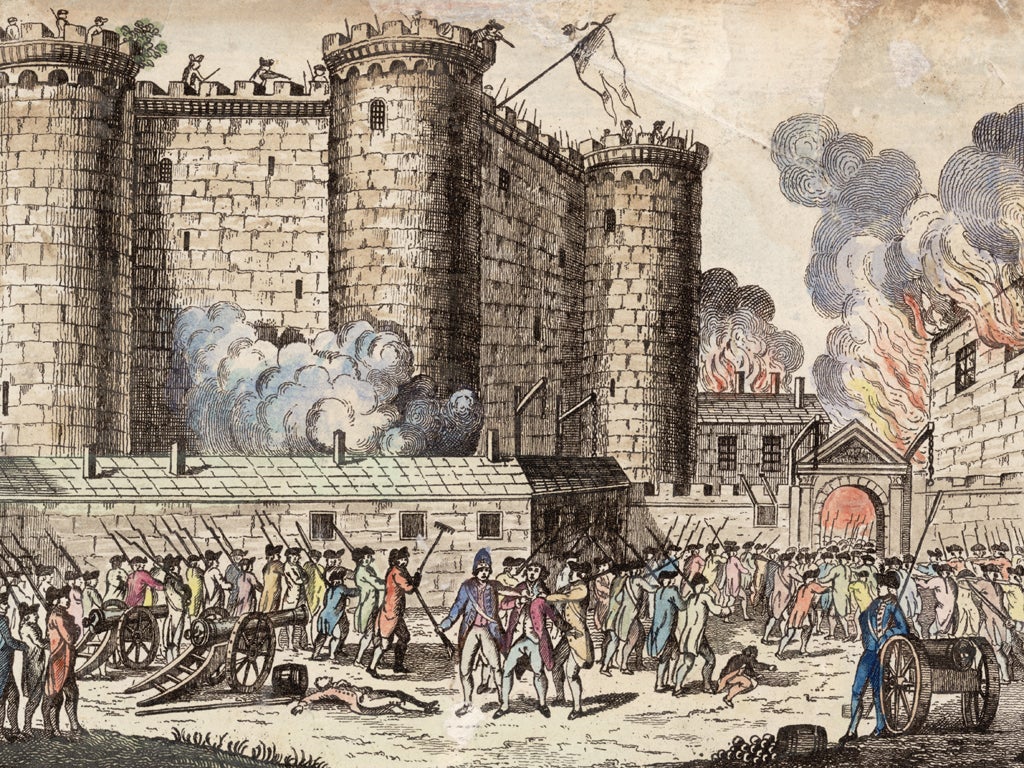
It is ironic that this democratic deficit is opening up in Europe just as democracy has come back on to the agenda in the Middle East, where the Arab Spring is that region's equivalent of knocking at the gates of dictatorship and oppression, much as Europe did, beginning with the assault on the Bastille in 1789. Sceptics, of course, will tell you that democracy in Europe has been dead for some time already, thanks to the EU, where neither the Council of Ministers nor the Commission are directly elected and where the European Parliament has no real say in big decisions. Certainly, over the past two decades, Silvio Berlusconi has eroded the integrity of Italian democracy, with his puppet appointments and manipulation of the legislative process to promote the interests of his personal business empire. Italy's sclerotic political class not only allowed that but also mortgaged its country to Europe and other holders of Italian debt. And now all Europe is paying the price.
What is alarming is that the markets have been able to fire Mr Berlusconi in response. Markets rule, somewhat irrationally, but they rule nonetheless. Some have argued that markets are just another form of popular vote, saying we are all the market, through our savings, investments, insurance policies and pensions. But those finances, too, are controlled by technocrats made in the same free-market mould as the technocrats in the German finance ministry, European Central Bank, the IMF and the European Commission, who will decide the future living conditions of the people of Greece.
In one sense, we have only ourselves to blame. Those in charge insist that the firm forward-looking action that is now required is anathema to politicians whose myopic gaze is fixed on the next set of elections. Some decisions require too long-term a vision to fit into short-term political horizons. Some democratic reforms may be needed to reconcile economic and political cycles. That – plus more courage from our politicians.
Some might argue that it does not really matter. Look at how successful China has been by promoting economic development without democracy. But that means a society where the rule of law, human rights, the freedom of the press and more are subjugated to economic imperatives. But democracy does matter, as people from Syria to Burma will tell you. There is a fate worse than debt.
When the colonels took power in 1967, Phillips Talbot, the US ambassador in Athens, lamented it as "a rape of democracy". His cynical CIA chief of station replied: "How can you rape a whore?" Answer came when the junta in the country that was the cradle of democracy banned citizens' right of assembly, subjected them to commonplace surveillance and detained thousands in torture centres where beatings, sexual torture and forcing excrement down victims' throats were routine.
Democracy is not a luxury. It is the ideological foundation for a mode of governing that respects the rights and desires of its citizens and encourages their aspirations to live in dignity and prosperity. And there speaks a man without a history degree.
Join our commenting forum
Join thought-provoking conversations, follow other Independent readers and see their replies
Comments
Bookmark popover
Removed from bookmarks