Rupert Cornwell: Crumbling America has a $2.2 trillion repair bill
Out of America: The US needs to update its roads, railways and airports – but recession and a shift to the right have put big infrastructure projects in jeopardy.
First, a tale of two rail tunnels. One of them is in Switzerland – the 35-mile Gotthard Base tunnel, the cutting of which was completed on Friday amid great national rejoicing, and which, when it opens for business in 2017, will be the longest of its kind in the world. It will have cost $10bn (£6.2bn), representing $1,300 of taxpayer's money for every citizen in the land of William Tell. But it will bestow huge benefits not only on Switzerland, but on north-south freight and passenger traffic for all Europe.
The other rail tunnel is (or rather was) in New Jersey, and would have linked the Garden State to Manhattan, vastly improving clogged access to New York City, with long-term economic benefits to match. The project, 20 years in the planning, would have cost around $9bn, or roughly $1,000 for each inhabitant of one of the richest states in the US.
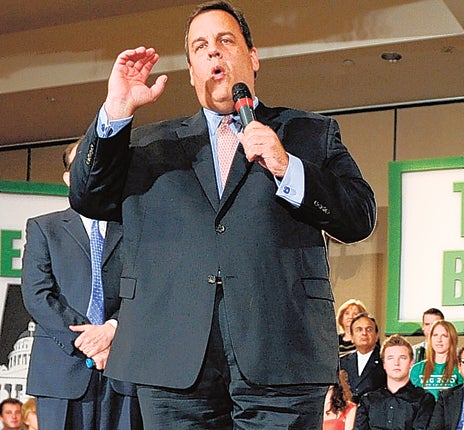
Alas, it is not to be. A few days ago, Governor Chris Christie of New Jersey announced his state was pulling out, in effect dooming the tunnel even though digging has started and $500m has already been spent. The cost was simply too high, he declared; in these cash-strapped times, New Jersey had better things to spend its money on. And so you start to understand the silent crisis that is undermining America: the creeping decay of its public infrastructure.
It's happening everywhere, from potholed interstate highways and grimy railways, to congested airports and a creaking air traffic control system that only adds to the increasingly third world experience of flying in the US. And hold your breath when you cross an American bridge: a 2005 study found that fully a quarter of them were structurally inadequate or obsolete.
Every now and then, the defects explode into the national consciousness – when breaches in scandalously neglected levees led to the flooding of New Orleans by Hurricane Katrina, or when the Interstate 35 bridge in Minneapolis collapsed one sunny rush hour afternoon in August 2007, sending 13 people to their deaths as their cars plunged into the Mississippi river.
Another reminder is when friends return from foreign trips marvelling at the high-speed rail networks in Europe, Japan and China, or at other man-made wonders such as the Millau Viaduct in southern France. Why, they ask, can't we have this sort of thing?
To be fair, they can and do. Yesterday saw the opening of the stunning new bridge 890ft above the gorge of the Colorado river, linking Arizona with Nevada and bypassing the congested old road across the top of the Hoover Dam – that earlier Depression-era miracle of infrastructure building, dedicated by President Franklin Roosevelt in 1935.
The new bridge took five years to complete and is said to have the longest single-span concrete arch in the Western hemisphere. As other great achievements of its kind (the Golden Gate bridge in San Francisco, for example) it actually adds to the magnificence of its setting. Sadly such triumphs of design, functionality and economic farsightedness have become the exception these days in the US.
When he won the 2008 election, Barack Obama was being hailed as Roosevelt redux. Just like FDR, he had come to power in miserable economic times, a Democratic president promising to unleash the power of the government on vast public works to revive the economy and generate jobs. Thus far at least, it hasn't happened – for several reasons.
The first of course is Governor Christie's objection. When state and federal budgets are under so much pressure such projects, it is argued, cannot be afforded. Americans like bold infrastructure spending, but not if it expands the deficit even further.
Second, among the presidents separating Obama from FDR is a certain Ronald Reagan, whose hostility to big government shifted the whole spectrum of US politics to the right. Since Reagan, public suspicion of government intervention has taken a quantum leap. Whatever you think of the Tea Party movement, the hottest thing in American politics right now and which holds the Republican party to ransom, one thing is sure. Tea Partiers are not into building bridges and modernising airports out of the public purse, or endowing the US with a state-of-the-art passenger rail system.
Europeans who visit the East Coast are the mirror image of Americans heading in the opposite direction, often astonished that there is no true high-speed rail link between Washington, Philadelphia, New York and Boston. However it's not for want of trying.
Last month Amtrak, the national passenger rail network, unveiled a plan that would put Washington within 96 minutes of New York and barely three hours of Boston. The only problem was, it would take 30 years and cost $117bn. But even that is nothing compared to the $2.2trn which the American Society of Civil Engineers estimates is needed to get the country's infrastructure into good shape. In that context, the $50bn scheme announced by President Obama to improve roads, railways and airports is a drop in the ocean.
But opportunity still beckons. Long-term borrowing rates are rock-bottom; a 9.6 per cent unemployment rate underlines how much spare capacity exists in the economy. As the infrastructure declines, so does the country's international competitiveness. In short, everyone knows something must be done. Indeed, even Governor Christie is said to be open to a rethink over that Manhattan tunnel.
Join our commenting forum
Join thought-provoking conversations, follow other Independent readers and see their replies
Comments
Bookmark popover
Removed from bookmarks