Steve Richards: Close your eyes and it seems like the 1970s again
Stand by for many more emergency Budgets; in the 1970s Denis Healey delivered two a year

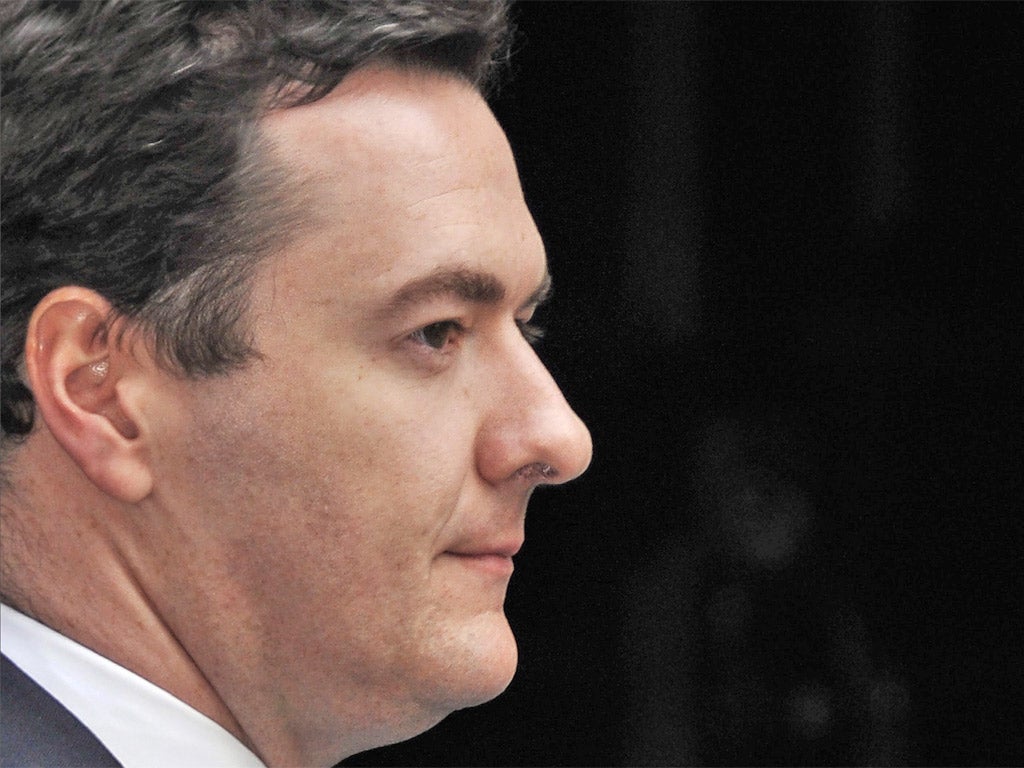
When did a Chancellor last deliver an economic statement in such bleakly constrained circumstances? In style, structure and even in some specific phrases, George Osborne followed Gordon Brown. Osborne went as far as copying Brown's old device when seeking to ridicule opponents. "I have had suggestions from some that the best way to deal with debt is to borrow more," Osborne joked.
Yet the parallel is limited. For most of his time as Chancellor, Brown delivered his words against the background of a booming economy and in a landslide parliament. Osborne is hemmed in by an apocalyptic crisis in the eurozone, the dynamics of a coalition, his decision in opposition to set up an independent Office for Budget Responsibility and his own policies since securing power after the 2010 election.
The context for Osborne is closer to Denis Healey in the 1970s and yesterday's Autumn Statement was similar to one of Healey's famous mini-Budgets or emergency statements that punctuated the stormy intervals between official Budgets. In this case Osborne unveiled an emergency set of measures unavoidably limited by the scale of the emergency.
Most of Osborne's narrow options had been leaked in advance. The capital projects are worthy, but the amount of government investment is tiny and the time taken for implementation will be years when the crisis is upon him and us now. The only new announcement was the 1 per cent pay rise for public sector workers.
The timing confirms that Osborne has made another of his famous and not always reliable tactical calculations, that an intensification of the dispute with public sector workers will help the Government's standing or certainly will not hinder it. If he had concluded appeasement was an expedient requirement he would not have chosen to raise the temperature on the eve of a strike. Some of the nightmarish constraints on the Chancellor were well beyond his control. Others were not. His early decision to cut fast and deep last year, and to make the removal of the deficit a defining one for this parliament, is proving to be counter-productive even on its own terms. Osborne will have to borrow more than had been projected under Labour's more measured if unspecified spending cuts, a damning statistic.
In an extraordinary sequence yesterday Osborne left the stage by early afternoon and the head of the Office for Budgetary Responsibility, Robert Chote, strode on to give his verdict. Among the many forecasts, Chote confirmed that the deficit would not be addressed by the time of the next election.
Indeed we already have the Conservatives' spending plans for the first two years after the next election and they are further real-terms cuts with no obvious scope for tax cuts. The next election will not be a bundle of laughs and will present agonising challenges for all the main parties. If the Labour leadership is not fiscally conservative by instinct it will have fiscal conservatism thrust upon it, as both Ed Miliband and Ed Balls have acknowledged for months.
Balls is the only prominent Labour politician who has argued confidently from the beginning that Osborne's plans would not work. He has been proven right. Osborne is a politician to the end of his finger tips. Balls is an economist who is a politician to the end of his finger tips. The additional qualification gives him a rare confidence and authenticity in a Shadow Cabinet that does not exactly exude ebullient conviction and guile. But vindication is easier to claim than to explain, one reason why the Conservatives are well ahead of Labour in the polls on the economy. Osborne is the wittier of the two in the Commons and joked effectively, if simplistically, about Balls' solution to high borrowing being to borrow more.
By a wide margin they are the most interesting figures on their respective front benches, a double act that brings to life a largely lifeless Parliament. Their framing of the economic debate between now and the election is of overwhelming importance, but of course nowhere near as significant as the state of the economy itself. Yesterday's measures will not make much difference given the scale of the crisis. Stand by for many more emergency Budgets in the next few years. In the 1970s Healey used to deliver at least two a year.
Join our commenting forum
Join thought-provoking conversations, follow other Independent readers and see their replies
Comments
Bookmark popover
Removed from bookmarks