Steve Richards: Eurosceptics are stirring again and there's panic in Downing Street
They have leapt on the new fashion for petitions to step up the pace and intensity in this parliament

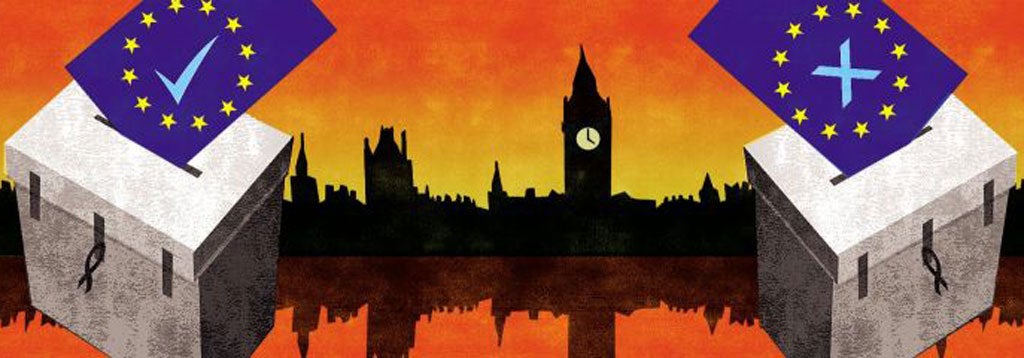
Power to the people is always one of the most potent slogans in British politics. No leader would enter an election arguing in favour of less power for the people. Empowerment can take many forms, most of them ill-defined. David Cameron's self-proclaimed mission aims to redistribute power away from the centre to the people. Labour too seeks to empower. And indeed sought to do so when in power.
In the case of both Labour in the final years of Tony Blair and the Coalition now, attempts at empowerment extend to direct democracy. "Let the people speak!" is part of the new engagement. Again, no leader would dare to argue the opposite.
As a result some people are speaking out by signing petitions, an activity endorsed with great initial enthusiasm by their rulers. At first the positive excitement in government circles was unbounded. Politicians genuinely do want to make new connections with an increasingly alienated electorate. However, within 10 minutes the enthusiasm for petitions within government disappeared and was replaced by another familiar emotion in politics: panic.
It is not much of an exaggeration to suggest that No 10 is close to panic over next week's debate on Europe. The debate in relation to a referendum has arisen because a Commons' backbench committee cited the number of petitions on the issue. The envisaged referendum would put forward several options including withdrawal from the EU and a partial exit that recognised a trading relationship.
No 10's first instinct was to impose a three-line whip against the proposal, but even MPs highly supportive of Cameron tell me that whipping against a motion triggered by petitions goes against the whole spirit of letting the people speak. Whipping arrangements are being reconsidered and No 10 is exploring the scope for amendments that might allow sceptics to express their concerns in a less spectacular fashion. Again MPs point out such a move would be against the spirit of the petitions.
Whatever the Government decides to do there will be no referendum in this Parliament. But that is not the point. The Euro-sceptics are stirring again and as they do so they highlight several strange, fragile dynamics with the Conservative wing of the Coalition.
The first relates to the relationship between Cameron and the right of his party. Cameron is a Eurosceptic, but is not sceptical enough for some of his colleagues. More widely, the Prime Minister leads a coalition of the radical right, but not one that is right-wing enough for elements in his party. This leads parts of the BBC to assert that Cameron has a problem with the right because he is a centrist One Nation Tory, a highly agreeable interpretation for the PM.
It is more complicated than that. Rather like John Major in the 1990s, who privatised the railways, kept public spending dangerously low and opted out of the euro and the Social Chapter, Cameron has instigated unprecedented spending cuts, an overhaul of the NHS and promised referendums on new EU treaties. Evidently both Major in the past and Cameron now support policies identified with the right, but ones that were not then, and are not now, right-wing enough. Again Major was a Eurosceptic and so is Cameron, but in both cases not enough.
We now have the odd contortion in which Cameron and William Hague are forced to defend Britain's membership of the EU, in the same way that Major had to defend the idea that membership of the Euro could not be ruled out forever. even though he was the one that had ruled it out at Maastricht.
Meanwhile, thoughtful, non-pugilistic Eurosceptics such as George Eustice, who used to be Cameron's press secretary, are also thrown into a degree of panic about what to do in next week's debate. Eustice had been pursuing a more long-term strategy, seeking a renegotiation of Britain's membership rather than full withdrawal. Cameron could live with that, at least in the short term. But other Eurosceptic MPs have leapt on the new fashion for petitions to step up the pace and intensity of scepticism. He might have no choice but to follow.
There is no precise proposal like the single currency in the early 1990s on which the sceptics can focus, but Europe is the great wrecker of parties in British politics. Even if voters share a party's disdain for Europe they do not automatically support it and can quickly turn away. Labour pledged to withdraw from the EU in its 1983 manifesto and was slaughtered. Neil Kinnock's only victory in a national poll came in the 1988 European elections when the Conservatives fought a populist sceptical campaign. William Hague spent most his time in the 1997 election pledging to save the pound and was slaughtered even more heavily than Labour in 1983.
The Eurosceptics have been proven right on some issues, but their fundamentalism does not chime with voters even at moments of partial vindication. Their reappearance in such numbers now is a reminder that Cameron has not greatly challenged the Eurosceptic right because he partially agrees with them.
The deification of petitions is the cause for the new excitement, not any event in Europe. On the Cabinet Office website the fashionable form of direct democracy is described with the objective innocence of an official: "E-petitions is an easy way for you to influence government policy in the UK. You can create an e-petition about anything that the Government is responsible for and if it gets at least 100,000 signatures, it will be eligible for debate in the House of Commons."
Sometimes a mountain of signatures can lead to dignified outcomes, such as the debate earlier this week on Hillsborough. But mostly petitions are a crude device for short-sighted, self-interested groups. Under the last Labour government ministers had finally dared to propose an experimental road pricing scheme, so experimental most drivers would not have noticed. Virtually every driver in the country seemed to sign a Downing Street petition against the move, even though motorists would have benefited in the long term. No 10 panicked and dropped its tentative experiment. No 10 is panicking now.
When Gordon Brown was recorded describing Gillian Duffy as a bigot during the last election, it struck me that while voters are allowed to abuse politicians, politicians can never abuse voters. That does not mean politicians must dance to every tune composed by a highly selective group of angry voters, often organised by a powerful pressure group. Petitions are a lousy way to make policy.
Join our commenting forum
Join thought-provoking conversations, follow other Independent readers and see their replies
Comments