Terence Blacker: When language is too rich for everyday use
Notebook
It would be easy to portray the recent spat between Professor Geoffrey Hill and Carol Ann Duffy as one of those literary catfights in which the world of poetry seems to specialise. Hill, Oxford Professor of Poetry, belongs uncompromisingly to a cerebral and academic tradition, while Duffy, a superb Poet Laureate, is a communicator and populist.
On this occasion, though, the row is more interesting and important than is usual. It is about the role of language and writing in an increasingly frenetic, chat-filled world. Launching Anthologise, a competition to encourage secondary school pupils to write poetry, Duffy spoke of poetry as the perfect medium for the Facebook generation. "It allows feelings and ideas to travel big distances in a very condensed form," she said. In that sense, it is comparable to texting, saying more with less.
Professor Hill took issue. A text was not poetic because it was short, he argued. Turning to one of Duffy's poems, he suggested that her language was "not democratic English but cast-off bits of oligarchical commodity English such as is employed by writers for Mills & Boon".
Stripped of exaggeration (Facebook messages are a long way from poetry) and insult (Duffy's brilliant poetry is a long way from Mills & Boon), the disagreement is about whether careful, serious writing is an extension of everyday language or, in some ways, an escape from it.
Never have so many billions of words – personal, practical, professional, romantic – been tapped out every day on to screens and keyboards. For reasons of speed, convenience and economy, it is often easier to write than to speak. It may be true, as Duffy says, that new modes of writing are being forced into existence by the busy fingers of the Facebook generation.
Professor Hill is right, though, to worry about what he calls "the linguistic semantic detritus of our particular phase of oligarchical consumerism". The more words are used hurriedly and casually to convey meaning, without feeling or nuance, the less weight they have. They are a means to an end. There is no room for subtlety; ambiguity is the enemy.
Our busy everyday chatter should not be allowed to infect that different kind of writing (real writing) which, with the right words in the right order, captures the complexity of a moment, a mood or a thought.
A spanking too good to be true
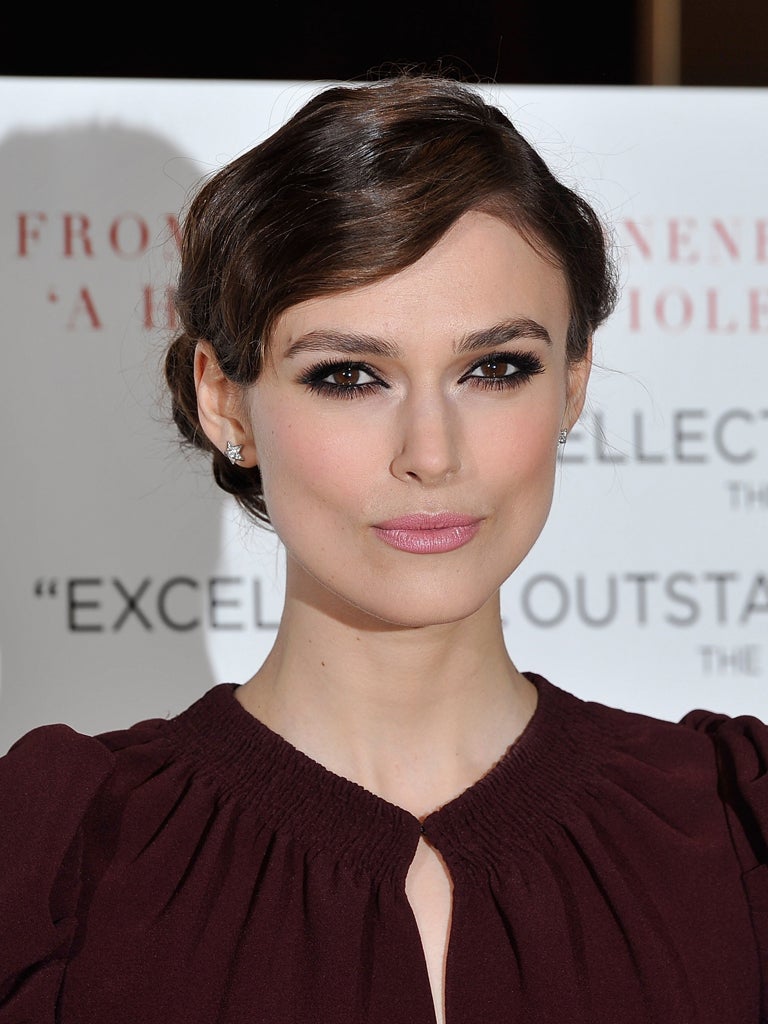
The spanking of Keira Knightley in David Cronenberg's film A Dangerous Method is proving a marketing hit. Thousands are discovering a previously unsuspected interest in the friendship between Freud and Jung. Few have complained that there is no historical basis for the scene. If there was not a hands-on element to Freud's therapy, there should have been, apparently. As The Iron Lady also confirmed recently, biopics no longer even pretend to be accurate. Audiences have a taste for real-life stories and so reality is carelessly twisted to fit the product. This new history expresses supreme arrogance. What matters is not what happened, but what we would like to have happened.
Join our commenting forum
Join thought-provoking conversations, follow other Independent readers and see their replies
Comments
Bookmark popover
Removed from bookmarks