100mph and rising: The science of fast bowling
England bowling coach tells Stephen Brenkley how he will soon produce a legion of lethal quicks
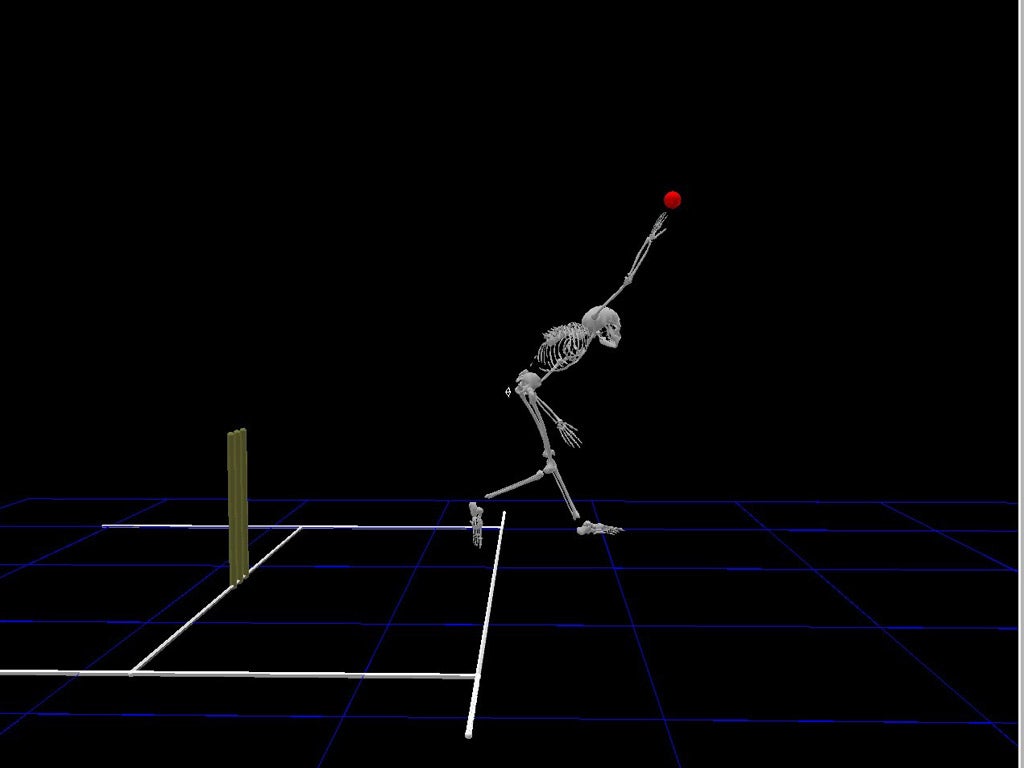
In the place where the elite performers of cricket are created, a vastly ambitious plan was revealed yesterday. It is to produce a legion of 100mph fast bowlers. If it comes off it could revolutionise the sport at the top level.
"In 10 years' time we'd like to have several bowlers capable of sustained high speeds. I want 90mph to be the old 80mph," said Kevin Shine, England's lead fast-bowling coach. The intake of breath from his audience was audible.
To try to achieve such constant velocity Shine is working with scientists at Loughborough University, where the National Performance Cricket Centre is based and where yesterday a fast-bowling seminar was held to present the latest research. The computer simulations on display took the primeval craft of raw fast bowling to a rarefied level but the case was overwhelmingly convincing.
The fast bowler's action is being broken down, to establish what limits performance and therefore what might be improved. With the passionate Shine cajoling and enthusing, Dr Mark King, senior lecturer in sports science, and Paul Felton, who is working on a fast-bowling PhD, are responding.
The quest for the 100mph ball took on some of the aura of the desperate attempt to run the four-minute mile. But there was a crucial difference. When Roger Bannister broke the mile barrier it led to serious worldwide improvement, as though there was now perfect clarity of what was possible.
When Shoaib Akhtar delivered the first measured 100mph delivery, in a World Cup match for Pakistan against England nine years ago, there was only anti-climax. Nick Knight nudged the ball in front of the wicket as though it was any other common or garden projectile, and ran a single. Was that all there was?
Nor has it led to sustained three-figure bursts. Indeed there have been few repeats and anybody who, like Shaun Tait of Australia, has regularly bowled in the high 90s in limited-overs cricket looks much quicker than Shoaib did that night. As does Steve Finn, who routinely bowls at above 90mph for England. Shine, however, speaks with the zeal he has always brought to the craft.
"I want to start with what we end at," he said. "The vision is endless. I am constantly asking questions about it and I know it's something we are capable of doing here eventually."
The fastest bowler in England is Stuart Meaker of Surrey. He has frequently been timed in the 90s, ahead of all his peers in tests at Loughborough, and has approached 97mph. King and Felton have isolated the key areas in a fast bowler's action which are likely to lead to higher speeds and in turn Shine has begun working on these as a coach.
The first element is the run-up. The faster it is then the faster the ball but it cannot be Usain Bolt quick, as Shine pointed out, or the bowler will be exhausted by the time he reaches his delivery stride (and may be wise to change his occupation to boot). In the action itself a quick arm, a delayed arm, a long stride with more trunk flexion and a straight front leg have all been identified as being likely to assist speed merchants.
Research has shown that England's leading fast bowlers possess a combined 74 per cent of these variations. Meaker turns out to be what they call "an outlier" and at under 6ft that makes him more of a rarity. His fitness and strength make the difference.
There is no doubt that such sustained rapidity would affect batsmen – the discomfort of many players has been seen when they have been exposed to Finn in recent months. But the Middlesex player achieves disconcerting bounce as well and Shine was careful to stress that pace was but one element. Get the action which aids that right and the craft of fast bowling can come into its own.Computer simulations, formed from live-action trials, also break down arm and hand movement and confirm that the position of the wrist at the moment of delivery is vital to the movement of the ball. It is that rather than pace which makes Jimmy Anderson such a handful. The seminar yesterday went some way towards explaining why England have been able to produce such a preponderance of skilled speed merchants, and explained how research had changed thinking on injuries.
This was evident in two points: generally, injuries are more likely when a bowler is not at full force; specifically, the science which was instrumental in persuading Anderson to change his action at the start of his career was flawed. He returned to his old action and became the bowler he is.
"I was often accused of relying on bio-mechanics and producing bowling clones but that's not true," said Shine. "You want to harness bowlers' natural actions to the key aspects."
Shine is already working with the talented teenagers who will be the next generation of England's fast bowlers. Who knows, they may form the world's first ton-up brigade.
Tredwell in as Swann is rested
Graeme Swann is the latest England bowler to be rested to ensure he is fit for the Test series against South Africa. The spinner has had discomfort in his right elbow, a possible recurrence of an old injury which required surgery, and will miss the last two ODIs against Australia starting with the game at Chester-le-Street tomorrow.
England's clear priority is rightly to preserve their No 1 Test status rather than to beat Australia 4-0. James Tredwell, the Kent off-spinner, has been called up and the seamer Chris Woakes will stay until the end.
Stephen Brenkley
Join our commenting forum
Join thought-provoking conversations, follow other Independent readers and see their replies
Comments
Bookmark popover
Removed from bookmarks