Chambers set to take on BOA in bid for Beijing Olympic place
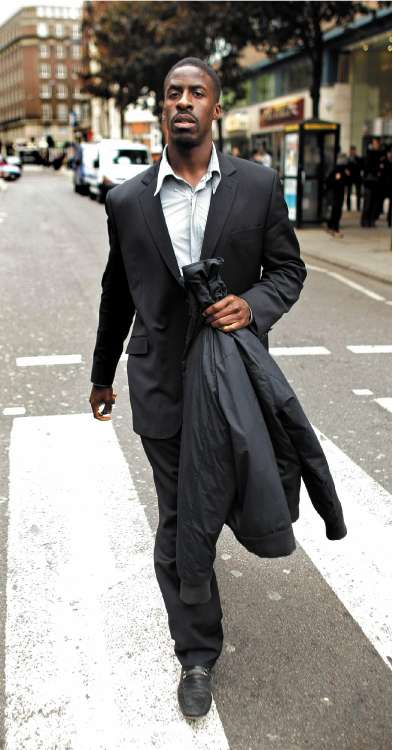
Dwain Chambers yesterday signalled his intention to challenge the Olympic ban imposed on him by the British Olympic Association by seeking to contest the trials for the Beijing Games.
"We can confirm that Dwain Chambers will be taking proceedings to secure his eligibility/participation in the Olympic and National trials in Birmingham from 11-13 July," said Nick Collins, the athlete's lawyer, who had earlier accompanied his client in a two-hour meeting with UK Sport's anti-doping chief John Scott at which Chambers produced a letter from Victor Conte, the man at the centre of the Balco scandal, detailing his doping regime.
There would be no point in Chambers seeking a place at the Games which start in Beijing in August if he were not then willing to challenge the BOA byelaw in the High Court. The byelaw, established unilaterally in 1992, imposes lifetime bans upon athletes who commit serious anti-doping offences, and that applies to Chambers, who tested positive for tetrahydrogestrinone (THG) in August 2003.
The BOA has already stated it will oppose Chambers' return whatever the financial cost but many – including former World Anti-Doping Agency president Dick Pound – believe the 1992 byelaw rests on "shaky ground". Chambers's former team-mate Carl Myerscough, also banned under the byelaw, has already indicated his intention to put it to legal challenge.
In the meantime, Britain's drug-testing authorities will seek an urgent meeting with Conte, the man at the heart of the Balco scandal, following yesterday's comprehensive revelations by Chambers about the doping regime which led to him earning his two-year ban.
As Trevor Graham – the coach who blew the whistle on the Balco operation by sending testing authorities a syringe full of the previously undetectable steroid THG – faces three counts of making false statements to federal agents at a trial which starts in San Francisco on Monday, Conte himself has made it clear that he is now ready to blow the whistle on some, if not all, aspects of the doping system he oversaw.
UK Sport is anxious to gain as full a picture as possible of the pattern of abuse presided over by Conte, who served a four-month prison sentence for conspiracy to distribute steroids and money laundering, as it works towards establishing an independent doping authority next year that will have far greater emphasis on intelligence gathering.
"We would like to have a dialogue with Victor," said UK Sport spokesman Russell Langley. "I think if people like him are willing to talk we would be foolish to turn them down."
Chambers, currently making a third comeback to athletics after abortive attempts at careers within American Football and rugby league, was said in the letter to have taken a cocktail of seven banned substances within a strict cycle to maximise his chances of avoiding detection. As well as THG, according to Conte, the Briton was ingesting "testosterone/epitestosterone cream, EPO, HGH (Serostim), insulin, modafinil and liothryonine, which is a synthetic form of the T3 thyroid hormone."
Conte also claimed that athletes were regularly using "duck and dodge" tactics to get away with cheating the system requiring them to let doping authorities know their whereabouts in order to conduct random out-of-competition tests. These include filling up their mobile phones with bogus messages so they cannot be reached by the testers and putting misleading information on their "whereabouts" form. Conte also maintains that athletes are exploiting the current allowance of two missed doping appointments before incurring penalties, and believes the allowance should be reduced to one.
Langley denied that this charge was relevant within the UK, where athletes operate under a principle of no-advance notice. "In other words," he said, "British athletes do not receive the phone call ahead of the test which would allow such a technique to be employed."
Under World Anti-Doping Agency regulations that will come into effect in January next year, all athletes will have to offer the authorities information on their whereabouts at all times, rather than their current obligation to specify availability for one hour on five days of each week.
"The global anti-doping game has changed," Langley added. "It's ramped up to a new level now. Simply testing athletes isn't going to be enough, we need to have more detailed data on methods and common practices so we are able to make the tests we currently employ more effective.
"The letter highlights what we are up against in terms of the level of sophistication of doping programmes. There was a lot of information to digest and it will be invaluable for us when we set up the new independent agency. There will be a lot more scope and emphasis on intelligence gathering then.
"It was a very good meeting. You could feel Dwain was doing it for the right reasons. The onus was on him to do the talking, and he did. It wasn't about wiping the slate clean or anything like that. We got the sense that he really wanted to make sure other athletes didn't get themselves into the same situation."
Scott described the meeting with Chambers and Collins as "the starting point of what we hope will be an ongoing relationship", adding : "It is through this sort of information that we are able to better understand both the mindset of why athletes choose that path and the network that sits behind them. It is these networks of manufacture, trafficking and supply that we need to be able to tap into if we are to get to the heart of doping in sport."
Meanwhile, the charges for which Graham was indicted on November 2006 threaten to create similar shock waves throughout the world of athletics as the FBI's investigation into the Balco lab.
Star witness for the prosecution is Angel Guillermo Heredia, who claims to have supplied Graham with drugs and advice for his athletes. Antonio Pettigrew, who beat Roger Black to the 1991 world 400m title, is one of seven runners willing to testify that his ex-coach supplied them with drugs.
Heredia has named 12 alleged dopers with a combined total of 26 Olympic and 21 World Championship medals, eight of whom have never been previously linked to performance-enhancing drugs.
The Mexican claims that he received $40,000 from former world and Olympic 100m champion Maurice Greene for a variety of illegal substances in 2003 and 2004. Greene, now retired, has never failed a drugs test and vehemently denies the claims.
Jail for former fastest man on earth
Tim Montgomery, the former 100m world record holder, was sentenced to 46 months in prison in New York yesterday for his role in a cheque fraud scheme.
Montgomery pleaded guilty last year to one count of conspiracy and two of bank fraud for depositing or trying to deposit three cheques worth $775,000 (£396,000) into an account he controlled.
"I stood at the top of the mountain and heard the cheers from the people," he said. "In jail, my status is gone."
Join our commenting forum
Join thought-provoking conversations, follow other Independent readers and see their replies
Comments
Bookmark popover
Removed from bookmarks