Why high-flyers are choosing to teach
Teaching careers have never been more sought-after, or as personally and financially rewarding for those who do them
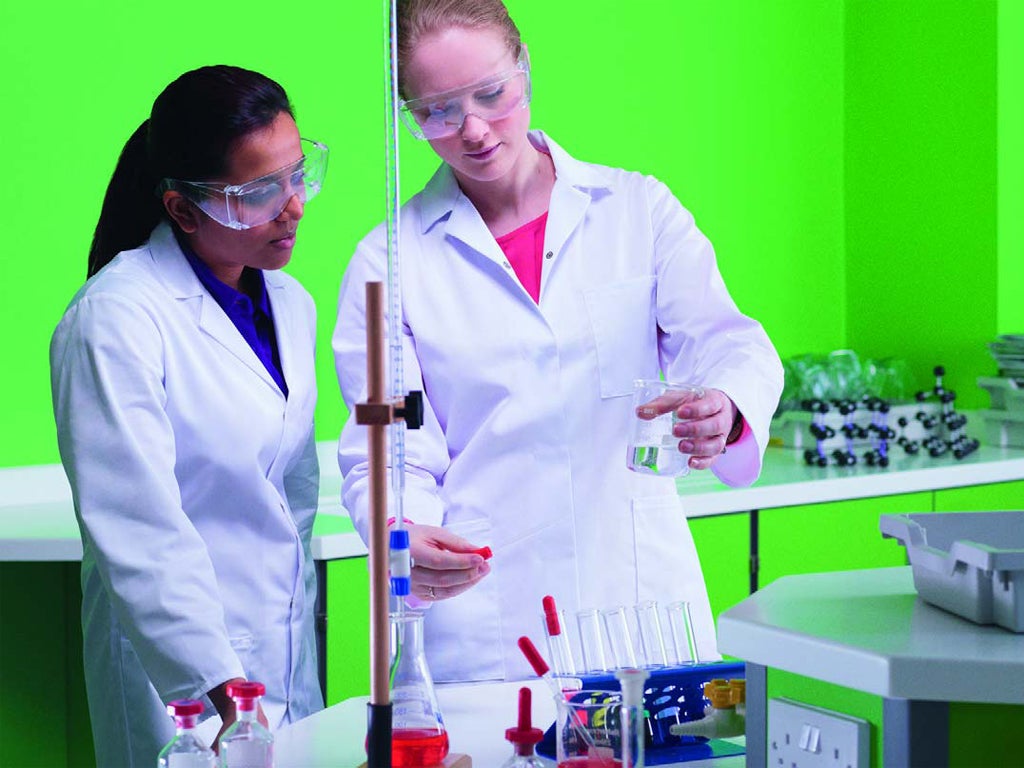
You can’t prepare for every classroom scenario, but teacher training has a good go, says Kate Green, programme director of secondary PGCEs at the University of Southampton. “We concentrate on all the important areas, including behaviour management. Trainees are very well prepared.”
There are three key ways to train as a teacher – as an undergraduate, as a postgraduate or through work-based schemes. All lead to qualified teacher status (QTS) allowing you to look for work within state schools.
University courses begin in September, with applications closing in June (December for primary). Applicants in sought-after subjects have never been so well supported. This year, graduates wishing to teach maths, physics, chemistry and foreign languages will receive extra help throughout the application process from a new Premier Plus service.
As well as bursaries of up to £20,000 for graduates with a relevant first-class degree (£15,000 for a 2:1 and £12,000 for a 2:2), eligible applicants receive one-to-one advice on applying, short placements to get a taste of teaching, free subject refresher courses and careers guidance from current teachers. All teachers must have a degree and at least a C-grade GCSE in maths and English; primary teachers also need a science GCSE grade C or above.
Routes into teaching
Undergraduate
A Bachelor of Education (BEd) or a BA/BSc with QTS takes three to four years of full-time study or up to six years part time and is offered by universities nationwide. Candidates must have at least two A-levels. This is a preferred route for candidates who want to complete a degree and get QTS at the same time. Apply through UCAS.
Postgraduate
A postgraduate certificate in education (PGCE) can be taken full-time in one year or part-time over two. Trainees have at least two substantial placements in schools lasting from 18 to 24 weeks, interspersed with 12 weeks of academic study. “A PGCE gives you the opportunity to evaluate, analyse and think about what you are learning before applying it,” says Green.
Bursaries range up to £20,000 at secondary level and up to to £9,000 at primary level. Graduates after a more hands-on approach can try School- Centred Initial Teacher Training.
Schools group together to provide one-year programmes often tailored to local needs. Courses will lead you to QTS status and some award a PGCE.
“The school-based nature of the course is brilliant – lots of time in schools; the lecturers are all up-to-date,” says a former trainee. Some funding is available – see the Teaching Agency site for details. Apply through the Graduate Teacher Training Registry (GTTR).
Work-based training
School Direct
New this year, selected schools have partnered with accredited teacher training institutions to offer a one-year, school-based training course that will lead to QTS and in some cases award a PGCE. Usual tuition fees apply, but as with the PGCE, bursaries of up to £20,000 are available in some subjects, plus discretionary top-ups. Expect placements and training in experienced schools, some of them outstanding.
Contact the Teaching Agency for a list of available School Direct institutions, and apply direct to the schools in question (see below).
Other alternatives
Other work-based routes may be available.
Check the Teaching Agency’s website for more information.
Case study: Fiona Robertson, 27
Fiona Robertson, 27, graduated with biological and medicinal chemistry with criminology from Keele University in Staffordshire. She is currently studying for a PGCE in chemistry at the University of Exeter’s Graduate School of Education.
I followed my childhood dream after university and went into acting.
I found what I enjoyed most was working with young people, so I decided to put my degree to good use. Getting a bursary to do a PGCE certainly helped and an advisor guided me through the application process. I wanted the reputation of Exeter on my CV and worked really hard to get on the course – I visited three separate schools to get experience.
After a couple of weeks’ work experience, the first term was all about laying the groundwork with research and pedagogical knowledge before putting it into practice. On this course you don’t get to teach until January – which was what I wanted. Other PGCEs start you off in the autumn term but I didn’t want to be thrown into the deep end.
We were so well prepared – with lectures on behaviour management and top-up courses in some science subjects, as I’ll be teaching all sciences to GCSE level. Specialist lecturers came in and we were given advice on job applications and interviews.
We’ve spent the next two terms on placements with the odd top-up day in university.
There was a lot of emphasis on behaviour management and every school has a strategy – so if you stick to it, you know you are in the right. Departments at my placement schools welcomed me with open arms. Staff were lovely and very professional.
I’m really looking forward to starting my job in September – at a school outside Bath. Chemistry teachers are really in demand, so it was great to have the pressure taken off. This has been the best year I’ve had.
My first day
Russel Line, 35, studied for a PGCE after 10 years as an engineer. He's in his second year at Salesian School in Chertsey.
“It’s a relief to finally get in the classroom – it’s the unknown that’s worse! I prepared really well for the first week – not just every lesson plan, I’d also asked loads of questions – a lesson could hinge on knowing where to find the right bit of equipment.
You need to know the layout of the school, new software, who should or shouldn’t sit next to each other. Everything ran smoothly. I can be myself as a teacher and my experience as an engineer adds to the job.”
Join our commenting forum
Join thought-provoking conversations, follow other Independent readers and see their replies
Comments
Bookmark popover
Removed from bookmarks